
Agricultural Robotics: When Automation Pays Off on Farm
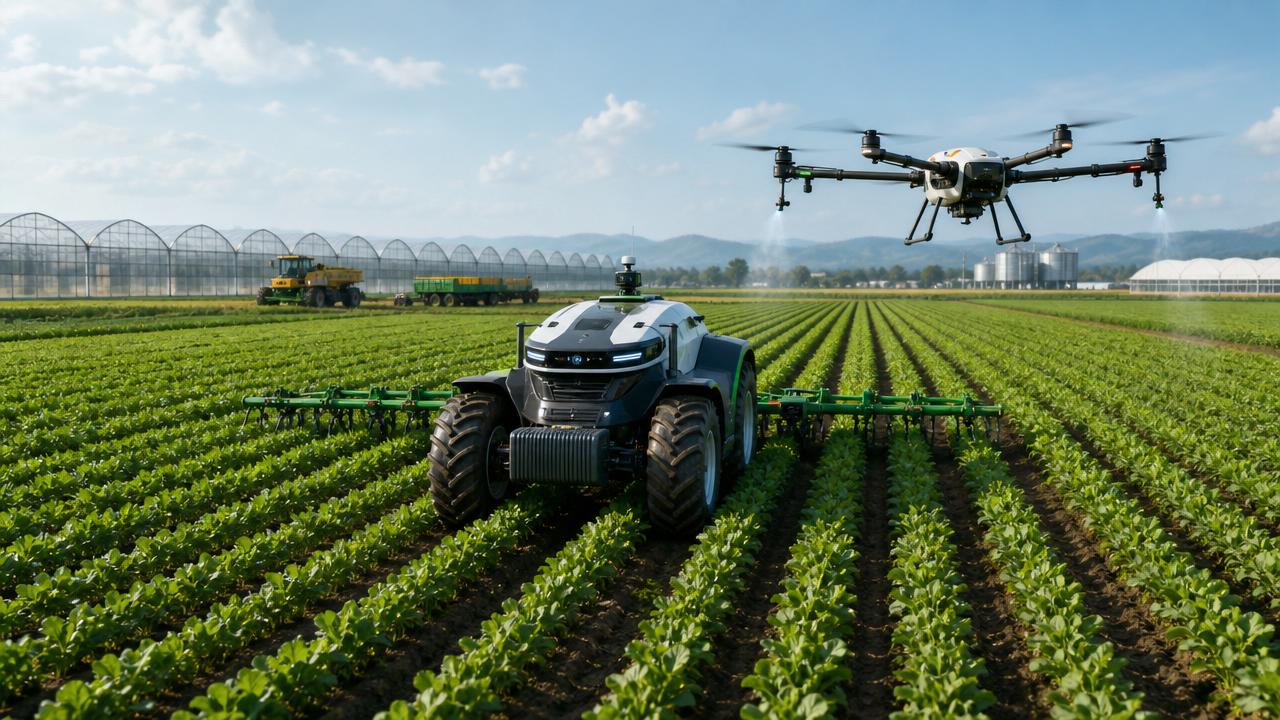
Agricultural robotics is shifting from experimental promise to practical farm economics. Across broad agricultural systems, automation now supports measurable gains in labor stability, input accuracy, operating speed, and yield protection.
The core issue is no longer novelty. It is timing. Agricultural robotics creates value when machine utilization, field conditions, crop cycles, and management discipline align with real cost pressure.
This matters across the wider industrial landscape. Food supply, logistics, energy use, and rural productivity all depend on more resilient farm operations under labor shortages and climate uncertainty.
What Agricultural Robotics Means in Modern Farming
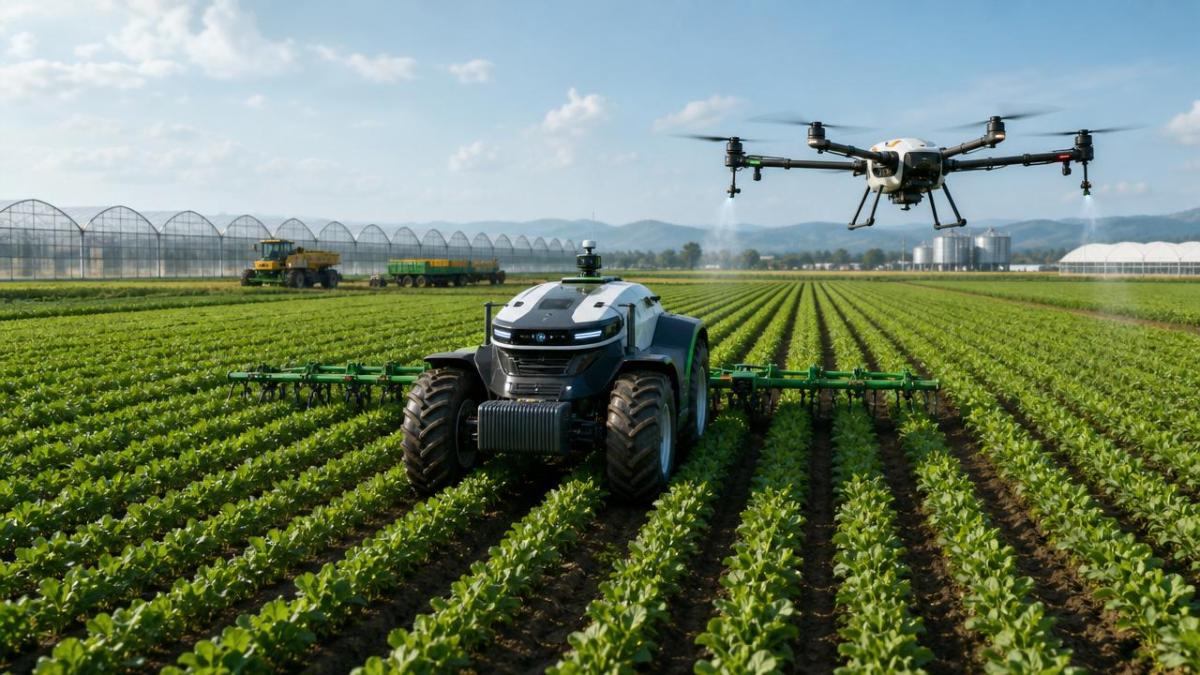
Agricultural robotics refers to machines that sense, decide, and act with limited or full autonomy in farming environments. It includes field equipment, aerial systems, greenhouse automation, and livestock handling technologies.
The category is wider than robots with arms. In practice, agricultural robotics often means autonomous tractors, guided harvesters, precision ag drones, robotic sprayers, climate control systems, and automated feeding equipment.
SAMS tracks this evolution across five connected pillars. These include smart high-horsepower tractors, combine harvesters and balers, precision drones, greenhouse automation, and livestock automation platforms.
The common thread is data-linked execution. RTK navigation, machine vision, variable-rate control, sensors, telematics, and workflow software allow repetitive tasks to become more accurate and less labor dependent.
That is why agricultural robotics should be judged as an operating system for farm performance, not only as a hardware purchase. The financial outcome depends on use intensity and process integration.
Market Signals Shaping the Adoption Curve
Several structural signals explain why agricultural robotics is gaining commercial traction. These signals affect both large-scale operations and specialized high-value production environments.
- Persistent labor scarcity increases the value of autonomous and semi-autonomous workflows.
- Input costs make precision application more attractive than blanket spraying or fertilizing.
- Climate volatility raises the cost of timing errors during planting, spraying, and harvesting.
- Digital infrastructure improves fleet visibility, traceability, and machine coordination.
- Large equipment costs push buyers toward ROI-led automation decisions rather than image-driven purchases.
SAMS observes that adoption is strongest where machine hours are high and agronomic timing is tight. Robotics performs best when delays create direct yield loss or quality penalties.
When Agricultural Robotics Pays Off Financially
Agricultural robotics pays off when it improves one or more of four economic levers. These are labor substitution, input efficiency, throughput expansion, and yield or quality protection.
1. Labor substitution becomes visible
Autonomous tractors and robotic feeding systems create value first where qualified operators are scarce. Replacing overtime, reducing idle delays, and extending working hours often support the earliest returns.
2. Precision cuts expensive waste
Precision agricultural robotics lowers overapplication of seed, fertilizer, pesticides, water, and fuel. Savings become meaningful where fields are variable and input budgets are already high.
3. Narrow operating windows justify speed
Harvest and planting delays can erase margins quickly. Agricultural robotics delivers stronger ROI when faster machine cycles protect crop condition during compressed seasonal windows.
4. High-value crops reward consistency
Greenhouse tomatoes, strawberries, seed crops, and premium produce can justify automation earlier. Small percentage gains in quality, grading, or loss prevention often have outsized financial impact.
The strongest cases usually combine several levers. For example, an RTK-equipped tractor may lower overlap, reduce fuel burn, improve line accuracy, and allow night operation in one package.
High-Return Application Areas Across Farm Systems
Not every robotics investment performs equally. The best results appear in applications where tasks are frequent, standardized, and sensitive to precision or timing.
This pattern aligns with SAMS intelligence across global farm equipment systems. Heavy-duty machinery and precise digital control create the best results when operations are scaled and performance is measurable.
How to Evaluate ROI Without Overestimating Automation
A sound agricultural robotics business case should start with baseline numbers. Measure labor costs, machine downtime, overlap rates, fuel use, yield losses, rework frequency, and weather-related delays.
Then evaluate total ownership, not only purchase price. Include software subscriptions, connectivity, operator training, maintenance, battery replacement, payload accessories, and support response quality.
A practical ROI checklist can improve decision quality:
- Identify one bottleneck task with high annual cost.
- Estimate annual machine utilization realistically.
- Quantify precision savings per acre, herd, or greenhouse zone.
- Stress-test results against bad weather and lower usage.
- Compare payback under ownership, leasing, or service models.
Agricultural robotics often disappoints when expected to solve weak processes. If maps are poor, maintenance is reactive, or staff workflows are unclear, automation may expose problems instead of fixing them.
Implementation Priorities and Common Risks
Successful deployment depends on operating discipline. Robotics should fit agronomy, terrain, connectivity, and service access rather than forcing a technology-first model onto unsuitable conditions.
- Check RTK coverage, signal reliability, and data transfer capacity.
- Confirm implement compatibility with tractors, drones, and control software.
- Define human supervision rules for safety and exception handling.
- Prepare maintenance routines before peak season begins.
- Use phased rollout instead of full-fleet conversion on day one.
Another frequent risk is underutilization. A sophisticated autonomous machine cannot justify its cost if acreage is too limited, crop cycles are too short, or deployment planning remains inconsistent.
For this reason, agricultural robotics works best with clear workload concentration. High-horsepower tractors, combines, drones, and CEA systems gain economic strength when used intensively across critical tasks.
A Practical Path Forward for Agricultural Robotics
Agricultural robotics pays off when automation is matched to measurable constraints, not abstract innovation goals. The most reliable gains come from labor relief, input precision, operational speed, and crop protection.
Start with one process where timing errors or labor shortages already damage performance. Build a baseline, test utilization, and compare results with real field economics instead of promotional assumptions.
In that framework, agricultural robotics becomes a disciplined investment tool. It supports resilient production, steadier margins, and stronger food-system efficiency across modern agriculture.
For deeper evaluation, align machine selection with acreage, crop value, labor exposure, and service support. That approach turns agricultural robotics from an impressive concept into a repeatable operating advantage.
Related Intelligence