
Climate-Smart Agriculture Trends Reshaping Farm Investment
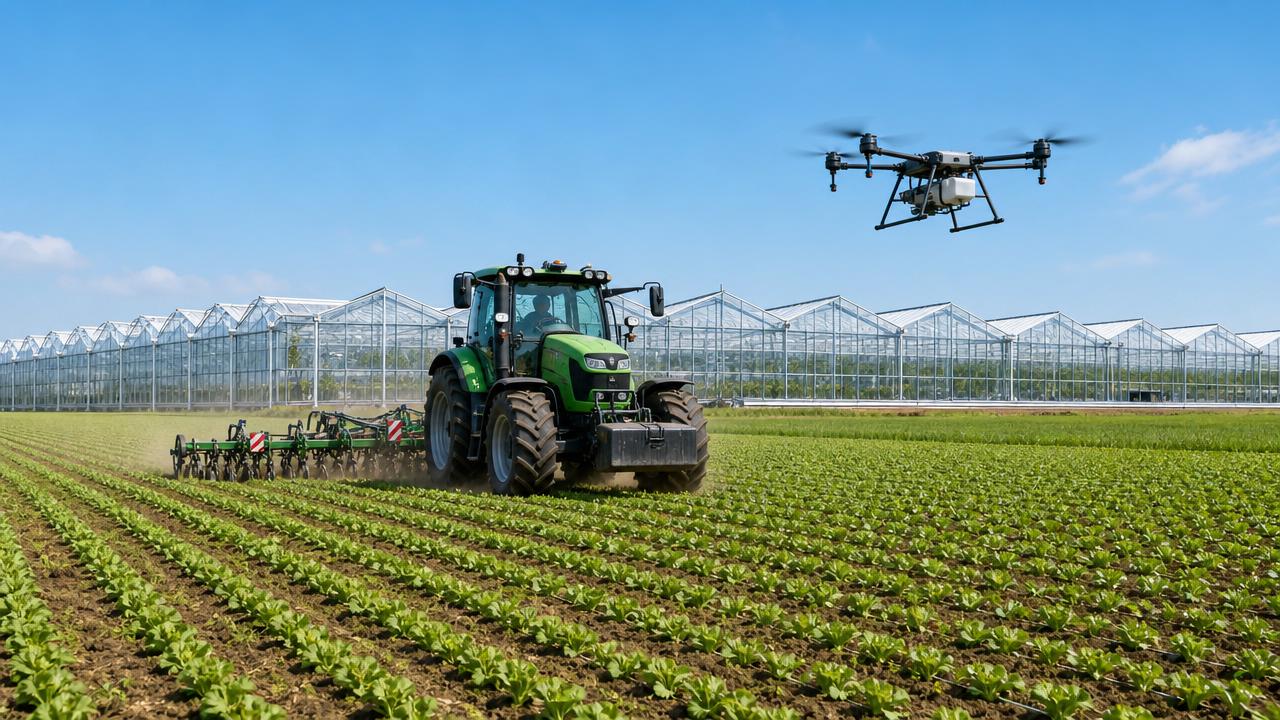
As climate volatility, labor shortages, and resource pressure redefine global farming, climate-smart agriculture is becoming a strategic priority for farm investors and agribusiness leaders. From autonomous tractors and precision ag-drones to controlled-environment systems and data-driven livestock automation, the latest trends are reshaping how capital is allocated, risk is managed, and long-term yield resilience is built across modern agriculture.
Why climate-smart agriculture is moving from sustainability talk to investment strategy
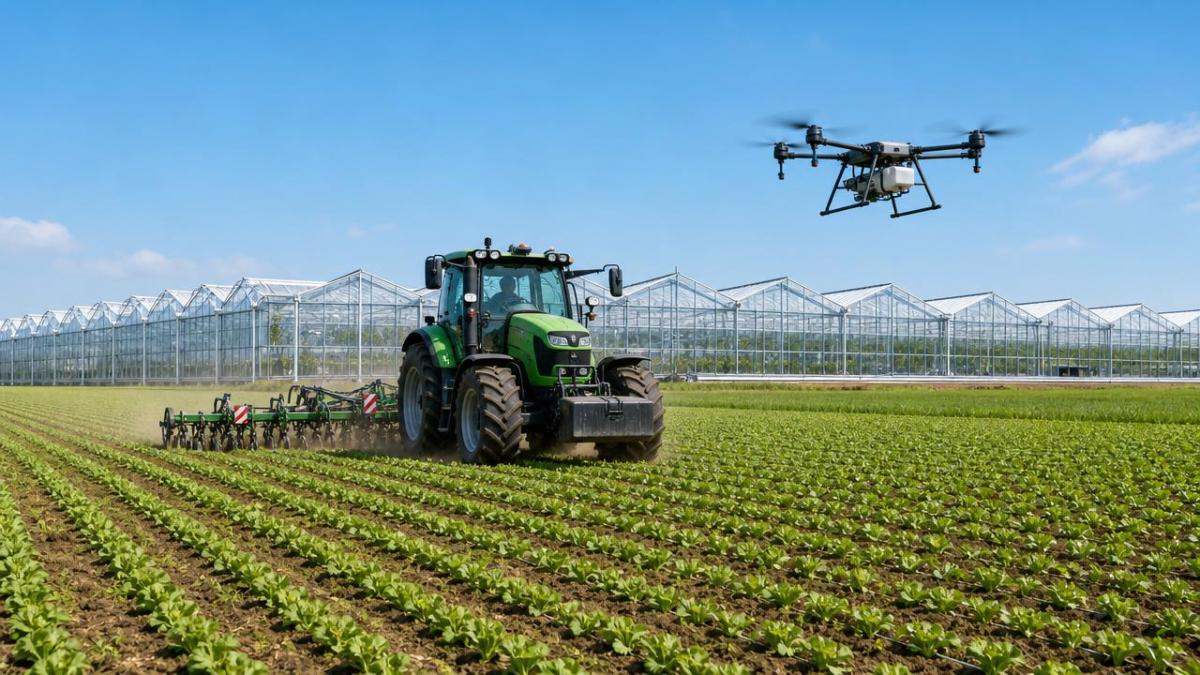
For enterprise decision-makers, climate-smart agriculture is no longer a soft ESG topic. It now sits at the center of asset productivity, operating resilience, and supply security. Unpredictable rainfall, heat stress, rising input costs, and rural labor shortages are changing the economics of both open-field and controlled-environment production.
What matters most is not adopting isolated tools, but building a coordinated system where machinery, sensors, data, and agronomic decisions work together. That is why investment is shifting toward integrated solutions: high-HP autonomous tractors, precision spraying drones, efficient harvest systems, greenhouse climate controls, and livestock automation platforms.
SAMS follows this shift through a practical lens. The value is not in technology headlines alone. The value lies in how centimeter-level RTK guidance reduces overlap, how variable-rate application cuts waste, how climate control stabilizes output, and how mechanized workflows preserve yield during narrow operating windows.
- Boards want lower weather-related revenue volatility and better visibility into return on capital.
- Operations leaders want higher field efficiency with fewer skilled operators available.
- Procurement teams need clear selection criteria across equipment, software, support, and interoperability.
- Investors want scalable models that protect margins under changing climate and compliance pressure.
Which climate-smart agriculture trends are reshaping farm investment first?
The most important climate-smart agriculture trends are those that convert environmental pressure into measurable operating advantage. In practice, decision-makers are prioritizing technologies that improve timing, reduce input waste, strengthen labor productivity, and support data-backed risk management.
1. Autonomous and RTK-enabled field operations
Large tractors with 300 to 500 horsepower and integrated RTK autonomy are becoming strategic assets in broadacre farming. They extend workable hours, maintain straight-line precision, and reduce operator fatigue. In climate-smart agriculture, timely planting and tillage often matter as much as seed genetics or fertilizer plans.
2. Precision ag-drones for targeted crop protection
Drone fleets are increasingly used where terrain, labor scarcity, and crop sensitivity make conventional spraying less efficient. Terrain-following flight, controlled droplet placement, and rapid deployment help protect crop health while minimizing unnecessary chemical load. This is especially valuable when weather windows are short.
3. Harvest automation and residue management
Combine harvesters and balers remain central to climate-smart agriculture because harvest delay directly affects both quality and field losses. Faster throughput, lower downtime, and better residue handling support whole-farm efficiency, including feed, biomass, and soil management decisions after harvest.
4. Controlled Environment Agriculture expansion
CEA systems are attracting capital where water stress, import dependence, and premium produce demand justify higher CAPEX. Greenhouse climate control, hydroponic fertigation, and sensor-based management make output less exposed to weather shocks. For some regions, this shifts production from seasonal uncertainty to year-round planning.
5. Livestock automation and feed efficiency analytics
Climate-smart agriculture also includes animal systems. Rotary milking, TMR feeding, and automated pushing robots improve labor efficiency and consistency. When integrated with machine vision and herd data, these systems help reduce waste, monitor animal performance, and improve resource use per unit of output.
How different investment options compare in climate-smart agriculture
The table below helps procurement and strategy teams compare major climate-smart agriculture investment areas by operating purpose, expected value drivers, and implementation complexity.
This comparison shows why climate-smart agriculture should be evaluated as a portfolio of risk-control tools rather than a single equipment purchase. The right mix depends on crop type, labor profile, water availability, market access, and the speed at which the business needs returns.
What should procurement teams evaluate before buying climate-smart agriculture systems?
Many investments underperform not because the technology is weak, but because selection criteria are too narrow. Purchase decisions often focus on headline performance while ignoring compatibility, support capacity, operator readiness, or data ownership. In climate-smart agriculture, those hidden variables shape actual value.
A practical evaluation checklist
- Match the asset to the bottleneck. If the biggest loss comes from delayed planting, autonomous tractors may beat drone investment in priority.
- Confirm interoperability. Guidance systems, sensors, implements, and farm software should exchange usable data without manual rework.
- Assess uptime risk. Spare parts, local service capability, and diagnostics access are as important as machine specifications.
- Evaluate training needs. A sophisticated system with weak onboarding can slow operations during the most critical season.
- Model total cost of ownership. Include fuel, batteries, software, maintenance, labor savings, and expected utilization rate.
- Review compliance exposure. Drone operations, food safety standards, water use rules, and worker safety requirements differ by market.
SAMS supports this decision logic by linking machinery capability with agronomic outcomes and capital discipline. For example, an RTK tractor should not be judged only by guidance accuracy. It should be judged by field efficiency gains, implement control, pass-to-pass consistency, and the labor model it enables over multiple seasons.
Parameter and selection guide for key climate-smart agriculture assets
For companies comparing climate-smart agriculture options, the table below summarizes common technical and commercial checkpoints that influence deployment success.
A disciplined parameter review reduces selection risk. It also helps align engineering, finance, and operations teams around the same purchasing logic, which is essential when climate-smart agriculture investments span both machinery and digital infrastructure.
How to think about cost, payback, and alternatives
Cost discussions in climate-smart agriculture should move beyond upfront price. A cheaper machine can become more expensive if it causes missed field windows, rework, poor application accuracy, or high labor dependency. The better lens is cost per productive acre, cost per protected yield unit, or cost per stable production cycle.
Where ROI often comes from
- Reduced overlap and input waste through RTK guidance and prescription-based application.
- Lower labor intensity and fewer delays during critical field or livestock tasks.
- Improved water efficiency and crop consistency in CEA environments.
- Better yield protection under climate stress through faster and more precise intervention.
When phased adoption makes more sense
Not every business should invest in a full climate-smart agriculture stack at once. A phased roadmap may start with RTK guidance and high-use field equipment, then add drones, telematics, greenhouse modules, or livestock sensors based on demonstrated operational gaps. This lowers execution risk and improves internal buy-in.
For capital-intensive systems such as Venlo-type glass greenhouses, decision-makers should stress-test assumptions around crop mix, energy pricing, market access, and technical staffing. Water savings and yield gains can be compelling, but only if the commercial model supports the operating complexity.
What compliance and implementation risks are often overlooked?
Climate-smart agriculture projects can stall when compliance and rollout planning are treated as secondary. The operational environment includes worker safety, chemical handling, equipment certification, data governance, and in some cases airspace restrictions for drone activity.
Key risk areas to review early
- Check local requirements related to agricultural drone registration, operator qualifications, and spraying permissions.
- Review machinery safety expectations, especially where autonomous or semi-autonomous functions are deployed near workers.
- For CEA systems, examine food safety procedures, water quality management, and electrical or climate-control installation norms.
- Clarify data ownership, cloud access, and interoperability before signing software or telematics agreements.
Implementation planning should include field mapping, workflow redesign, operator training, maintenance routines, and seasonal contingency plans. This is where intelligence support matters. SAMS interprets the connection between technical systems and real operating conditions, helping buyers avoid costly mismatches.
FAQ: common decision questions about climate-smart agriculture
How do I prioritize climate-smart agriculture investments with a limited budget?
Start with the largest recurring source of loss: delayed planting, inefficient spraying, unstable greenhouse output, or livestock labor gaps. Prioritize the asset that removes that bottleneck first. A staged approach usually produces better capital efficiency than buying multiple disconnected tools.
Which farms are best suited for precision ag-drones?
They are particularly valuable in fragmented plots, wet or difficult terrain, specialty crops, or regions where field access is limited during treatment windows. They also fit operations that need fast response to pest pressure without creating additional soil compaction.
What should I check before investing in autonomous tractors?
Verify implement compatibility, RTK signal availability, hydraulic requirements, transmission suitability, local service strength, and operator onboarding plans. In climate-smart agriculture, the tractor must fit the whole field system, not just the horsepower requirement.
Is Controlled Environment Agriculture always the best climate-smart agriculture option?
No. CEA is powerful for water-stressed regions, premium crops, and stable supply programs, but it carries higher CAPEX and stronger management demands. Open-field precision systems may deliver faster returns where land scale is large and weather risk can be partially managed through mechanization and data tools.
How long does implementation usually take?
Timing depends on equipment type, integration depth, and site readiness. A guidance upgrade may move faster than a greenhouse or livestock automation rollout. Decision-makers should ask suppliers to break implementation into delivery, installation, training, testing, and ramp-up phases before approving budgets.
Why decision-makers use SAMS to navigate climate-smart agriculture choices
Climate-smart agriculture decisions cut across engineering, agronomy, finance, and risk management. SAMS is built for that intersection. We track the five pillars shaping modern farm productivity: smart high-HP tractors, combine harvesters and balers, precision ag-drones, greenhouse and climate control systems, and livestock automation.
Our perspective is practical and investment-oriented. We examine how NDVI maps support variable-rate decisions, how CVT behavior affects deep-tillage performance, and how water savings and yield stability influence long-tail greenhouse cash flow. That helps buyers move from feature lists to operational judgment.
If your team is evaluating climate-smart agriculture initiatives, you can contact us for parameter confirmation, product selection guidance, delivery timeline discussion, customized solution comparison, certification and compliance checkpoints, sample support planning, and quotation communication. These conversations are especially useful when multiple technologies must work together under tight budget or seasonal constraints.
Related Intelligence