
How Smart Irrigation Systems Improve Water Management Efficiency
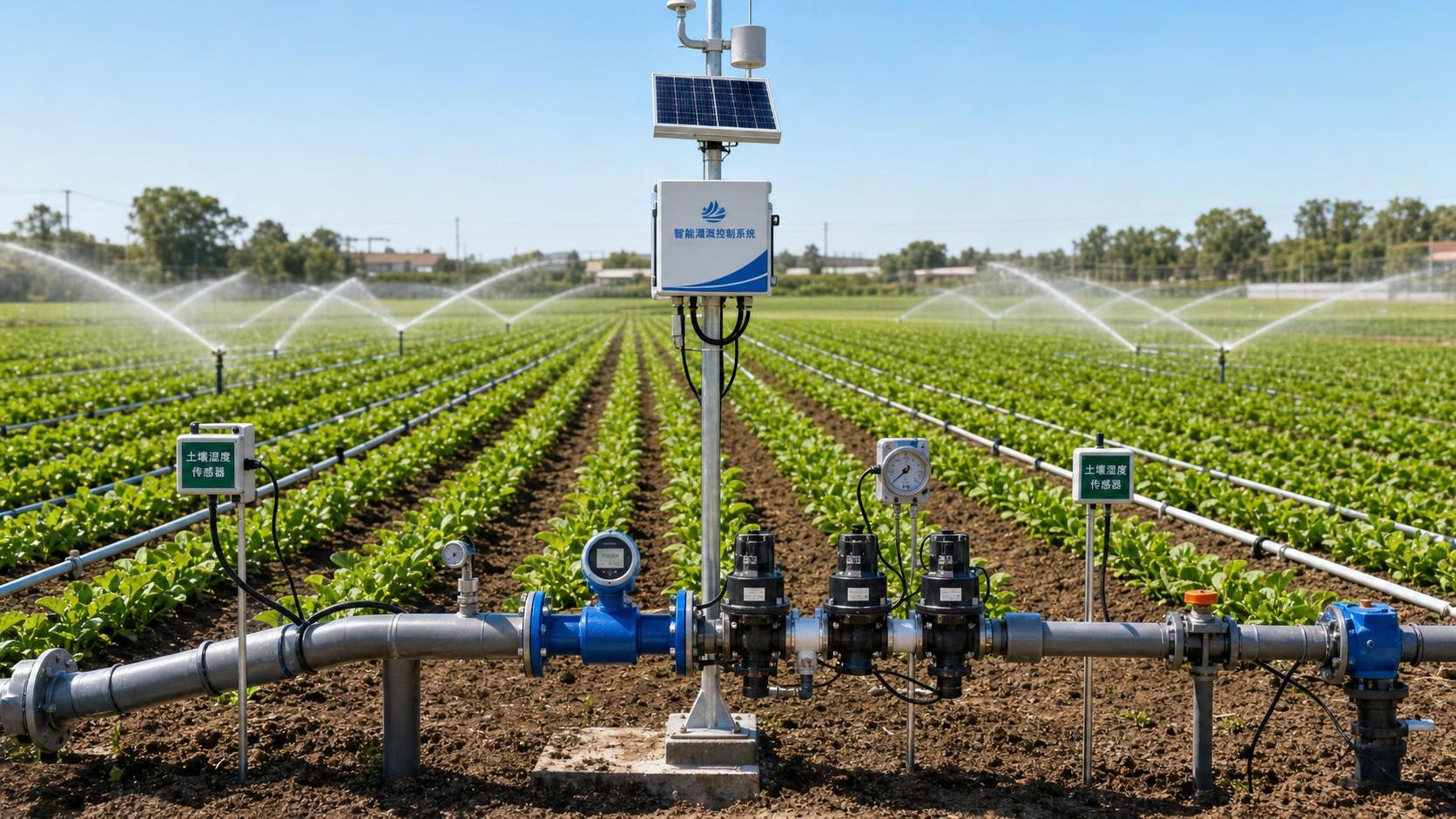
How Smart Irrigation Systems Improve Water Management Efficiency
For technical evaluators assessing irrigation upgrades, smart irrigation systems for water management offer a practical path to higher efficiency, lower water waste, and better operational control. By combining sensors, automation, data analytics, and real-time field response, these systems help farms optimize irrigation timing, pressure, and application rates. This article explores how smart irrigation technologies improve water management efficiency while supporting ROI analysis, sustainability goals, and large-scale agricultural performance.
If you are screening suppliers or comparing upgrade paths, the real question is not whether the system is “smart.” It is whether it can make better irrigation decisions than your current process, consistently, under field conditions that are rarely stable. Good systems reduce overwatering, prevent late irrigation during stress periods, and make uneven blocks more manageable. Weak ones just move manual mistakes into a dashboard.
Start With the Water Management Problem, Not the Feature List
This is where many evaluations drift off course. A farm may ask for soil moisture sensors, cloud monitoring, variable-rate control, and mobile alerts, but the real bottleneck could be somewhere simpler: unstable inlet pressure, poor zoning, non-uniform emitter performance, or irrigation schedules that ignore crop stage. Smart irrigation systems for water management only deliver value when they are solving a defined control problem.
Before comparing platforms, pin down a few operating questions:
- Is the farm losing water through overscheduling, leakage, runoff, or low distribution uniformity?
- Does the crop require tighter irrigation windows because of yield sensitivity, disease pressure, or quality targets?
- Are labor shortages delaying valve operation, inspection, or field adjustments?
- Is the site dealing with groundwater restrictions, pumping cost pressure, or reporting requirements?
If those points are vague, the procurement process usually turns into software comparison without engineering clarity.
Check Whether the System Can Measure What Actually Drives Irrigation Decisions
A smart controller is only as good as its field inputs. In practice, evaluators should look at four input layers together: soil, weather, hydraulic performance, and crop response. Not every project needs all four at full depth, but skipping the wrong layer creates blind spots.
Soil moisture sensing gets the most attention, but placement matters more than brochure claims. One sensor in an easy-to-access spot will not represent a heterogeneous block. Ask how the supplier handles soil texture variation, rooting depth, salinity influence, and sensor maintenance. Also ask what happens when data goes missing. A system that cannot fail gracefully is a risk during peak irrigation periods.
Weather-based scheduling can be useful, especially where evapotranspiration estimates are already part of farm practice. But local relevance matters. A distant weather feed may be acceptable for broad planning and still be too weak for day-to-day control in fields with microclimate variation, greenhouse structures, or strong wind exposure. That gap shows up quickly in water balance errors.
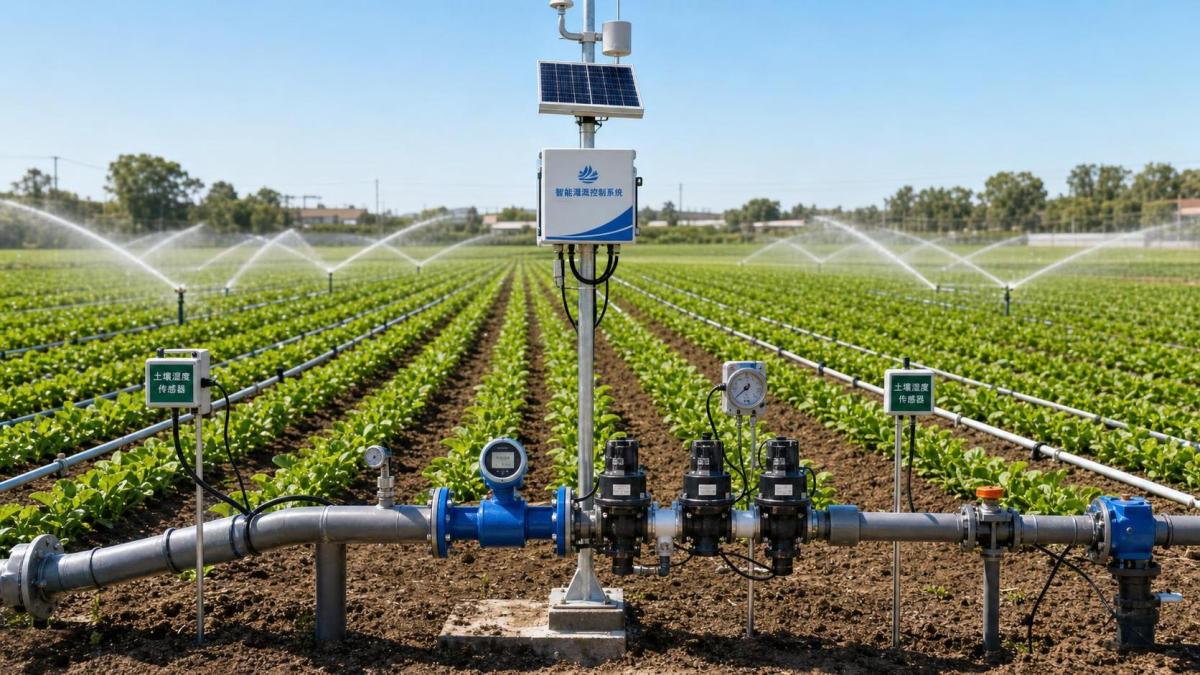
Hydraulic data is often undervalued during evaluation. Flow meters, pressure sensors, and alarm logic can reveal blocked filters, broken laterals, valve failures, or pump instability much faster than field scouting. If the goal is water management efficiency, measuring delivered water is not optional. Otherwise, the platform may optimize a schedule while the system is physically underperforming.
Look Hard at Control Resolution
This is where performance differences become obvious. Some systems can only switch large irrigation blocks on and off. Others can manage zone-level timing, pump sequencing, fertigation integration, and in some cases variable-rate application depending on the irrigation method. For technical evaluation, resolution is not a luxury feature. It determines whether the farm can respond to field variability or just digitize a rigid schedule.
Ask for a clear explanation of what the control layer can do in your actual configuration:
- Valve-level or block-level control?
- Can it handle staggered starts to avoid pressure shock?
- Can it coordinate pumps, filters, and fertigation units automatically?
- Does it support rule-based shutdown for low pressure, abnormal flow, or communication loss?
- Can local manual override continue safely if cloud connectivity drops?
That last point deserves attention. Remote automation is useful, but field operations cannot depend entirely on network uptime.
Uniformity Still Matters More Than Interface Design
A polished dashboard does not fix poor water distribution. If emitter performance, nozzle condition, pressure regulation, or lateral layout are weak, automation may simply make non-uniform irrigation happen more consistently. That is not efficiency.
Technical evaluators should require baseline field performance checks before judging expected gains. Depending on the irrigation type, that may include pressure readings across zones, flow verification, distribution uniformity testing, filtration review, and maintenance history. Exact test methods vary by system and local practice, so field protocols should be confirmed against applicable engineering guidance and supplier documentation rather than assumed.【待核实】
In plain terms: do not buy analytics to explain a mechanical problem you have not fixed yet.
Evaluate the Data Model, Not Just the Sensors
Two vendors may offer similar hardware and very different operational value. The difference is usually in how data is cleaned, interpreted, and turned into actions. A good platform helps the operator answer practical questions: which block is trending dry, where runtime is exceeding expected depletion, whether irrigation finished as commanded, and what exception needs attention today.
Watch for systems that overwhelm the user with raw charts but offer little decision support. That may still suit advanced in-house agronomy teams, but it is not automatically better. For mixed teams, including operations staff and procurement reviewers, clarity matters. Alarm thresholds, irrigation recommendations, and historical comparisons should be visible without turning every review into a data interpretation exercise.
Do Not Treat ROI as Water Savings Alone
Water saved is the easiest metric to talk about, but technical buyers usually need a broader view. Smart irrigation systems for water management can also reduce pumping hours, improve fertigation timing, lower scouting and manual valve labor, and cut crop losses from inconsistent irrigation. In some operations, the strongest business case comes from risk reduction during hot periods or labor-constrained weeks rather than from simple water volume reduction.
Be careful with vendor savings claims unless the baseline is documented. Ask what comparison period was used, whether weather variability was normalized, and whether mechanical improvements were made at the same time. If the farm replaced leaking infrastructure and installed automation together, those gains should not be assigned to software alone.
Standards, Compatibility, and Cyber Hygiene Need a Real Check
For larger farms, greenhouse operators, and multi-site groups, integration discipline matters almost as much as irrigation logic. Review communication architecture, controller compatibility, and support for common industrial or agricultural interfaces where relevant. Specific protocol requirements vary by equipment stack, so evaluators should verify them against the installed base rather than assume cross-brand interoperability.【待核实】
Security is often treated as an IT issue until someone loses remote access in the middle of an irrigation cycle. Check user permission levels, audit trails, firmware update policy, backup behavior, and local fallback control. For operations with procurement governance or cross-border deployment, data hosting location and service responsibilities should also be reviewed early, not after vendor selection.
Field Support and Commissioning Quality Usually Decide Success
A smart irrigation project can fail with good equipment and poor commissioning. Sensor depth is wrong, flow meter scaling is off, pressure thresholds are copied from another site, and nobody notices until the crop reacts. It happens more often than vendors like to admit.
Ask who owns startup validation. Ask who confirms control logic, not just wiring completion. Ask how the supplier trains operators to distinguish between agronomic adjustments and equipment faults. A capable service team will have a commissioning checklist that includes calibration, communications testing, alarm verification, and irrigation event confirmation under live conditions. If that process sounds informal, expect a rough first season.
A Practical Evaluation Shortlist
When you narrow options, this is the shortlist worth keeping on the table:
- The system measures delivered water, not just planned irrigation.
- Sensor layout matches field variability and crop rooting conditions.
- Control resolution is fine enough to manage real zone differences.
- Manual override and fault response are clearly defined.
- Reporting supports technical review, procurement justification, and seasonal improvement.
- Commissioning, support, and maintenance responsibilities are written down.
That is usually enough to separate useful systems from attractive demos.
For technical evaluators, the best smart irrigation systems for water management are not the ones with the longest spec sheet. They are the ones that measure the right variables, control water where it matters, stay reliable during peak demand, and produce records solid enough for operational review. If a supplier can show that clearly, using your field conditions and your constraints, the efficiency story is probably real. If not, keep digging before you sign off.
Related Intelligence