
Agricultural IoT Risks to Check Before Full Deployment
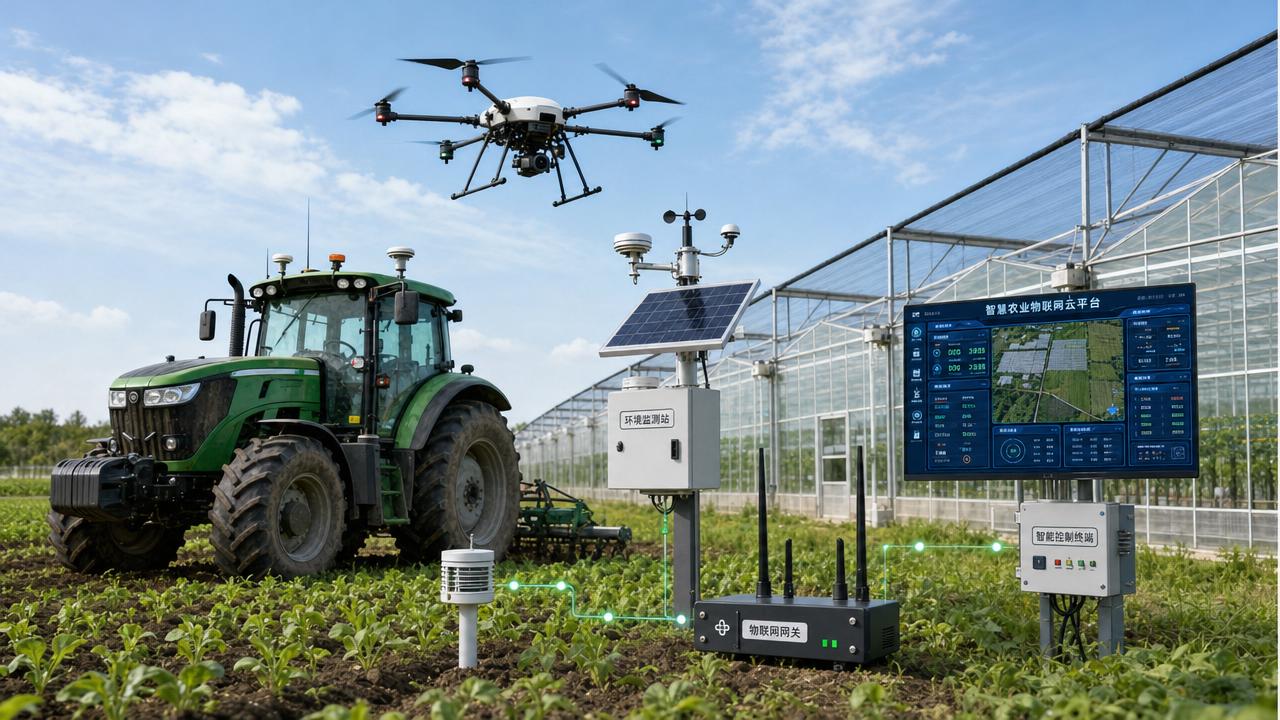
Before scaling agricultural IoT across tractors, drones, harvesters, greenhouses, and livestock systems, technical evaluators need a clear view of hidden failure points. Connectivity alone does not create resilient operations.
In agriculture, weak sensors, unstable networks, poor integration, and rushed cybersecurity decisions can quietly damage uptime, yield, compliance, and return on investment. These risks usually appear after expansion, not during pilots.
This guide explains which agricultural IoT risks deserve verification before full deployment. It focuses on practical checks for machinery, field infrastructure, greenhouse controls, and livestock automation environments.
What makes agricultural IoT risk different from standard industrial IoT?
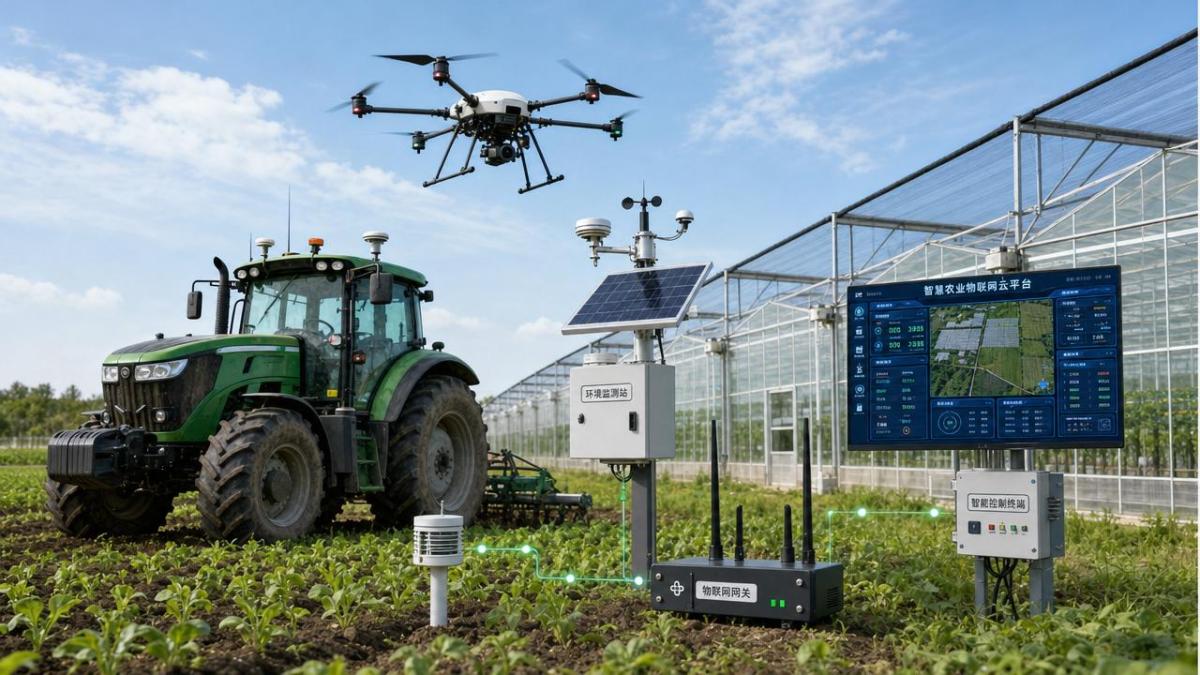
Agricultural IoT works in moving, dirty, exposed, and highly seasonal environments. That makes risk assessment harder than in fixed indoor factories with stable power, cleaner air, and controlled temperatures.
A smart tractor may depend on GNSS, RTK correction, CAN bus signals, telematics gateways, and cloud analytics at the same time. One weak link can interrupt the entire digital chain.
A drone fleet faces additional pressure. Wind, terrain-following radar, battery cycles, geofencing logic, and prescription map accuracy all affect mission safety and spray precision.
Greenhouse systems carry another profile. They depend on continuous sensing, climate control logic, irrigation dosing, and alarm reliability. Minor drift can cause hidden crop stress for days.
Livestock automation adds animal welfare exposure. If feeding robots, milking systems, or monitoring tags fail, the consequence is not only downtime. It can quickly become a biological and compliance issue.
For that reason, agricultural IoT risk must be judged through three lenses:
- Environmental toughness under dust, vibration, heat, moisture, and chemicals
- Operational continuity during narrow planting, spraying, and harvest windows
- Decision accuracy when automated actions depend on real-time data streams
Which data and sensor risks should be checked before full agricultural IoT deployment?
Many agricultural IoT projects fail quietly because the data looks available but is not trustworthy enough for automated decisions. Bad data often hides behind polished dashboards.
Sensor drift and calibration decay
Moisture probes, temperature sensors, flow meters, load cells, and nutrient dosing sensors can drift over time. Dust, corrosion, shock, and chemical residue accelerate that drift.
A greenhouse may over-irrigate because an EC sensor slowly deviates. A sprayer may under-apply because flow feedback loses accuracy after field vibration and nozzle wear.
Positioning dependence
Autonomous guidance often relies on RTK or similar correction signals. If correction availability drops, centimeter-level accuracy disappears and overlaps or skips increase.
That risk matters most for planting, strip-till, controlled traffic farming, and night operation. It also affects drones using terrain-aware or mapped flight paths.
Data context loss
Agricultural IoT data becomes misleading when context is missing. Machine logs without weather, soil conditions, implement settings, or operator overrides can produce wrong conclusions.
Before deployment, verify timestamp consistency, unit standardization, location tagging, and event traceability. Data quality rules should exist before analytics and automation rules are activated.
Practical checks
- Define calibration intervals for each critical sensor
- Test failover behavior when RTK corrections disappear
- Set data validity thresholds before control actions trigger
- Record manual overrides and maintenance events in the same system
How serious are connectivity and integration risks in agricultural IoT systems?
Connectivity is often the most visible agricultural IoT issue, but integration is usually the more expensive one. A connected machine is not automatically an interoperable machine.
Network instability in remote areas
Fields and ranches often have uneven cellular coverage. Greenhouses may face local Wi-Fi dead zones. Metal structures, terrain, and weather can reduce signal quality unexpectedly.
If applications require constant cloud access, outages can stop telemetry, remote support, task syncing, or compliance logging. That design becomes risky during peak seasonal windows.
Platform silos
A tractor platform, drone platform, weather platform, and irrigation platform may each work well alone. Yet full value disappears when they cannot exchange clean operational data.
Common symptoms include duplicate maps, mismatched work orders, inconsistent field boundaries, and delayed reporting. These issues reduce trust in agricultural IoT at the management level.
Protocol and legacy compatibility
Older implements, controllers, and livestock systems may not support modern APIs or standard communication layers. Integration then depends on adapters, custom middleware, or manual export routines.
Every extra bridge creates another failure point. It also increases maintenance complexity after software updates or hardware replacement cycles.
A stronger agricultural IoT design supports local operation during outages, synchronized recovery after reconnection, and open integration paths for future equipment changes.
What cybersecurity risks are most often underestimated in agricultural IoT?
Cybersecurity in agricultural IoT is often treated as an IT afterthought. That is dangerous because machinery control, application records, and biological environments now depend on connected devices.
Weak authentication and device sprawl
Large deployments can include gateways, cameras, drones, sensor nodes, tablets, routers, controllers, and service laptops. If passwords are reused, attack surfaces multiply fast.
Unpatched firmware
Field devices may remain unpatched because update windows are hard to schedule. But known vulnerabilities in modems, cameras, and control units are commonly exploited.
Operational consequences
A cyber event in agricultural IoT can block telemetry, alter prescriptions, disrupt climate control, or lock access to machine history. The result is physical, financial, and reputational damage.
Security planning should include segmented networks, role-based access, encrypted transmission, signed firmware, asset inventories, and incident response drills tied to field operations.
Minimum validation list
- Can critical systems run safely in offline mode?
- Are software updates tested before peak season?
- Is device ownership clearly documented?
- Are third-party access rights reviewed regularly?
How do environmental stress and machinery realities affect agricultural IoT reliability?
Agricultural IoT must survive real field punishment. Laboratory success does not guarantee reliability on high-horsepower tractors, harvesters, balers, or drone support stations.
Vibration can loosen connectors. Mud can block ports. Heat can shorten battery life. Fertilizer, pesticides, and manure gases can accelerate corrosion and degrade seals.
In harvest operations, dust loads can overwhelm cooling paths and optical components. In livestock barns, humidity and ammonia create another harsh electronics profile.
Agricultural IoT hardware should be checked for enclosure rating, connector quality, shock tolerance, cable routing, antenna placement, and serviceability in dirty conditions.
Reliability testing should simulate real duty cycles, not only static benchmarks. Seasonal stress, washdown procedures, battery aging, and operator handling all deserve evaluation.
What cost, timeline, and ROI mistakes can derail agricultural IoT rollout?
The biggest agricultural IoT budgeting mistake is treating deployment as a hardware purchase. Full cost includes integration, training, support, recalibration, subscriptions, and replacement planning.
Another common mistake is expanding too quickly from pilot to full fleet. A successful test in one field or one greenhouse zone may not represent the entire operating environment.
ROI should not be measured only through labor reduction. Better metrics include overlap reduction, input savings, reduced downtime, improved traceability, yield stability, and faster issue detection.
A phased agricultural IoT roadmap usually works better:
- Validate data quality and network resilience
- Integrate one high-value workflow end to end
- Stress-test support and maintenance routines
- Scale only after measurable reliability targets are met
Which pre-deployment checklist helps compare agricultural IoT risks clearly?
The table below summarizes the most important agricultural IoT checks before full deployment across machinery, drones, greenhouse systems, and livestock automation.
Agricultural IoT creates strong value when precision, automation, and operational intelligence work together. But scaling too fast without verifying risk can turn digital promise into expensive fragility.
Before full deployment, test data trustworthiness, RTK dependency, connectivity resilience, cybersecurity hygiene, integration depth, and hardware durability under real agricultural pressure.
A disciplined agricultural IoT review supports better uptime, cleaner decisions, and stronger long-term returns across tractors, harvesters, drones, CEA systems, and livestock operations.
Use these checks as a deployment gate, not a post-installation fix list. That approach keeps digital agriculture grounded in reliability, scalability, and field-proven operational value.
Related Intelligence