
Precision Agriculture Technology for Better Field Decisions
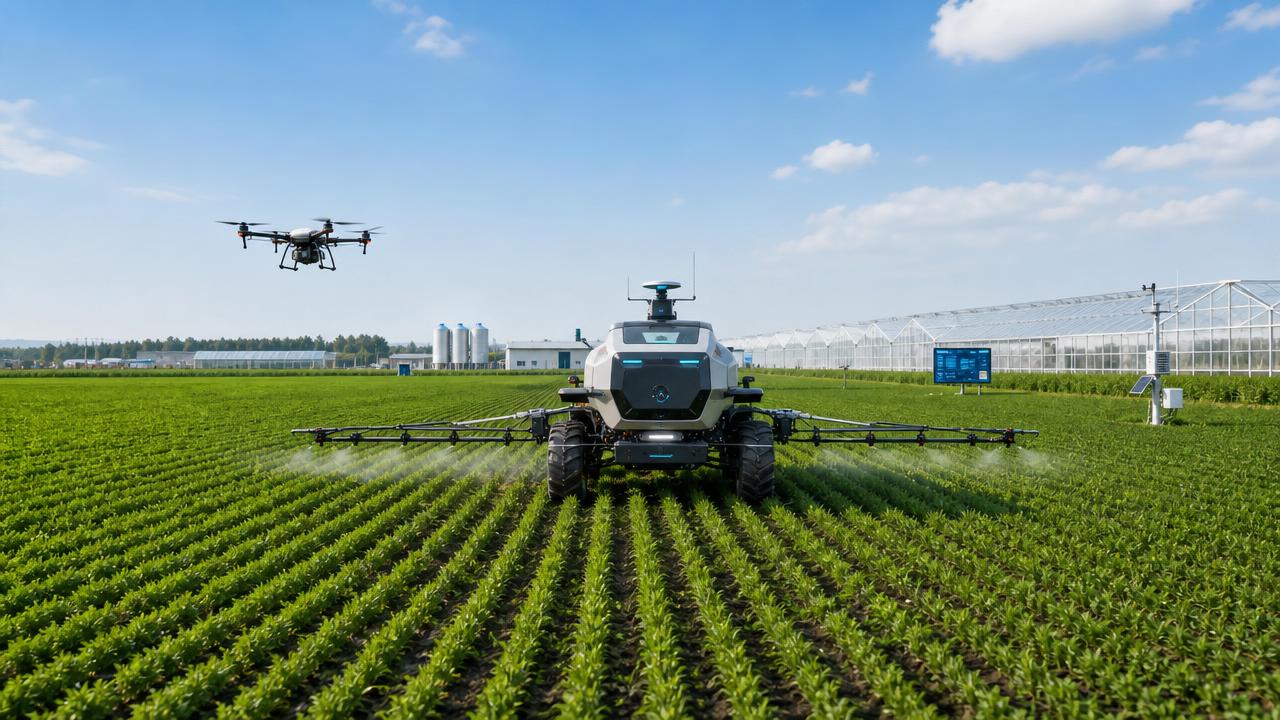
Precision agriculture technology is changing how farms make field decisions under pressure from labor shortages, volatile weather, and yield expectations. It combines machinery, sensors, connectivity, and analytics into one operating system for modern agriculture.
From RTK-guided tractors to drone scouting and greenhouse climate control, precision agriculture technology helps convert raw field data into practical action. Better decisions now depend on timing, accuracy, machine coordination, and measurable return.
Why Precision Agriculture Technology Needs a Clear Evaluation Framework
Precision agriculture technology includes many tools, but field performance depends on how well they work together. A strong evaluation framework prevents isolated investments that add complexity without improving productivity.
This matters across the broader industrial landscape because agriculture now overlaps with automation, software, robotics, hydraulics, energy management, and data intelligence. Field decisions are no longer mechanical alone.
A structured review also helps compare systems across tractors, harvesters, drones, CEA facilities, and livestock automation. The goal is simple: improve per-acre results, reduce waste, and protect operational continuity.
Core Points to Review Before Adopting Precision Agriculture Technology
Use the following points to assess whether precision agriculture technology can support better field decisions, stronger machine utilization, and more reliable agronomic outcomes.
- Confirm data accuracy first. RTK guidance, sensor calibration, and drone imagery quality must be stable before prescriptions, route planning, or variable-rate actions can be trusted.
- Check equipment interoperability. Tractors, implements, drones, harvesters, and farm software should exchange data smoothly instead of creating disconnected information silos.
- Measure timing sensitivity. Precision agriculture technology creates value when actions happen within narrow weather, moisture, and crop-growth windows, not merely when data exists.
- Review operator workload reduction. The best systems simplify steering, spraying, scouting, and monitoring rather than adding layers of dashboards and manual correction.
- Evaluate input efficiency. Variable-rate seeding, fertilizer placement, and targeted crop protection should cut overlap, misses, and unnecessary application volume.
- Examine machine power matching. High-horsepower tractors and harvesting lines must align with field size, implement width, residue load, and transport constraints.
- Assess connectivity resilience. Precision agriculture technology depends on dependable signal coverage, data sync, and local fallback options when networks become unstable.
- Verify analytics usability. Yield maps, NDVI layers, and machine logs must translate into simple field decisions, not unread reports with little agronomic meaning.
- Check maintenance readiness. Sensors, hydraulic systems, batteries, rotors, nozzles, and autonomous modules require service plans that match local operating conditions.
- Calculate ROI beyond purchase price. Include fuel savings, labor relief, water efficiency, reduced compaction, higher yield consistency, and shorter harvest completion time.
How Precision Agriculture Technology Supports Better Decisions in Key Applications
High-HP Tractors and Guidance Systems
In broadacre farming, precision agriculture technology often begins with steering accuracy. RTK-enabled tractors reduce overlap during planting, tillage, and fertilizer application while improving night operations and pass-to-pass consistency.
The key checks are correction signal reliability, implement control response, and compatibility with variable-rate prescriptions. Straight lines matter, but section control and execution accuracy matter just as much.
Combine Harvesters, Balers, and Harvest Timing
During harvest, precision agriculture technology improves timing and throughput. Machine telemetry, grain-loss monitoring, and route coordination help operators respond faster to moisture shifts and bottlenecks.
Balers add another decision layer. Residue density, transport planning, and machine synchronization determine whether the post-harvest chain captures value or creates avoidable delays.
Precision Ag Drones for Scouting and Spraying
Drone-based precision agriculture technology offers fast surveillance and targeted treatment. Multispectral imaging detects stress patterns early, while terrain-following spray systems improve coverage in uneven fields.
Field decisions improve when drone outputs feed actionable prescription maps. Important checks include droplet penetration, payload efficiency, battery logistics, and image interpretation consistency.
Greenhouse and Controlled Environment Agriculture
In CEA, precision agriculture technology controls variables rather than reacting to open-field uncertainty. Sensors manage temperature, humidity, irrigation, CO2, and light to stabilize plant growth.
The essential review points are climate control precision, fertigation accuracy, water recirculation, and data-driven crop scheduling. Good greenhouse automation improves yield density and resource efficiency simultaneously.
Livestock Automation and Feed Systems
Precision agriculture technology also supports livestock through feeding automation, milking systems, and behavioral monitoring. Better decisions come from linking machine activity with animal health and production metrics.
Important checks include ration consistency, machine uptime, sensor cleanliness, and alert thresholds. Automation succeeds when biological performance improves, not only when labor inputs decline.
Commonly Overlooked Gaps and Risk Signals
One frequent mistake is buying advanced hardware without a decision workflow. Precision agriculture technology produces value only when collected data changes actions in the field.
Another risk is overestimating autonomy. Guidance and automation reduce operator burden, but difficult terrain, changing crop conditions, and service interruptions still require skilled oversight.
Data quality is also underestimated. Poor calibration, weak georeferencing, and inconsistent sampling can make variable-rate recommendations look scientific while degrading real performance.
A further issue is fragmented ROI analysis. If fuel, labor, water, input savings, and yield stability are not measured together, investment decisions become distorted.
Cybersecurity and ownership of operational data deserve attention as well. Connected machines, cloud platforms, and sensor networks increase efficiency, but they also expand digital risk exposure.
Practical Steps for Smarter Implementation
- Start with one high-impact workflow, such as guidance, spraying, or harvest monitoring. Narrow scope makes performance gains easier to verify.
- Define baseline metrics before deployment. Track overlap, fuel use, labor hours, application rates, moisture windows, and output per acre.
- Standardize data collection rules. Consistent naming, mapping layers, and reporting periods make precision agriculture technology easier to compare across seasons.
- Connect agronomy and machinery review. Machine capability should support crop strategy rather than operate as a separate technical project.
- Plan service response early. Spare parts, software updates, and calibration routines are essential to keeping systems decision-ready during peak periods.
FAQ About Precision Agriculture Technology
What is the main purpose of precision agriculture technology?
Its main purpose is to improve field decisions through accurate data, targeted inputs, machine coordination, and better timing across crop and livestock operations.
Which system usually delivers the fastest visible gains?
Guidance and section control often show quick gains because they reduce overlap, save inputs, improve pass accuracy, and lower operator fatigue immediately.
Can precision agriculture technology work without full autonomy?
Yes. Many farms gain value from assisted steering, telemetry, variable-rate tools, and sensor-based decisions before adopting higher levels of automation.
How should performance be reviewed over time?
Review agronomic results, machine uptime, input efficiency, labor savings, and seasonal consistency together. One metric alone rarely shows the full impact.
Final Takeaways for Better Field Decisions
Precision agriculture technology is most valuable when machinery, analytics, and execution timing operate as one system. Better field decisions come from coordination, not from isolated smart devices.
A practical next step is to review one operational chain end to end. Choose planting, spraying, harvesting, greenhouse control, or feeding, then measure where precision agriculture technology can remove waste.
For industry observers tracking global smart machinery, this structured approach reveals which technologies truly improve yield, efficiency, and resilience across modern agriculture.
Related Intelligence