
Precision Farming ROI: Where Savings Show Up First
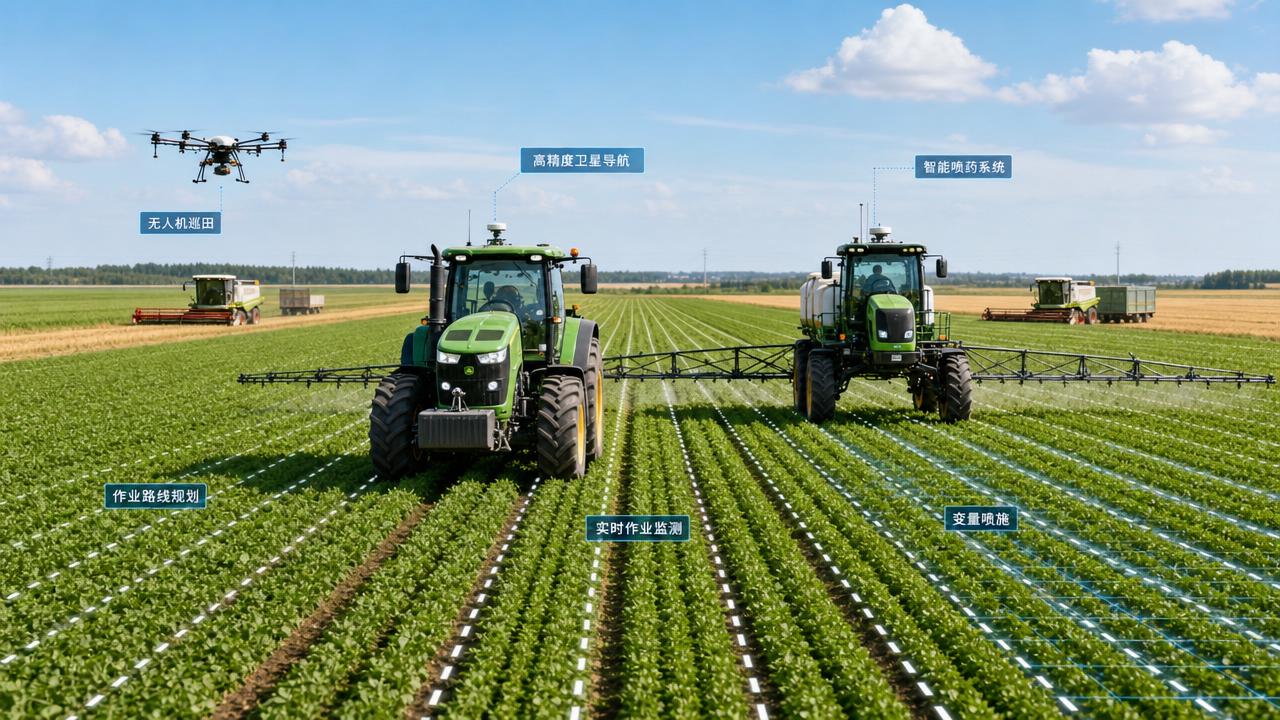
For finance approvers, the ROI of precision farming becomes credible when savings appear early and measurably. In most operations, the first gains show up in lower fuel use, reduced input waste, fewer labor hours, and tighter machine utilization—often before yield improvements are fully realized. This article breaks down where those savings emerge first, how to evaluate payback with confidence, and which smart agriculture investments deserve priority in capital planning.
When Precision Farming Delivers Fastest in Broad-Acre Operations
The first precision farming savings usually appear in repetitive field work. Broad-acre farms feel results fastest because passes are frequent, fuel use is high, and overlap waste compounds quickly.
RTK guidance, section control, and machine telematics often create visible cost reductions within one season. These gains are easier to verify than yield gains, which depend on weather and market timing.
In the SAMS ecosystem, high-horsepower smart tractors and connected harvesting systems create the clearest early evidence. Straight-line accuracy reduces overlap. Better routing cuts idle time. Data logs improve accountability.
Early ROI signals in tillage, planting, and spraying
Deep tillage consumes substantial diesel and operator hours. Precision farming reduces duplicated passes and improves traction discipline. Even small percentage savings become meaningful across large fields.
At planting, centimeter-level RTK minimizes skips and doubles. Uniform row spacing also improves downstream operations, including side-dressing, spraying, and harvest alignment.
During spraying, section control and prescription maps often produce the most immediate input savings. Fewer overlaps mean less chemical waste, lower refill frequency, and better use of narrow weather windows.
Where Savings Show Up First Across Different Precision Farming Scenarios
Not every operation sees ROI in the same order. Precision farming payback depends on field size, crop value, labor pressure, machine intensity, and whether losses come from fuel, inputs, or scheduling delays.
The practical question is not whether precision farming works. The real question is where the first measurable savings surface under specific operating conditions.
Scenario 1: Large grain farms with long machine hours
Here, fuel and machine utilization usually improve first. Guidance reduces overlap. Telematics expose unproductive idle time. Harvest logistics become tighter, especially when combines and grain carts share live location data.
The first precision farming win is often simple: more acres covered per day with the same iron. That alone can defer equipment expansion and improve seasonal capacity.
Scenario 2: Input-heavy row crop systems
Fertilizer and crop protection costs dominate these systems. Variable-rate application, auto shutoff, and drone-supported scouting usually generate early savings through lower waste and more targeted intervention.
Precision farming becomes especially compelling when input prices rise. A modest reduction in overapplication can create a clear payback path, even before any yield response appears.
Scenario 3: Labor-constrained mixed farming
Where skilled operators are scarce, automation often justifies investment faster than agronomy alone. Auto-steer, task recording, and guided headland turns reduce fatigue and shorten training time.
The first savings show up in labor efficiency, fewer mistakes, and better schedule reliability. Precision farming also helps keep operations moving at night or during compressed weather windows.
Scenario 4: Greenhouse and CEA environments
In controlled systems, precision farming extends beyond field guidance. Sensors, fertigation control, and climate automation create early savings through water efficiency, nutrient dosing accuracy, and lower manual intervention.
Because conditions are monitored continuously, ROI can be easier to document. Resource use per kilogram produced becomes a powerful metric in capital planning.
How to Judge Precision Farming ROI with Confidence
A credible precision farming business case starts with baseline measurement. Without a before-and-after comparison, savings claims stay theoretical and difficult to defend.
Track a small set of indicators first, then expand. Keep the framework simple enough to survive one full season of practical use.
- Fuel used per acre or per hectare
- Input applied per treated area
- Labor hours per field operation
- Acres completed per machine day
- Overlap percentage in spraying or planting
- Idle time and transport time
Precision farming ROI improves when these indicators are linked to actual invoices, machine logs, and work orders. Field-level evidence beats broad assumptions every time.
A practical payback formula
Use a conservative model. Add annual fuel savings, annual input savings, annual labor savings, and annual machine efficiency gains. Then subtract subscriptions, correction signals, training, and maintenance.
If yield benefits are uncertain, exclude them from the first model. Precision farming often clears internal approval faster when the payback works without optimistic yield assumptions.
Different Precision Farming Needs by Operating Scenario
The strongest investment choice depends on where losses happen now. The table below helps align precision farming tools with the first savings opportunity.
Which Precision Farming Investments Usually Deserve Priority
When budgets are staged, start with technologies that create visible operational savings. These usually outperform complex systems that require several seasons before benefits become obvious.
- RTK guidance for tractors with heavy annual field hours
- Section control on sprayers and planters
- Telematics for machine time, idle monitoring, and routing
- Drone scouting where field variability is high
- Sensor-based climate and fertigation control in CEA
SAMS closely tracks these priorities because they connect directly to measurable throughput, lower waste, and stronger per-acre economics. They also support later upgrades without forcing a full digital reset.
Common Precision Farming Misjudgments That Delay Payback
A common mistake is focusing only on yield uplift. Precision farming often earns trust faster through cost control, consistency, and timing improvements.
Another mistake is buying disconnected tools. If guidance, maps, machine logs, and application data do not connect, measurement becomes weak and user adoption slows.
Some operations also underestimate training. Even excellent systems lose value when calibration, data transfer, or prescription execution are inconsistent.
- Do not assume every field needs the same precision farming stack
- Do not count yield gains before documenting cost reductions
- Do not ignore subscriptions and correction signal fees
- Do not skip operator workflow testing during peak season
A Practical Next Step for Building a Precision Farming ROI Case
Start with one season, two operations, and a short metrics list. For example, compare spraying overlap, fuel use, and labor hours before and after guidance plus section control.
Then expand only after the first savings are documented. This staged method makes precision farming easier to evaluate and easier to scale across tractors, harvesters, drones, or CEA systems.
Precision farming ROI becomes persuasive when the first wins are operational, visible, and repeatable. In most cases, fuel, inputs, labor, and machine utilization reveal those wins first.
For organizations tracking the future of smart agriculture, that is where disciplined capital planning should begin: with measurable waste reduction today, followed by higher resilience and yield performance tomorrow.
Related Intelligence