
Digital Farm Management Platforms: Choosing Features for Multi-Field Operations
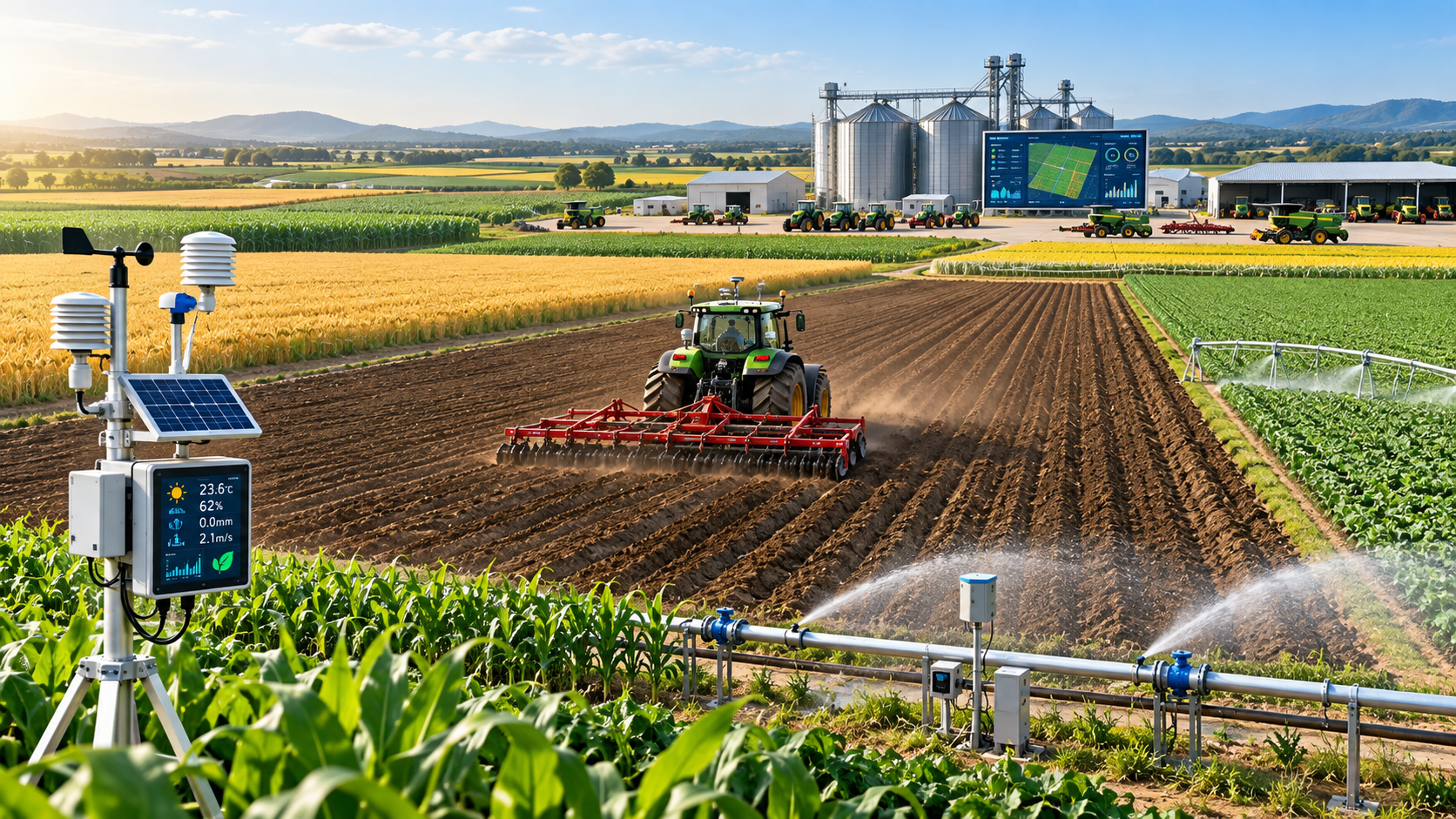
Managing a farm across several fields, rented parcels, grower locations, or production sites is rarely a simple matter of seeing dots on a map. Project leaders need to know what happened, where it happened, who performed the work, which inputs were used, whether machinery was available, and what still needs attention before weather or crop timing closes the window.
A digital farm management platform brings those moving parts into a shared operational record. For multi-field operations, the right system is not necessarily the one with the longest feature list. It is the one that reflects how work actually moves from planning to execution, verification, analysis, and the next season’s decisions.
This selection guide is designed for farm project managers, engineering leads, cooperative coordinators, and procurement teams assessing digital farm management platforms for dispersed or complex operations. It focuses on the features that make a measurable difference when machinery, people, agronomy, and field data must work as one system.
Begin with the operating model, not the software demonstration
Software evaluations often begin with dashboards. That is understandable: a clean screen can make a platform feel organized before anyone has tested it under pressure. But a multi-field operation should start somewhere less glamorous—its own workflow.
Map the season as it is currently managed. A planting campaign may involve seed allocation, field access checks, tractor and planter scheduling, RTK guidance records, operator instructions, weather monitoring, fuel planning, and post-operation verification. Harvest may introduce a different chain: combine availability, header changes, grain cart coordination, moisture records, transport routing, storage capacity, and machine downtime.
If the proposed platform cannot make these handoffs easier, it may become another place where staff must enter data after work is already complete. That is a common reason for low adoption. The platform should reduce operational friction, not create an additional reporting burden for operators and supervisors.
Before comparing vendors, document several practical questions:
- How many fields, blocks, farms, and legal entities must be managed in one view?
- Which activities require same-day visibility: spraying, irrigation, harvesting, feeding, transport, or labor allocation?
- What equipment brands and telematics systems are already in use?
- Which records are essential for compliance, input traceability, contracts, or internal cost control?
- Where are decisions currently delayed because data sits in spreadsheets, paper job sheets, or separate machine portals?
These answers turn a vague technology purchase into a defined project requirement.
The core requirement: a dependable field and asset master record
Multi-field farms frequently struggle with inconsistent naming and boundaries. One team may call a parcel “North 12,” another may record it as “N-12,” while a contractor sees only a local grower name. Once records are fragmented, cost and performance analysis becomes unreliable.
A capable digital farm management platform should maintain a structured master record for each field: boundaries, acreage or hectares, crop history, soil zones, irrigation infrastructure, drainage notes, access constraints, ownership or lease information, and relevant environmental restrictions. It should also support farms, blocks, and management groups so a regional manager can review the entire portfolio while a site supervisor sees only the fields under their control.
Boundary management deserves careful attention. Look for import and export support for standard geographic file formats, revision history, and clear rules for who can edit field geometry. Inaccurate boundaries can distort fuel-per-hectare calculations, application totals, yield comparisons, and machine productivity reports. A platform that manages areas casually will undermine more advanced analytics later.
Features that matter when work is happening across the map
Live machinery visibility with useful context
Location tracking alone is not enough. A project manager needs to distinguish between a tractor traveling, idling, working, refueling, or waiting for service. During narrow planting or harvest windows, this operational context is what allows a team to respond before lost time becomes lost output.
Evaluate whether the platform can show machine position, task status, route history, engine or hour-meter data, fuel indicators where available, and alerts for abnormal idle time or geofence events. For high-horsepower tractors, combines, balers, self-propelled sprayers, and drone teams, the system should link machine activity to a specific field and job rather than present movement as a disconnected map layer.
Real-time visibility is particularly valuable when farms are spread across long distances or when external contractors are involved. Still, avoid paying for constant tracking if your operating model mainly needs end-of-day task confirmation. Match the data frequency to the decisions your team actually makes.
Task planning that reaches the field crew
A task module should do more than create a digital to-do list. It should connect the operation to the field, crop stage, machinery, operator, inputs, safety notes, and expected completion window.
For example, a variable-rate fertilizer task may include the assigned field zones, the prescription file, approved product, target application rate, equipment configuration, weather constraints, and a deadline based on crop growth stage. When completed, the actual rate, area, time, operator, and machine should return to the same record.
Mobile usability is decisive here. Operators need a clear, fast interface that works in cab conditions and in areas with weak connectivity. Offline capability, later synchronization, photo attachments, voice notes, and simple exception reporting can be more valuable than elaborate planning screens. Ask to see a task completed from a mobile device, not merely created in an office demonstration.
RTK, guidance, and operation records that can be trusted
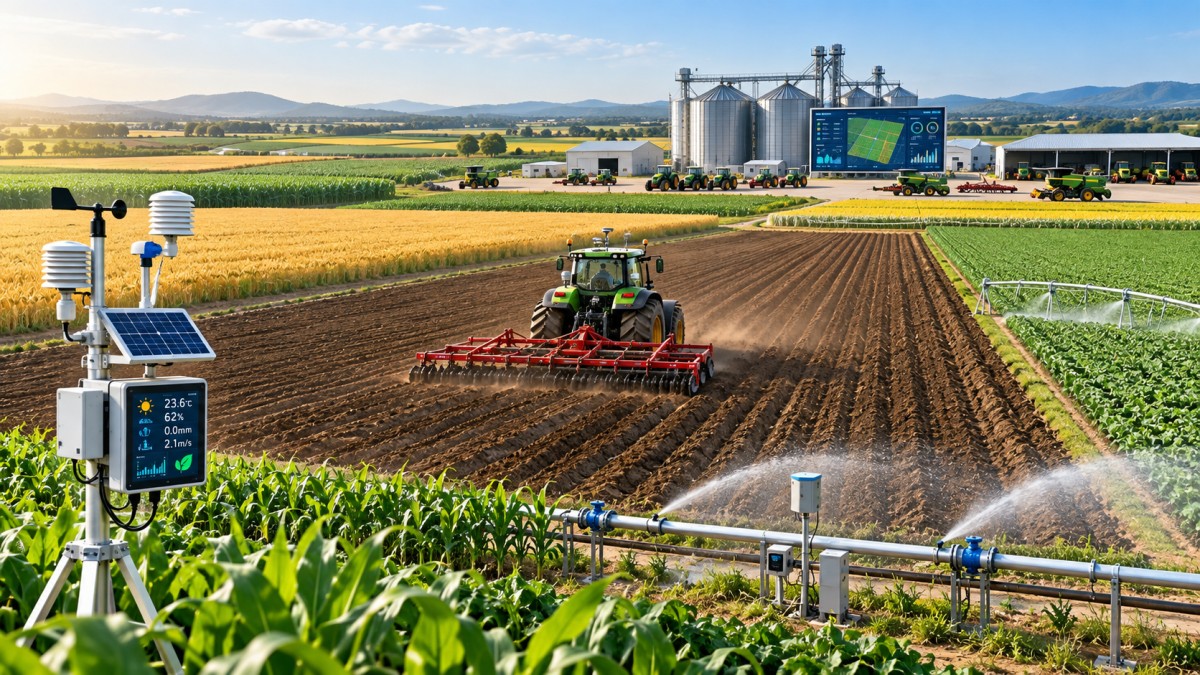
Precision agriculture systems generate valuable data, but the value disappears when records remain locked inside separate displays or vendor portals. For operations using RTK autonomous steering, section control, precision planters, or yield monitoring, the platform should consolidate as-applied and as-harvested records in a form that managers and agronomists can use.
Check support for guidance lines, coverage maps, application records, machine work logs, and imports from common equipment ecosystems. The goal is not to force every machine into one proprietary environment. It is to establish a reliable operational layer above mixed fleets.
Data provenance matters. Users should be able to tell whether a record came from a machine controller, a manually entered job report, a sensor, a drone survey, or an imported spreadsheet. When performance or compliance is questioned, traceability is far more useful than a polished chart with unclear origins.
Precision planning should connect sensing to action
Multi-field operations often accumulate satellite imagery, drone images, soil test results, NDVI maps, and yield layers without converting them into better field decisions. A stronger platform closes the loop.
For crop enterprises, assess whether the system can organize layers by field and season, compare imagery dates, define management zones, attach scouting observations, and create or import prescription maps for variable-rate seeding, fertilization, or spraying. It should accommodate the practical reality that a field recommendation may need approval from an agronomist, farm manager, or client before it becomes an executable task.
The same principle applies beyond row crops. Greenhouse managers may prioritize sensor trends, climate setpoints, fertigation recipes, water consumption, and alarm history. Livestock producers may need feeding plans, pen-level observations, equipment uptime, or milk and animal activity records. A broad platform is only useful when its modules fit the enterprise rather than burying staff in irrelevant menus.
Integration is an operational risk question
Every vendor claims integration capability. Procurement teams should ask a more precise question: which systems exchange what data, in which direction, and how reliably?
A digital farm management platform may need to connect with tractor telematics, combine data systems, irrigation controllers, weather stations, farm accounting tools, inventory records, drone processing software, laboratory data, or enterprise resource planning systems. Some connections may be ready-made; others may require APIs, middleware, manual imports, or custom development.
Request an integration matrix during evaluation. It should identify the source system, the data object, refresh frequency, responsible party, export options, and any additional cost. A one-way import of machine hours is very different from a two-way workflow that sends planned jobs to operators and returns verified completion data.
Data ownership and exit rights should be reviewed before signing. Confirm who owns field records, machine data, imagery-derived outputs, and historical reports; how long data remains accessible; and how it can be exported if the organization changes providers. This is not a legal detail to leave until the end. Over several seasons, the platform may become one of the farm’s most valuable operational archives.
Financial visibility: move beyond total spend
Project leaders are often asked to justify digital investment in terms of ROI. The platform should make that analysis practical without pretending that every agronomic outcome can be assigned to one software tool.
Useful financial functions include field-level budgets, actual-versus-planned input use, labor and machine cost allocation, fuel tracking, contractor charges, and cost per hectare or acre. For a harvesting operation, compare machine hours, idle periods, fuel use, throughput, moisture-related delays, and cost by crop or site. For irrigation projects, review water use, energy consumption, runtime, and exceptions by zone.
Look for reports that can be filtered by season, enterprise, geography, crop, machine, and activity. A single average across all fields can hide the management issue that deserves attention: a recurring access delay, an underperforming irrigation block, excessive overlap during spraying, or one machine consuming disproportionate maintenance time.
Equally important, distinguish leading indicators from final financial outcomes. Timely completion of planting, fewer missed service intervals, lower rework, cleaner application records, and reduced administrative hours may show operational value before a full season of yield and margin data is available.
Implementation capacity is a feature in its own right
The best-fit platform can fail if implementation assumes that everyone will change behavior overnight. Multi-field deployment should be phased. Start with a defined use case that matters to the operation—such as work orders and machine tracking during planting, irrigation exception management, or harvest logistics. Establish clean field records, user roles, naming conventions, and responsibility for reviewing exceptions.
Training should be tailored. A regional manager needs portfolio reporting; an equipment supervisor needs maintenance and machine status; an operator needs a short path to accept, complete, or flag a job. Asking every user to learn every module is costly and discouraging.
Set acceptance criteria before rollout. Examples include the percentage of active fields with validated boundaries, the share of jobs completed digitally, the time required to produce a weekly operations report, and the completeness of input traceability. These measures reveal whether the system is becoming part of work rather than simply accumulating data.
A practical shortlist decision
When comparing platforms, score each candidate against your highest-risk workflows, not generic feature categories. A system with strong dashboards but weak offline task execution may be unsuitable for remote field crews. A machine-focused platform may excel at fleet data but offer limited crop and input traceability. An agronomy-oriented system may handle prescriptions well yet struggle with maintenance, labor, or contractor coordination.
For most multi-field organizations, the strongest choice balances five areas: a dependable field structure, mobile task execution, machinery and RTK data connectivity, usable integration pathways, and reports that link operations to cost and performance. Advanced analytics, artificial intelligence, and automation can add value, but they should sit on top of disciplined records—not substitute for them.
A well-chosen digital farm management platform gives project leaders a clearer picture of what is happening across dispersed land, assets, and teams. More importantly, it creates a shared operating rhythm: plan the work, send it to the right people and machines, confirm what occurred, learn from the result, and act earlier next time. In modern agriculture, that continuity is often where better decisions begin.
Related Intelligence