
Farm Operations Optimization Market: What Buyers Should Watch Through 2026
Farm Operations Optimization Market: What Buyers Should Watch Through 2026
Introduction: As labor pressures, input costs, and climate volatility reshape agricultural investment decisions, the farm operations optimization solutions market is becoming a critical focus for procurement teams.
Through 2026, buyers should evaluate more than machine specifications: interoperability, automation readiness, data integration, lifecycle costs, service support, and measurable per-acre ROI will increasingly determine value.
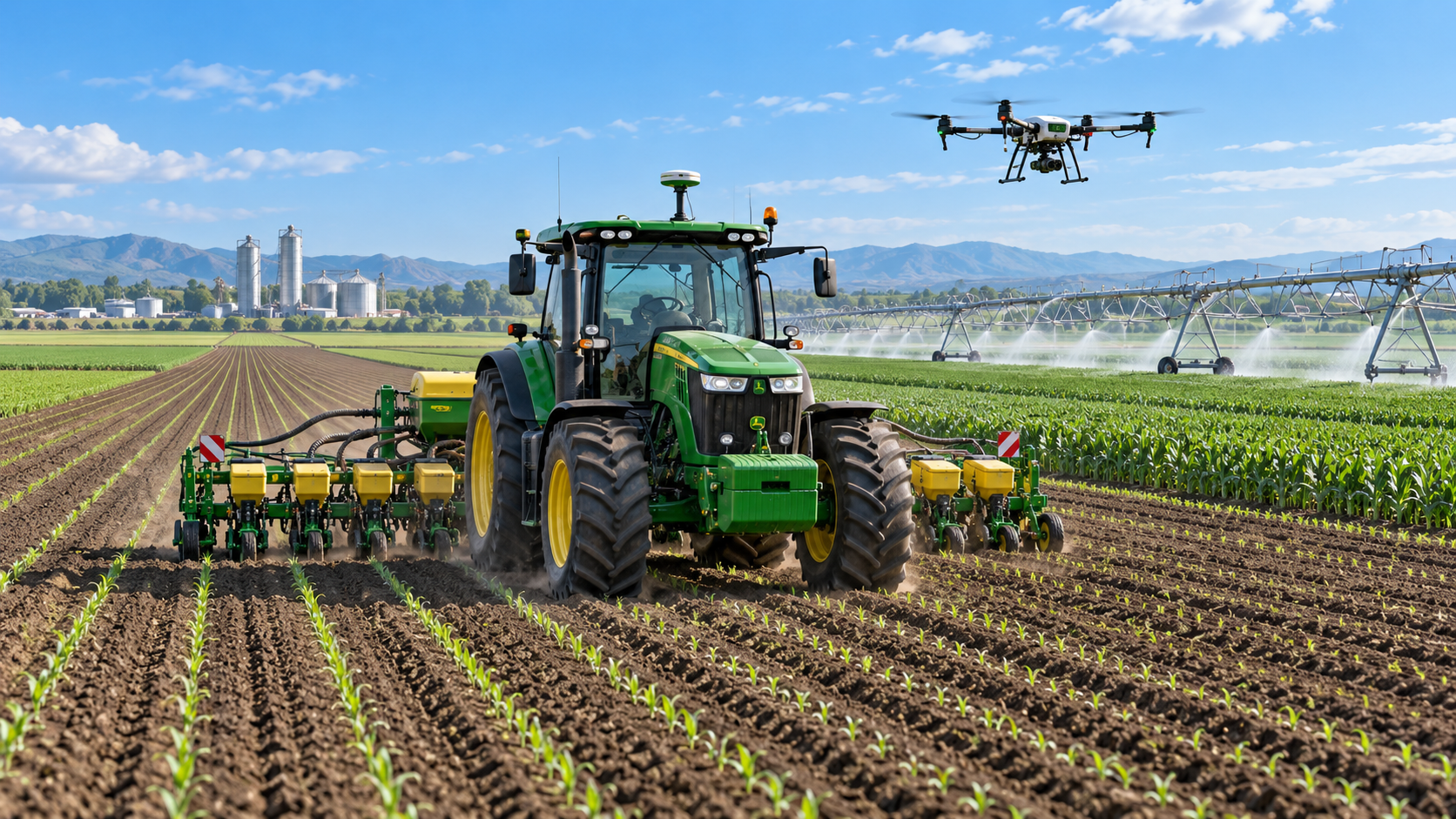
From RTK-guided tractors and precision drones to greenhouse controls and livestock automation, smarter purchasing decisions can strengthen productivity, resilience, and long-term farm profitability.
For procurement teams, the central question is no longer whether farm optimization technology is useful. It is whether a proposed solution can improve operational outcomes within existing farm workflows.
The strongest investments connect labor, machinery, crop data, maintenance, and input decisions. Isolated equipment upgrades may solve one problem, but integrated systems usually create greater long-term value.
Buyers entering the farm operations optimization solutions market should prioritize operational fit over feature volume. A sophisticated platform has limited value when operators cannot use it reliably.
Procurement decisions should begin with a measurable business problem: labor shortages, excessive fuel use, inconsistent spraying, harvest bottlenecks, water waste, animal management gaps, or weak equipment visibility.
Start With the Operational Bottleneck, Not the Product Category
Farm optimization purchases often fail because teams start with a product request rather than a workflow diagnosis. Buyers should identify where time, money, yield, or quality is currently being lost.
For broad-acre farms, the highest-cost constraint may be operator availability during planting or harvest. In greenhouses, it may be climate inconsistency, irrigation waste, or labor-intensive crop monitoring.
Livestock producers may face different pressures, including feeding accuracy, milking throughput, animal health visibility, and staffing requirements. Each operating model requires a different technology investment logic.
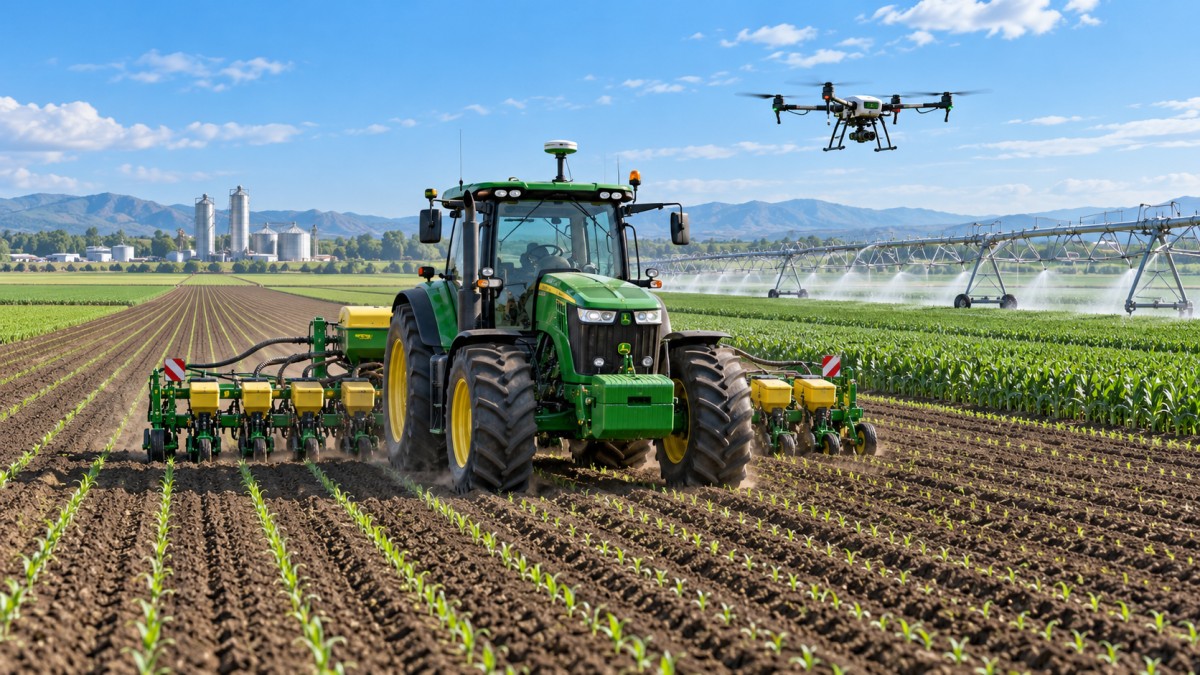
A 300-500 HP tractor with RTK guidance can reduce overlap and operator fatigue, but its return depends on acreage, implement compatibility, field shape, and seasonal utilization.
A precision spraying drone may improve access and reduce chemical exposure, yet its value depends on local regulation, payload capacity, charging logistics, weather windows, and qualified operator availability.
Buyers should quantify the existing baseline before reviewing suppliers. Measure labor hours, diesel use, application overlap, downtime, water consumption, feed waste, crop losses, and quality variation.
Without baseline data, procurement teams cannot distinguish a useful improvement from a compelling sales demonstration. Baselines also create accountability after deployment and support future budget approvals.
Technology selection should follow a simple hierarchy: protect production capacity first, reduce recurring operating costs second, and improve data-driven decision-making third.
For example, a combine harvester upgrade may deserve priority when short harvest windows threaten grain quality. A digital dashboard may wait if equipment utilization data already exists elsewhere.
The farm operations optimization solutions market includes many overlapping technologies. Buyers should avoid buying several tools that collect similar data but cannot share it across platforms.
Evaluate Total Cost of Ownership Instead of Purchase Price
Purchase price remains important, but it is rarely the best indicator of economic value. Farm machinery and digital platforms create costs throughout their operating life.
Procurement teams should model acquisition, financing, installation, training, connectivity, software subscriptions, maintenance, spare parts, insurance, and eventual replacement or resale value.
For autonomous steering systems, recurring correction-signal subscriptions, antenna maintenance, display upgrades, and implementation support can materially change the total annual cost.
For greenhouse automation, buyers should include sensor calibration, actuator servicing, water treatment integration, climate software licenses, and technician support in the financial model.
Service capacity is particularly important for seasonal equipment. A low-cost machine loses its advantage when parts delays interrupt planting, spraying, silage, or harvest operations.
Ask suppliers for documented response-time commitments, local dealer coverage, spare-parts stock policies, remote diagnostics capability, and escalation procedures during peak operating periods.
Buyers should also assess whether technicians understand both mechanical systems and digital controls. Modern farm equipment increasingly requires hydraulic, electrical, software, and connectivity expertise.
Lifecycle analysis should include expected utilization. A high-capacity baler may deliver attractive unit economics for a large contractor but remain underused on a smaller farm.
Conversely, shared ownership, cooperative purchasing, and managed service arrangements can improve access to advanced technology where individual capital budgets are limited.
When comparing quotes, request a five-year or seven-year cost model using consistent assumptions. Supplier proposals should show what is included, excluded, optional, and recurring.
Demand Interoperability Before Expanding the Technology Stack
Interoperability is becoming one of the most important purchasing criteria in the farm operations optimization solutions market. Farms increasingly operate mixed fleets and multiple software environments.
Buyers should not assume that a tractor, implement, drone, sensor network, and farm management platform will exchange data automatically.
Ask whether systems support common standards such as ISOBUS, ISOXML, API connections, telematics exports, shapefile imports, and machine-readable prescription maps.
These capabilities determine whether field data can move from crop planning to machinery execution, then return as verified application and performance records.
A variable-rate fertilization program is only effective when soil data, crop zones, prescription maps, spreader controls, and application records remain connected and auditable.
Similarly, an RTK-guided tractor becomes more valuable when steering lines, field boundaries, implement settings, and operator records can be reused across seasons.
Buyers should request a live demonstration using representative farm data. Generic demonstrations often hide limitations involving file formats, account permissions, connectivity, and reporting workflows.
Data ownership must be addressed contractually. Procurement teams should understand who owns machine data, where it is stored, how it can be exported, and what happens after cancellation.
Vendor lock-in can become expensive when a farm changes machinery brands, acquires neighboring operations, or needs to connect systems from different suppliers.
Require suppliers to specify integration responsibilities. A contract should identify which party configures data flows, resolves compatibility problems, trains users, and maintains software connections.
Assess Automation Readiness at the Farm Level
Automation should be evaluated as an operating model, not merely as a machine feature. Autonomous capability depends on farm processes, infrastructure, safety controls, and people.
RTK guidance, automated headland turns, section control, machine vision, robotic feeding, and climate automation can all reduce manual work, but implementation requirements differ significantly.
Before purchasing autonomous or semi-autonomous equipment, map the task sequence from setup through completion. Identify decisions that still require a skilled operator or manager.
For autonomous tractors, fields need reliable boundaries, correction coverage, obstacle management procedures, maintenance discipline, and clear supervision rules.
For livestock automation, feeding robots require dependable feed preparation, route access, battery management, barn layout compatibility, and routines for reviewing animal alerts.
Automation benefits are strongest where repetitive work is frequent, quality standards are consistent, and manual staffing is difficult to maintain.
They are weaker where tasks vary constantly, fields are fragmented, infrastructure is unreliable, or skilled human judgment remains essential at every step.
Procurement teams should challenge labor-saving claims. Ask whether labor is truly removed, shifted to higher-value work, or simply replaced by technical support requirements.
Labor value should include recruitment difficulty, overtime exposure, seasonal staffing risks, workplace safety, and the cost of operational delays caused by labor shortages.
A credible supplier should provide reference sites with similar acreage, crop systems, climate conditions, livestock scale, or greenhouse production methods.
Connect Precision Agriculture to Verifiable Input Savings
Precision agriculture investments should be linked to specific input decisions. Buyers should avoid treating sensors, drones, and dashboards as standalone digital assets.
The relevant question is whether information changes an action: seeding rate, fertilizer placement, irrigation timing, spray volume, harvest route, or field intervention priority.
Multispectral imaging and NDVI maps can reveal variability, but imagery alone does not create value. Teams need agronomic interpretation and a practical response workflow.
For drone programs, evaluate terrain following, payload, battery turnaround, nozzle performance, coverage quality, local operating rules, and integration with farm records.
For variable-rate application, validate controller compatibility, prescription-map workflows, calibration procedures, and post-application verification data.
Buyers should calculate savings conservatively. Include the cost of sampling, imagery, agronomy support, data processing, equipment calibration, and operator time.
Yield gains may be more difficult to verify than input reductions, especially when weather variability affects results. Use multi-season comparisons where possible.
Procurement teams should seek evidence from comparable production systems, rather than relying solely on average claims across different crops and geographies.
Water management deserves special attention through 2026. Irrigation automation, soil moisture sensing, fertigation controls, and leak detection can protect margins under tighter water constraints.
However, the best irrigation system depends on water quality, pressure stability, field design, pumping costs, crop value, and the farm’s ability to maintain sensors.
Greenhouse and Controlled Environment Buyers Need System-Level Evaluation
Greenhouse optimization should be purchased as a coordinated production system. Climate control, irrigation, fertigation, lighting, CO2 management, and crop planning affect each other.
A climate computer can improve consistency, but results depend on greenhouse structure, ventilation capacity, heating design, sensor placement, and staff response to alarms.
Buyers should evaluate whether proposed controls support crop-specific setpoints, historical trend analysis, remote access, alarm priorities, and integration with fertigation equipment.
For hydroponic systems, assess water treatment, nutrient dosing accuracy, drain management, reservoir design, sanitation requirements, and the availability of technical support.
Energy exposure is another critical issue. Procurement models should account for heating, cooling, dehumidification, lighting, and peak electricity demand under realistic climate scenarios.
Automation can reduce labor dependency in greenhouses, but it should not be used to obscure crop-management requirements. Reliable scouting and crop expertise remain essential.
Request performance evidence that separates technology impact from crop genetics, local climate, grower skill, and production intensity.
For expansion projects, modularity matters. Systems that can add zones, sensors, irrigation lines, or software users may reduce disruption as production capacity grows.
Build ROI Models Around Per-Acre, Per-Head, or Per-Unit Output
Return on investment should be expressed in the operational unit that managers already use. For field crops, that usually means per acre or per hectare.
For dairy and livestock systems, useful measures include per head, per cow, per kilogram of feed, milk yield, mortality reduction, or labor hours per production unit.
For greenhouses, buyers may use yield per square meter, water use per kilogram, energy cost per kilogram, reject rate, or labor hours per harvest cycle.
Strong business cases include direct savings, avoided losses, capacity gains, quality improvements, risk reduction, and revenue protection during critical operating windows.
For example, combine capacity can protect crop value by shortening harvest duration. That value may exceed the easily visible savings from fuel or maintenance.
Buyers should separate hard benefits from assumptions. Hard benefits are supported by payroll records, fuel invoices, application logs, repair history, and production data.
Assumptions may still be reasonable, but they should be stress-tested. Model best-case, expected-case, and downside-case results before authorizing capital expenditure.
Include a realistic adoption curve. Technology rarely reaches full performance immediately because operators need training, workflows need adjustment, and data quality improves gradually.
Procurement teams should define a post-purchase scorecard before signing. This creates shared expectations and gives management a basis for evaluating supplier performance.
Make Service, Cybersecurity, and Adoption Part of the Contract
Digital farm systems are operational infrastructure. Buyers should evaluate cybersecurity, user access controls, software update policies, backup procedures, and data recovery arrangements.
Connected machinery can expose farms to operational disruption if credentials are poorly managed or platforms lose connectivity during critical work periods.
Ask suppliers how they manage remote access, account administration, security patches, incident communication, and system availability.
Training should be role-specific. Operators need practical machine workflows, managers need reporting skills, and maintenance teams need diagnostic and escalation procedures.
One initial training session is rarely enough. Buyers should request onboarding plans, seasonal refreshers, user documentation, and support channels designed for peak periods.
Contracts should define acceptance criteria. This may include installation completion, connectivity validation, operator competence, data export testing, and agreed performance checks.
For large investments, phased deployment can reduce risk. Begin with representative fields, barns, greenhouse zones, or machine groups before enterprise-wide rollout.
A phased approach also helps procurement teams identify hidden integration costs and confirm whether projected operational benefits are actually achievable.
What the Market Will Reward Through 2026
Through 2026, the farm operations optimization solutions market will reward suppliers that combine dependable equipment, open data practices, practical automation, and responsive service.
Buyers will increasingly favor systems that support measurable outcomes rather than isolated technology claims. Reliability during planting, feeding, spraying, and harvest remains fundamental.
Climate volatility will increase demand for tools that improve timing, water management, crop visibility, and operational resilience. Yet resilience requires processes, not only sensors.
Labor constraints will continue to support automation investments, particularly where farms can standardize repetitive tasks and maintain appropriate technical supervision.
At the same time, procurement teams will scrutinize subscription costs, data restrictions, dealer capability, and technology obsolescence more closely than before.
The most valuable suppliers will make implementation easier: interoperable systems, transparent commercial terms, credible support networks, and evidence relevant to the buyer’s production environment.
Conclusion
For procurement teams, farm optimization is not a single equipment category. It is a portfolio of decisions affecting labor, inputs, uptime, data quality, and production risk.
The best purchases begin with a defined operational bottleneck, use total-cost analysis, demand interoperability, and measure results in meaningful farm business units.
Buyers should prioritize technology that fits existing workflows while creating a clear path toward greater automation and stronger data integration.
By evaluating service, adoption, lifecycle economics, and verified ROI alongside machine performance, decision-makers can invest with greater confidence through 2026.
In a more volatile agricultural environment, the strongest farm operations optimization solutions will be those that deliver dependable execution when timing, resources, and margins matter most.
Related Intelligence