
Can industry intelligence for farming improve investment timing?
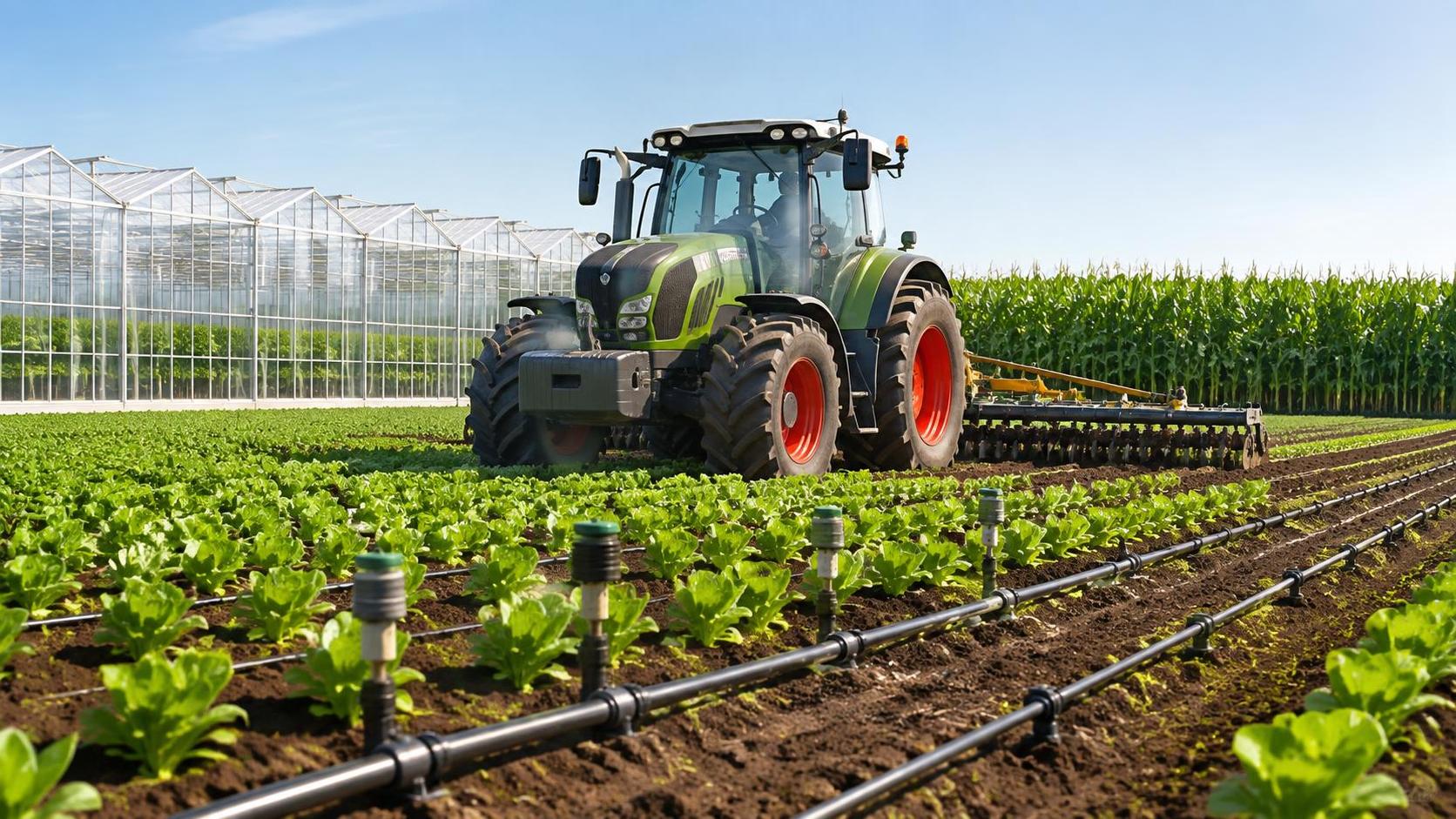
Yes. Industry intelligence for farming can improve investment timing, but only when it is used to test an operational decision rather than to confirm a purchase already favored by management. The useful question is not whether a tractor, drone, greenhouse system, or livestock platform is technically advanced. It is whether the farm’s current constraint has become expensive enough that waiting creates a larger loss than investing.
That distinction matters because agricultural capital expenditure is exposed to a difficult mix of seasonal work windows, volatile input costs, labor availability, equipment reliability, weather risk, and changing buyer requirements. A machine may be capable of increasing field capacity, yet still be the wrong purchase if the real bottleneck is maintenance support, storage, irrigation design, or insufficient operator capability. Good market intelligence brings those variables into the same decision instead of treating equipment selection as a specification comparison.
For an organization planning farm modernization, better timing usually comes from recognizing a change in operating conditions early: a recurring harvest delay, rising contractor dependence, repeated crop losses from uneven application, growing labor gaps, water restrictions, or a production system that no longer provides consistent records. Intelligence does not remove uncertainty. It makes the assumptions behind an investment visible enough to challenge.
Investment timing is usually a bottleneck question
Farm investments are often triggered by a visible event: an aging combine requires repeated repairs, a tractor fleet cannot cover peak workload, or a greenhouse needs more climate control capacity. These events matter, but they are symptoms. The investment case becomes stronger when decision-makers can identify the cost of the bottleneck across several seasons.
Consider harvest equipment. A larger combine is not justified simply because it has greater rated capacity. The more relevant issue is whether the existing harvesting setup repeatedly misses a narrow crop-quality window, creates excessive grain losses, depends on expensive outside capacity, or leaves transport and drying assets unable to keep pace. If the header, grain handling, labor scheduling, and service coverage are not aligned, a higher-capacity machine may shift the constraint rather than solve it.
The same logic applies to high-horsepower tractors. A 300–500 HP tractor may be appropriate where field size, soil conditions, implement width, and seasonal workload demand sustained drawbar power. It may be poorly timed where the main source of delay is implement availability, road transport, poor field planning, or unplanned downtime. Industry intelligence helps distinguish a capacity shortfall from an operating-process shortfall.
Timing improves when management monitors leading signals rather than relying only on annual profit. Rising repair invoices are a lagging signal. More useful indicators include increasing downtime during critical weeks, declining completion accuracy, recurring overtime, higher fuel use for the same field operation, missed spray windows, uneven crop establishment, or prolonged manual intervention in feeding and irrigation routines.
What market intelligence should connect before CAPEX is approved
A useful farming intelligence process joins commercial data with agronomic and operational reality. Looking at only equipment pricing can produce a low purchase cost but high lifetime risk. Looking only at agronomic potential can produce a technically appealing project that cannot be supported or integrated on site.
This connected view is particularly valuable when several investments compete for the same budget. A farm may be considering RTK guidance, a new planter, a precision spraying drone, variable-rate capability, and an irrigation upgrade at the same time. Buying all of them together can overwhelm installation, training, and data management. Buying only the most visible machine can leave high-return operational improvements unfunded.
The sensible sequence depends on the constraint. If application quality varies substantially across fields, accurate positioning, prescription maps, and compatible rate-control systems may produce a clearer operating benefit before a machinery replacement. If irrigation water is the limiting resource, sensor-based scheduling, filtration, pumping performance, and fertigation control may deserve priority over more field horsepower. If greenhouse production is constrained by unstable temperature, humidity, or CO2 management, climate sensors and control architecture need to be assessed as a system rather than as isolated hardware.
Why technology adoption trends can mislead investment decisions
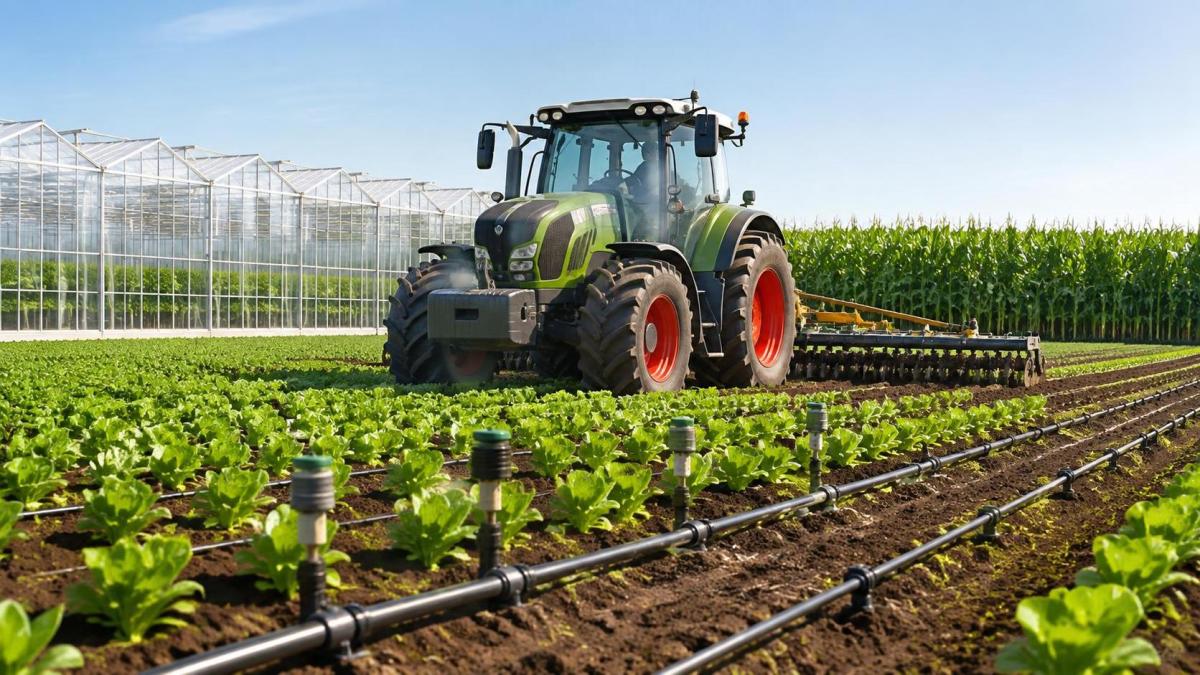
Technology adoption is a useful market signal, but it is not a purchase signal by itself. Autonomous steering, machine vision, digital farm platforms, remote sensing, feeding robots, and electrification attract attention because they address real pressures. Yet a trend becomes investable only when it matches a defined work process and has a credible path to daily use.
Precision agriculture provides a common example. Multispectral imaging and NDVI maps can reveal differences in crop vigor, while variable-rate application can adjust inputs by management zone. The technology may be valuable where field variability is understood, application equipment can execute prescriptions accurately, and agronomic decisions can be made from the information. It is less useful when imagery is collected without a process for validation, prescription design, execution, and outcome review. In that situation, the purchase creates more data but not a better decision.
Livestock automation follows the same pattern. Feeding robots, rotary milking systems, TMR mixers, sensors, and machine vision can reduce repetitive work and improve consistency. However, their value depends on barn layout, ration workflow, animal movement, maintenance capability, and the discipline to act on alerts. A labor shortage may support earlier investment, while an unstable facility layout may make redesign the more appropriate first step.
One of the most expensive mistakes is assuming that a new technology replaces management attention. Digital systems can improve visibility and consistency, but they also introduce integration work: data ownership, device compatibility, connectivity, maintenance routines, user permissions, and operator training. The investment timetable should include those requirements. A project that appears affordable on the equipment quote can become difficult when the organization has not allocated time for commissioning and process change.
Use scenario triggers instead of calendar-based replacement cycles
Replacement cycles remain useful for budgeting, but they are a weak method for deciding when to invest. Two machines of the same age can have very different economic roles. One may remain reliable, well-supported, and appropriately sized. The other may create costly delays despite having acceptable annual maintenance spending.
A stronger approach is to define investment triggers before the buying process begins. These triggers should be operational and measurable within the farm’s own records. They might include repeated inability to complete planting within the desired window, a pattern of downtime during harvest, unacceptable variability in irrigation delivery, an expanding dependence on temporary labor, or chronic inability to trace feed, treatment, or crop-input decisions.
Triggers also prevent panic buying after a difficult season. Weather disruption can make any equipment fleet appear undersized. Before responding with a major purchase, compare whether the problem recurs under normal conditions, whether bottlenecks occurred at the same point in the workflow, and whether a lower-capital intervention could reduce the exposure. Additional storage, preventive maintenance, better transport coordination, or a seasonal service agreement may sometimes protect the same window at lower risk.
When earlier investment is justified
Earlier investment tends to be justified when an issue is persistent, concentrated in a high-value operating window, and not easily solved through scheduling or external capacity. Examples include a combine whose unreliability repeatedly disrupts harvest, irrigation infrastructure that cannot deliver consistent water to a valuable crop, or labor-intensive routines that cannot be staffed reliably. It is also justified when a compatible technology upgrade can be added to an existing machine fleet at modest disruption, such as RTK steering on operations where repeatable passes and reduced operator fatigue address a clear field-management need.
When waiting is the better decision
Waiting can be rational when the business model is changing, site infrastructure is not ready, service support is unclear, or the expected benefit relies on data that is not being collected consistently. It can also be sensible where utilization is highly seasonal and dependable contract capacity is available. Ownership is not automatically superior to access. The objective is dependable execution at an acceptable whole-system cost.
Per-acre ROI is useful, but it should not be the only lens
Per-acre return helps compare investments across field operations, especially when evaluating planters, sprayers, guidance systems, irrigation upgrades, or tractors. It can show whether the proposed change affects enough acres to justify the capital outlay. But it has limits. It may understate the value of risk reduction during narrow windows, operator retention, data traceability, animal welfare management, and resilience against equipment failure.
For controlled environment agriculture, per-acre analysis may also be too broad. A greenhouse climate-control upgrade should be assessed against crop value, production consistency, water and nutrient management, energy exposure, and the ability to maintain target conditions. Hydroponic fertigation, climate sensors, and CO2 control are connected systems. Their financial value is weakened when one component cannot deliver the stability assumed by the investment model.
The best financial model therefore uses several views at once: direct operating cost, expected throughput or output consistency, avoided disruption, support requirements, residual flexibility, and the downside if the proposed benefit does not arrive on schedule. This does not require false precision. It requires stating which assumptions drive the decision and testing the ones most likely to change.
Building a practical intelligence routine
Industry intelligence for farming becomes useful when it is embedded in a recurring review rather than consulted only during a purchase negotiation. Internal records should be paired with external signals: supplier product roadmaps, dealer and service capacity, equipment availability, compatibility between brands and software, input-market conditions, technology adoption in comparable production systems, and changes in the farm’s own crop or livestock strategy.
Platforms such as Global Smart Agricultural Machinery Systems (SAMS) can support this work by bringing machinery performance, automation capability, precision agriculture, greenhouse systems, irrigation, livestock technologies, and supplier visibility into one research process. The point is not to treat market reporting as a substitute for farm records. It is to use it to frame better questions: Which alternatives solve the same bottleneck? Which features depend on compatible implements or data systems? What maintenance and operating conditions are implied by the proposed upgrade?
Before issuing a request for quotation, define the decision in a short operating brief. State the current constraint, the work window affected, the required output or consistency, the systems that must connect, the local support expectation, and the measures that will show whether the investment worked. This brief makes supplier discussions more useful because it moves the conversation beyond headline specifications.
Investment timing improves when organizations stop treating capital equipment as a stand-alone asset and start assessing it as part of a production system. The most valuable intelligence does not simply identify what is new in the market. It identifies when a specific constraint has become costly enough, stable enough, and operationally clear enough to justify action.
Related Intelligence