
Can precision livestock management reduce cattle health risks?
Can Precision Livestock Management Reduce Cattle Health Risks?
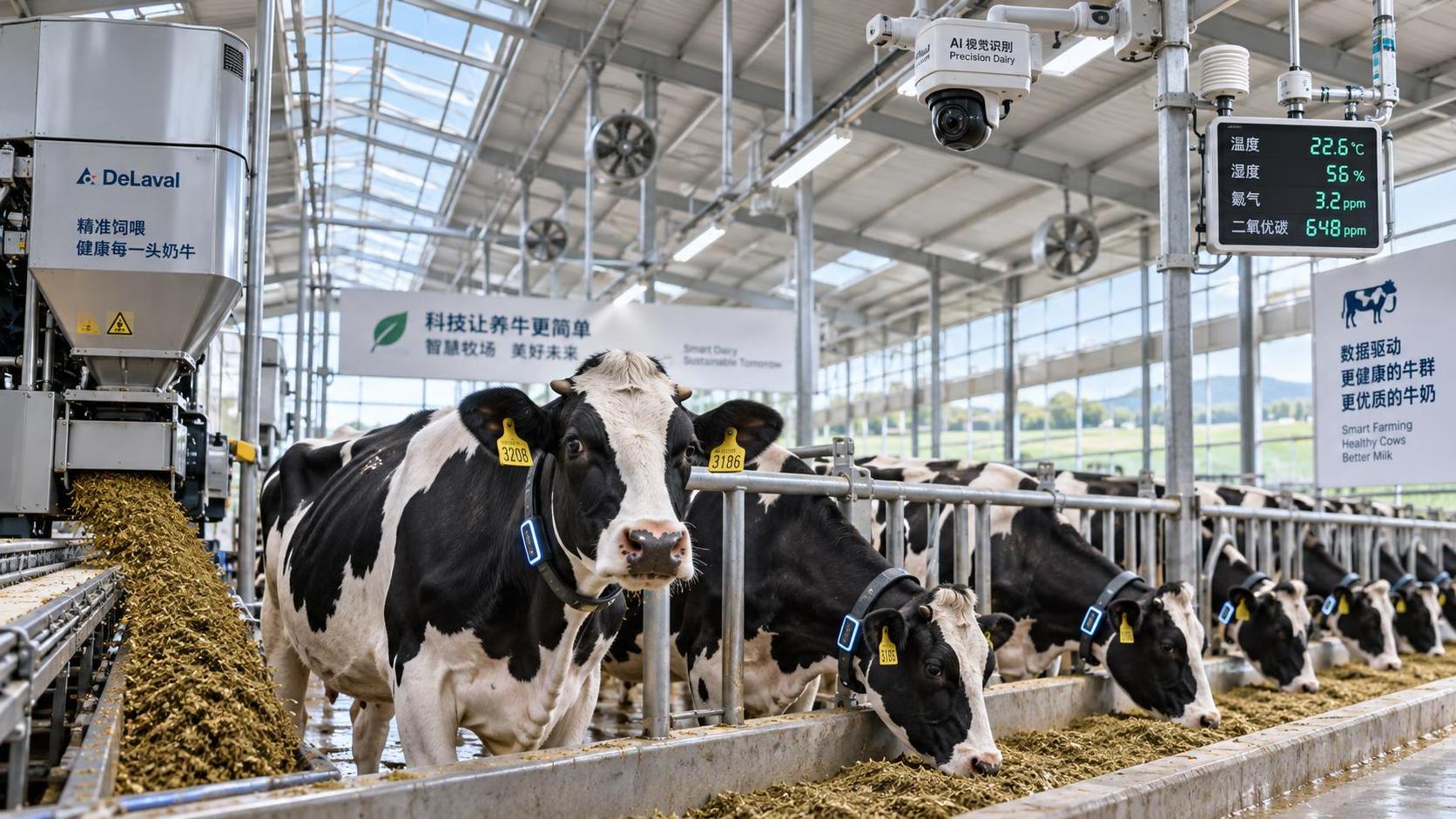
Can precision livestock management reduce cattle health risks while improving operational control and return on investment? In many cattle operations, the answer is yes—but only when technology is used to improve decisions rather than simply collect more data. Connected sensors, automated feeding equipment, machine vision, environmental monitoring, and herd-management software can reveal early changes in behavior, intake, movement, milk production, rumination, or barn conditions. Those changes may appear before a health problem is obvious during routine visual checks.
For large dairy farms, feedlots, breeding operations, and integrated food-production groups, the practical value lies in earlier intervention. A cow that reduces feeding visits, spends longer lying down, drinks less frequently, or shows abnormal mobility may require inspection before the issue develops into a severe lameness, metabolic disorder, heat-stress event, or infectious disease concern. Precision livestock management does not replace veterinarians, stockpeople, or sound husbandry. It gives them a more reliable way to focus attention where it is needed.
The business case is therefore broader than labor reduction. Better visibility can support welfare goals, reduce avoidable treatment delays, improve record quality, stabilize feeding performance, and help management understand whether a health issue is isolated or linked to a larger operational condition. The quality of that outcome depends on system design, workflow discipline, sensor reliability, and the farm’s willingness to act on alerts.
The Health Risks That Technology Can Detect Earlier
Cattle health events rarely begin with a single dramatic signal. More often, they emerge as a pattern: a gradual decline in dry matter intake, fewer visits to a feeder, reduced rumination, altered activity, rising pen temperature, changes in gait, or irregular milking behavior. In a small herd, experienced staff may notice these changes quickly. In larger facilities with multiple pens, shifts, production stages, or remote sites, consistent observation becomes harder to maintain.
Precision livestock management cattle systems are designed to make these patterns visible. Ear tags, collars, leg-mounted activity devices, rumination sensors, smart scales, automated feeders, milk meters, cameras, thermal imaging tools, and climate sensors can each provide a partial view of the animal or its environment. The goal is not to assume that one reading confirms illness. A single low-activity alert can result from weather, handling, social stress, estrus, equipment disruption, or a sensor problem. The useful signal comes from combining trends with context.
This distinction matters in procurement. A system that produces many unprioritized alerts can add work rather than reduce it. A better implementation identifies the few indicators that match the farm’s main risks and then defines who reviews them, how quickly animals are checked, what findings are recorded, and when veterinary input is required.
From Individual Animal Alerts to Herd-Level Control
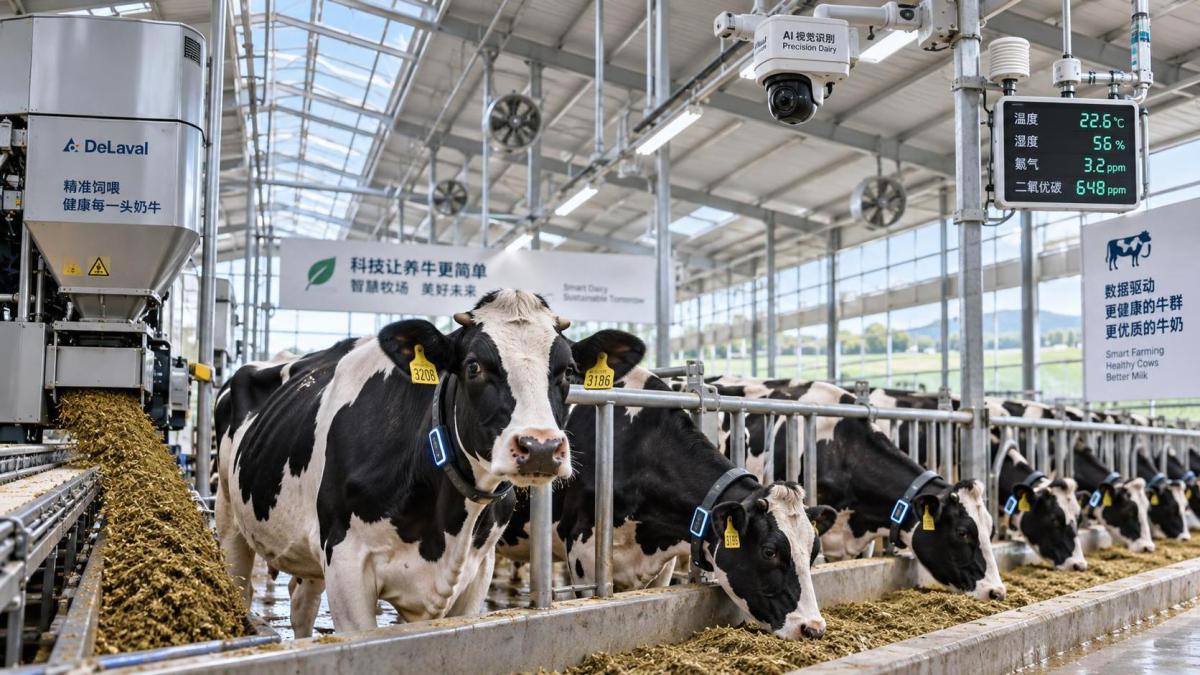
Individual monitoring is often the most visible part of livestock automation, but herd-level insight may be equally valuable. If several cattle in one pen show reduced intake at the same time, the issue may not be animal-specific. Feed consistency, bunk access, water availability, ventilation, stocking density, heat load, bedding condition, or a sudden management change may need investigation.
This is where connected systems become more useful than standalone devices. Feeding robots and TMR mixers can document ration delivery and timing. Feed pushers can help maintain access at the bunk. Climate controls can record temperature, humidity, airflow, and in some facilities gases such as carbon dioxide or ammonia, depending on the installed sensing approach. Rotary milking parlors and automated milking systems can contribute production and conductivity-related data where available. A farm platform can bring these operational signals into a common review process.
The resulting picture is not automatically a diagnosis. It is a management prompt. If health alerts rise during hot afternoons and drinking behavior changes, operators can review cooling capacity and water access. If rumination decreases after a ration adjustment, the nutrition team can investigate particle size, mixing consistency, ingredient variability, or delivery timing. If lameness indicators concentrate in one group, flooring, footbath routines, cow flow, bedding, and hoof-trimming records may deserve attention.
Why Feeding Automation Has a Direct Health Connection
Feeding is often discussed in terms of labor, ration accuracy, and feed waste, but it is also central to cattle health. Inconsistent delivery times, uneven mixing, delayed feed push-up, inadequate bunk space, or poor access for lower-ranking animals can create conditions that are difficult to detect from production data alone. Automated feeding systems do not eliminate nutritional risk, yet they can make feed management more repeatable and more auditable.
A TMR mixer with documented loading and mixing procedures, for example, can support more consistent execution when supported by calibrated scales and proper maintenance. Feeding robots may increase the frequency of fresh feed presentation in suitable barn layouts. Smart feed stations can identify intake patterns for individual animals in targeted applications. These capabilities are valuable only if the underlying ration formulation, ingredient handling, and feed-bunk management are sound.
Decision-makers should avoid treating automation as a shortcut around nutrition management. The more useful question is whether the equipment makes critical variation easier to see and correct. If a system can show missed deliveries, unusual consumption patterns, or recurring timing deviations, it can help managers investigate root causes before performance losses become entrenched.
Machine Vision: Useful, but Not a Standalone Answer
Machine vision has expanded the range of health-related observations that can be captured without repeatedly handling animals. Cameras may support body-condition assessment, locomotion monitoring, occupancy analysis, feeding behavior review, or detection of abnormal movement patterns. In some settings, thermal tools may help identify temperature differences that warrant closer examination. Performance depends heavily on camera placement, lighting, animal flow, barn dust, image quality, model training, and the type of alert being generated.
The procurement risk is assuming that a computer-vision output is universally transferable. A model developed around one breed type, housing arrangement, lane width, or lighting environment may require validation in another. Farms should ask suppliers how the system handles occlusion, dirty lenses, low-light conditions, group movement, missing observations, and changes in facility layout. It is also reasonable to ask what information can be exported, how exceptions are displayed, and whether staff can understand the basis for an alert.
A practical setup uses machine vision as an additional layer of observation. It should support stockperson judgment, not create false confidence that visual welfare checks are no longer necessary.
Data Quality Determines Whether Alerts Become Action
Many livestock technology projects underperform for a simple reason: the farm receives data but has no operating routine for it. Health alerts must enter a clear daily process. Someone needs responsibility for reviewing priority exceptions, locating the animal, performing a physical check, documenting the result, and closing or escalating the alert. Without that loop, even sophisticated sensing equipment can become an expensive dashboard.
Integration is another practical issue. A cattle operation may already use herd-management software, milking records, feed inventory tools, environmental controllers, veterinary records, weigh scales, and financial systems. Adding another disconnected platform can increase double entry and make adoption difficult. Before selecting a precision livestock management cattle solution, it is worth mapping what information already exists, who owns it, and which data exchanges are genuinely required.
Connectivity deserves the same attention. Remote buildings, metal structures, uneven terrain, power interruptions, and weak cellular coverage can affect sensor performance and data transmission. A pilot zone can expose these constraints before the farm commits to a full deployment. It also allows management to test alert thresholds against actual working conditions rather than relying only on a vendor demonstration.
How to Evaluate a System Without Buying More Technology Than Needed
The most defensible investment starts with a defined operational problem. A dairy facing transition-cow monitoring challenges may prioritize behavior and rumination signals. A feedlot may focus more on intake, water access, environmental stress, mobility, and pen-level surveillance. A breeding herd may value estrus detection, calving alerts, location data, and maternal behavior monitoring. The technology stack should follow the risk profile, not the other way around.
Several questions usually separate a workable proposal from an attractive presentation:
- Which health or welfare decisions will this system improve, and what action follows each alert?
- What is measured directly, what is inferred by an algorithm, and what requires manual confirmation?
- How are sensors maintained, replaced, calibrated, cleaned, and accounted for?
- Can the platform exchange data with current herd, feed, milking, or farm-management software?
- What local service, training, spare-parts access, and technical support are available after installation?
- How will the farm measure adoption, response time, and operational value during the first production cycle?
CAPEX should be considered alongside subscription charges, connectivity costs, maintenance, data management, training time, and possible changes to daily routines. In some operations, a focused upgrade to feeding consistency or ventilation control may produce more usable benefit than a large sensor deployment. In others, the lack of individual-animal visibility may be the central bottleneck. There is no universal equipment sequence.
A Broader Modernization Decision
Livestock automation increasingly sits within a wider farm modernization plan. The same organization may be evaluating high-horsepower tractors, RTK guidance, irrigation controls, greenhouse climate systems, drones, or digital crop records alongside cattle technologies. The common issue is operational visibility: where does labor time go, where does variation enter the production system, and which equipment produces information that can support a better decision?
Global Smart Agricultural Machinery Systems (SAMS) examines these connections across machinery, digital farm platforms, climate control, feeding systems, rotary milking, TMR mixing, machine vision, and smart ranch automation. For procurement teams and farm operators, the useful comparison is rarely sensor versus sensor alone. It is whether a proposed system fits the existing workflow, facility design, service capability, and long-term modernization plan.
Precision livestock management can reduce cattle health risks by helping teams identify deviations earlier, investigate them with better context, and document responses more consistently. It cannot guarantee disease prevention, compensate for weak husbandry, or replace professional veterinary judgment. The strongest projects begin with a specific risk, test the data in real operating conditions, and build a response process before scaling the technology across the herd.
- smart agricultural machinery
- high-horsepower tractors
- livestock automation
- agricultural machinery
- automated feeding systems
- automated milking systems
- precision livestock management
- Rotary Milking Parlors
- Feeding Robots
- smart agricultural machinery systems
- smart ranch automation
- agricultural machinery systems
- precision livestock management cattle
Related Intelligence