
Can farming software and online data in agriculture improve traceability?
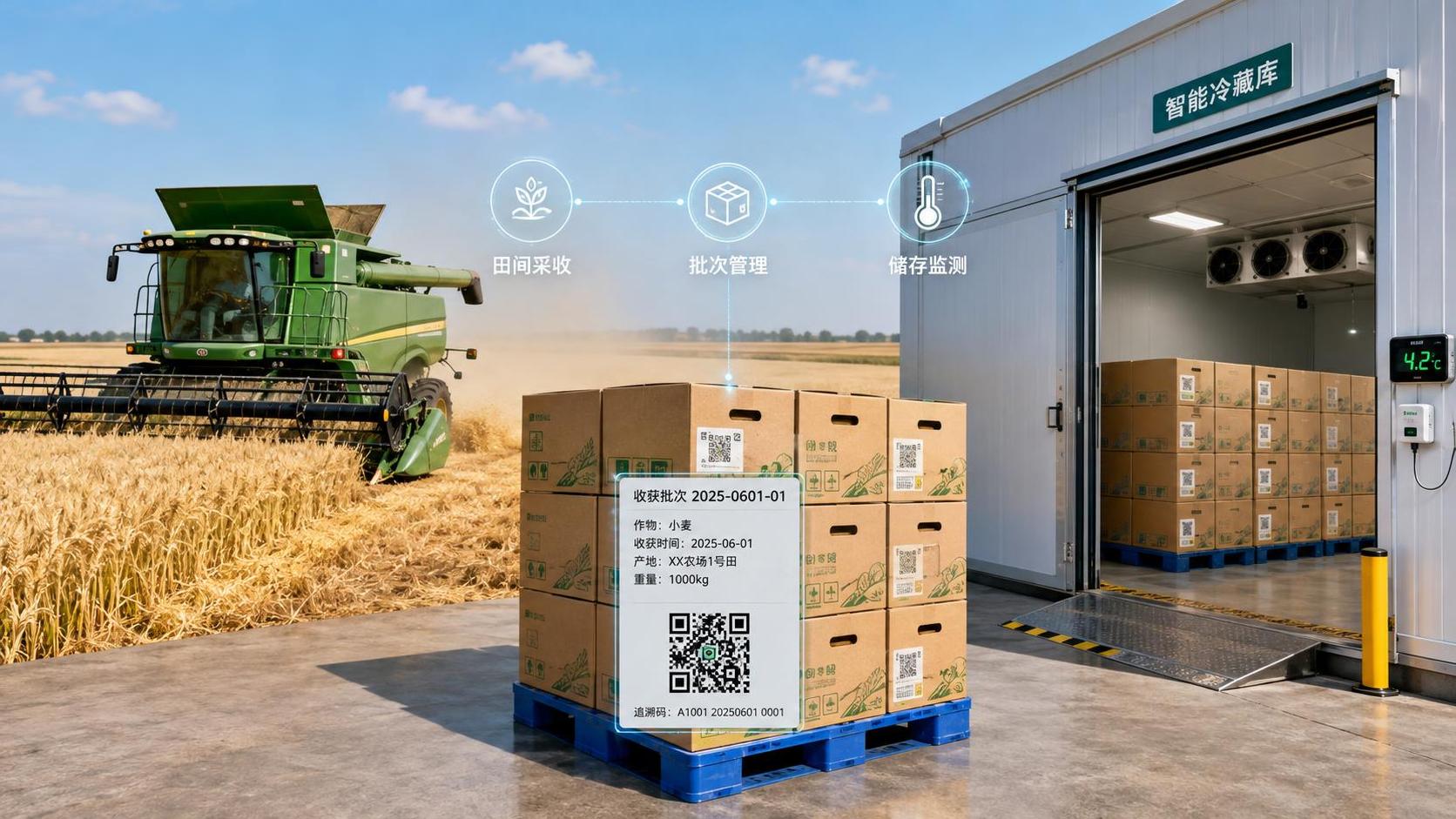
A traceability question rarely begins with a dashboard. More often, it begins when something does not match: a residue test needs explanation, a buyer asks where a lot was harvested, a storage temperature record is incomplete, or a complaint arrives after product has already moved downstream. For quality control and safety managers, the pressure is not simply to find data. It is to establish a defensible chain of events quickly, across people, machines, fields, facilities, and trading partners.
This is where farming software and online data in agriculture can make a practical difference. When digital farm platforms connect field operations, machinery activity, input records, crop observations, harvest lots, and post-harvest handling, they create a traceability structure that is far more useful than a collection of spreadsheets, paper spray logs, and disconnected machine files.
That does not mean every connected farm automatically has reliable traceability. Digital records can still be incomplete, poorly linked, incorrectly entered, or inaccessible when an audit takes place. The value comes from designing the system around real control points: what was done, where it was done, when it happened, who or what performed the work, and which crop lot was affected.
Traceability is built from operational evidence
In agriculture, traceability is sometimes treated as a packing-house or food-processing responsibility. In reality, many of the most important records originate much earlier. They begin with seed selection, field preparation, irrigation, fertilizer and crop-protection applications, equipment cleaning, harvest timing, transport, storage, and livestock handling where relevant.
A farm may know that a shipment came from “Field 12,” but that alone is not enough for a meaningful investigation. A quality manager may need to know which zone of the field was sprayed, whether the operator followed the approved application window, which product batch was used, whether weather conditions created drift risk, and whether that field’s output was mixed with another lot during harvest or storage.
Farming software turns these scattered events into linked records. A well-configured platform can associate field boundaries with crop plans, work orders, machine logs, input inventories, operator actions, and harvest tickets. Online access then allows authorized teams to review the same version of the record without waiting for files to be emailed from the farm office.
The result is not merely “more data.” It is context. Context is what lets an auditor, food-safety manager, or procurement team distinguish a routine event from a potential compliance issue.
What a usable digital traceability chain looks like
The strongest systems follow the physical movement of crop or animal products while retaining the operational history behind them. The exact workflow varies between open-field production, greenhouse operations, livestock enterprises, and mixed farms, but the logic is similar.
- Production unit identification: Fields, greenhouse bays, hydroponic channels, barns, pens, and storage zones need stable IDs that staff actually use.
- Input-to-location linkage: Seed, feed, fertilizer, plant-protection products, water treatments, and cleaning materials should be associated with the relevant location, date, rate, batch, and operator where applicable.
- Operation verification: Tractor guidance records, sprayer task logs, drone flight data, irrigation controller histories, or feeding-system reports can confirm that a planned activity was performed.
- Harvest or collection lot creation: The system should convert a field, block, or production window into a harvest lot before product is blended, loaded, or moved.
- Movement and transformation records: Transfers to a grain bin, cold room, packing line, feed area, or buyer collection point must preserve lot identity or record any intentional commingling.
- Exception management: Deviations, rejected loads, machine-cleaning failures, disease observations, test results, and corrective actions need their own audit trail rather than disappearing into notes or phone calls.
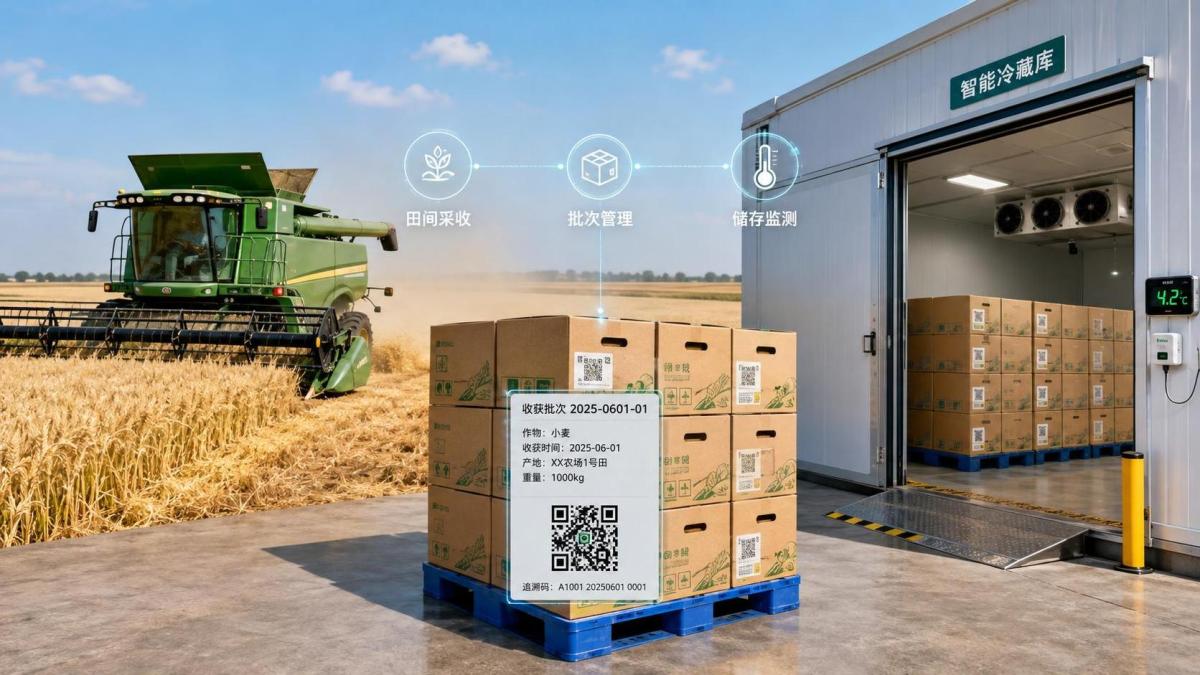
For many farms, machinery is the bridge between intent and evidence. A crop plan may state that a field should receive a certain fertilizer program. A variable-rate applicator, RTK guidance system, or connected sprayer can provide supporting operational data: location, timing, coverage, rate map, and sometimes the implement status. In the same way, combine harvester yield maps and grain-cart records can strengthen the connection between a harvested area and the lot entering storage.
Why machinery data matters to quality and safety teams
Machine data is often viewed as an efficiency tool for farm managers. It has a second role: it can help validate traceability records that would otherwise rely entirely on manual reporting.
Consider pesticide application. A digital record entered at the end of the day may say that a field was treated. But a connected sprayer or precision spraying drone may add operational detail, including the treated area, route, application time, and target zones. These records do not replace supervisor approval, label compliance, or chemical inventory control. They do, however, make it easier to compare the planned job with what occurred in the field.
Harvest offers another example. During a short harvest window, several combines, trucks, and temporary storage points may operate at once. Without disciplined lot management, grain or produce can lose its identity very quickly. Combine telemetry, field maps, load records, and digital weigh tickets can help reconstruct movements. For a quality team investigating a mycotoxin concern, moisture issue, or foreign-material complaint, that reconstruction may narrow the affected volume rather than forcing a broad and costly hold.
In greenhouse and controlled-environment agriculture, the digital evidence may come less from mobile machinery and more from climate sensors, fertigation controllers, irrigation logs, CO2 records, crop scouting data, and harvest schedules. If a buyer questions a product’s production conditions, the farm can review setpoints, alarms, actions taken, and the production zones involved. The system becomes particularly valuable when multiple greenhouse compartments use different varieties, nutrient programs, or biological-control strategies.
Online data improves response time—but only with clear governance
Cloud-based access is one of the major advantages of modern farm management platforms. Quality managers do not always work beside the field team, and external auditors may require documents while operations continue. Secure online data can reduce the delay between a question and an informed response.
Yet speed should not come at the cost of control. A traceability system needs rules for who can create records, who can change them, who can approve corrections, and how revisions are retained. If anyone can overwrite a harvest date or input application after the fact without a visible history, the credibility of the database weakens.
Useful governance features include time-stamped entries, user permissions, mandatory fields for critical activities, approval workflows for deviations, and audit logs that show changes rather than simply displaying the latest version. Farms should also define data ownership when contractors, dealers, agronomy advisers, drone service providers, and machinery OEM platforms contribute information.
For large farms and food production groups, another important question is interoperability. A quality team should not have to search through five portals to establish the history of one lot. The goal is not necessarily a single software vendor for every task; it is a controlled method for moving essential information between systems. Exportable records, standard identifiers, API connectivity where appropriate, and consistent lot naming conventions are often more important than an impressive-looking interface.
From isolated records to a recall-ready workflow
A practical way to assess farming software and online data in agriculture is to run a mock trace exercise. Choose one finished lot or shipment and ask the team to trace it backward. Can they identify its field or production zone, harvest date, harvest equipment, storage location, relevant input applications, water or climate records, and personnel involved? Then trace forward: can they identify every destination, blended lot, or customer shipment affected?
The test should measure more than whether the information exists. It should reveal how long it takes to retrieve, whether the records agree, and whether the team can explain gaps. A farm that finds most of the answer in ten minutes but cannot verify a truck transfer or a storage-bin change still has a traceability vulnerability.
Common weak points that software alone will not solve
Digitization can expose process weaknesses, but it cannot correct them by itself. One frequent problem is vague location structure. If workers use informal labels such as “north plot” while the software uses a different field code, data linkage becomes unreliable. Another is late entry. Records entered days after an operation may satisfy a checklist but are less dependable when details are disputed.
Lot mixing is also a persistent risk. Harvested material may move through shared carts, conveyors, bins, wash lines, or packing areas. Unless each transfer is recorded and cleaning or changeover procedures are documented, digital field records will not protect product identity downstream.
Sensor data requires similar caution. A climate sensor, moisture probe, or livestock monitoring device produces continuous information, but the record is only useful if the sensor is maintained, its readings are understood, and alarms lead to documented decisions. An unreviewed alert is not a control measure.
Finally, farms should avoid treating software-generated reports as automatically accurate. GPS drift, missing connectivity, wrong implement settings, duplicated jobs, and operator workarounds can all distort records. Periodic reconciliation between digital logs, physical inventory, equipment calibration, and supervisor review remains essential.
A sensible implementation path for farm traceability
Quality and safety managers often get better results by starting with the highest-consequence products, fields, or processes rather than attempting to digitize every activity at once. Identify the records most often requested by customers, regulators, certification bodies, or internal investigations. Then map where those records are created and where they currently break down.
For an arable operation, the first priorities may be spray records, equipment-cleaning logs, harvest lot creation, and storage movements. A greenhouse may focus on water treatment, fertigation recipes, climate exceptions, hygiene checks, and packing-lot links. Livestock producers may prioritize feed traceability, animal treatment records, movement histories, milk or egg collection data, and sanitation documentation.
Technology selection should follow that map. Evaluate whether the platform can handle field boundaries, machinery integration, mobile entry, offline work, lot genealogy, document attachments, user roles, and data exports. Ask suppliers how their system handles corrections, contractor records, multi-site operations, and long-term data access. A system that is simple enough for operators to use consistently is often more valuable than one with functions that remain unused.
Training should focus on the reason behind each record. Field staff are more likely to capture accurate information when they understand that a missing load ticket could delay a shipment, expand a recall scope, or leave a colleague unable to answer a buyer’s question. Traceability is not paperwork performed after production; it is part of protecting the product while it is being produced.
Better visibility, not false certainty
Can farming software and online data in agriculture improve traceability? Yes—when they connect physical operations to clear lot identities and when the organization treats data quality as seriously as product quality. They can shorten investigations, support faster containment, make audits less disruptive, and give quality teams a more complete view of what happened across the farm.
For modern agricultural businesses using autonomous guidance, precision application, connected harvesters, greenhouse climate controls, livestock automation, or digital farm management tools, traceability no longer needs to depend on memory and fragmented records. The opportunity is to turn operational data into evidence that is usable when it matters most: not just during a routine audit, but when a safety decision must be made with confidence.
Related Intelligence