
Digital farming sounds efficient, but where is the real payoff?
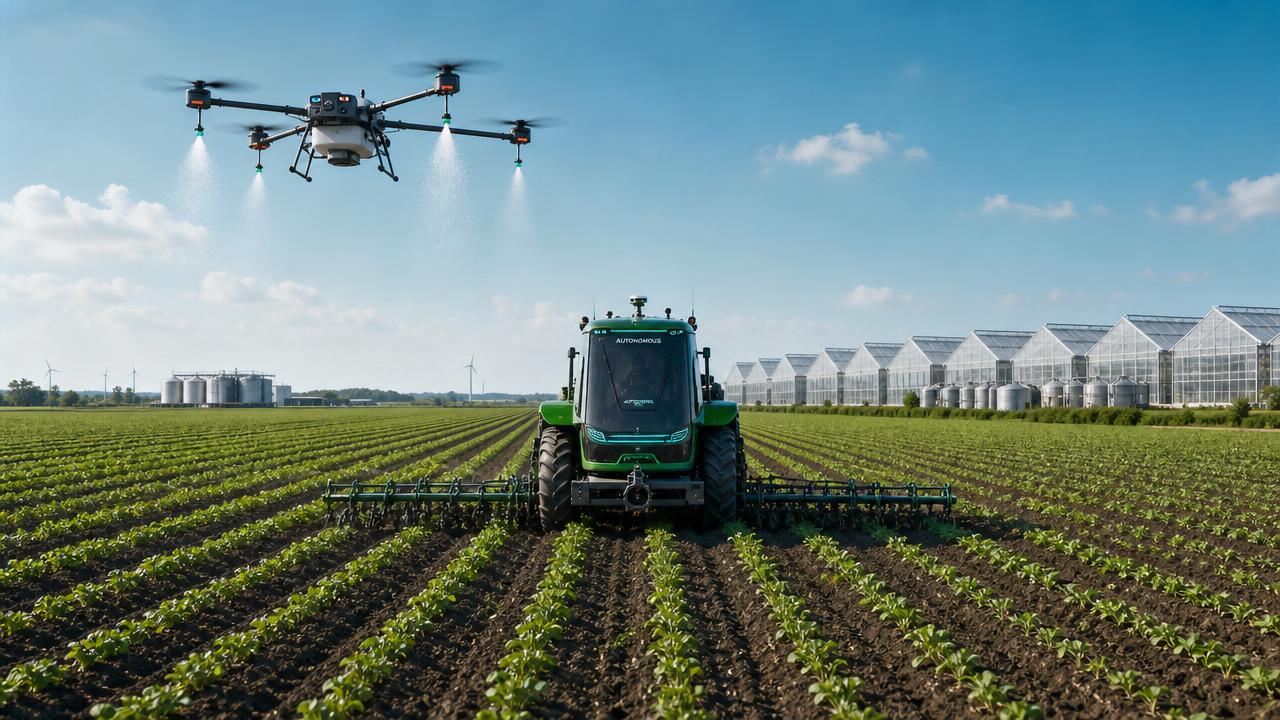
Digital farming promises sharper efficiency, but enterprise leaders need clearer proof of where margins truly improve. From autonomous high-horsepower tractors and precision ag-drones to climate-controlled greenhouses and livestock automation, the real payoff depends on measurable gains in yield, labor savings, resource use, and ROI. This article examines where smart agriculture delivers strategic value—and where decision-makers should look beyond the hype.
Where does digital farming create measurable business value?
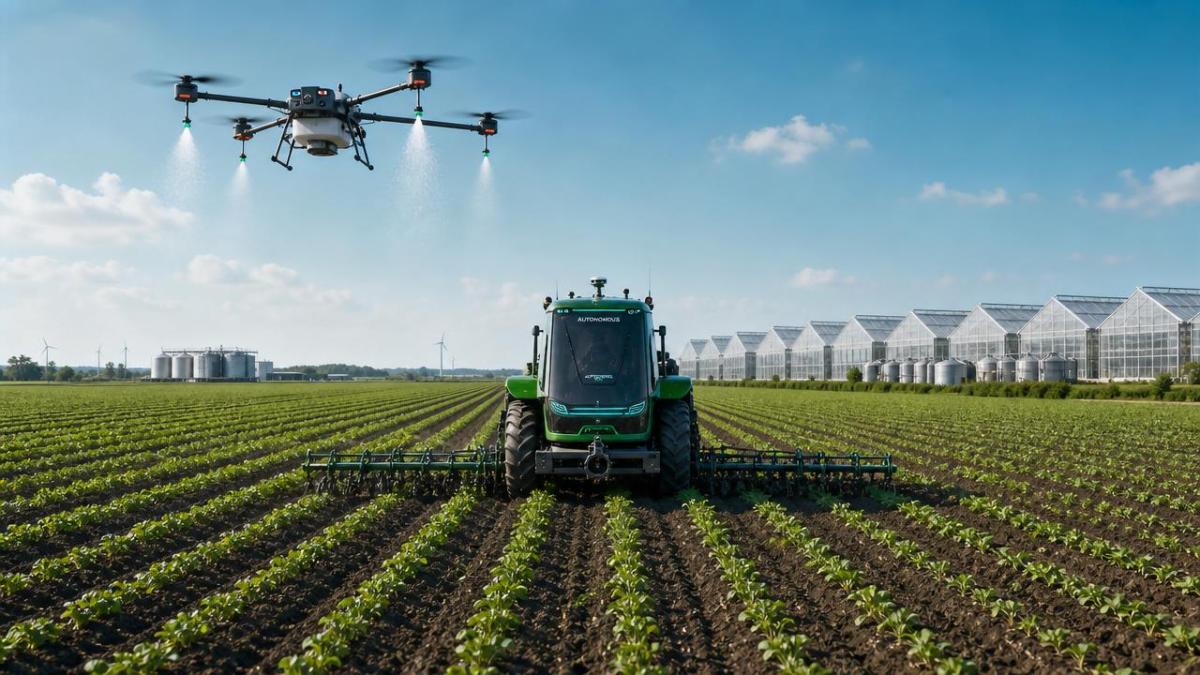
For enterprise decision-makers, digital farming is not a single technology purchase. It is an operating model that combines machinery, agronomic data, navigation systems, automation software, and execution discipline. The question is not whether the tools look advanced. The real question is whether they improve output per acre, labor productivity, input precision, and asset utilization.
In large-scale agriculture, margins are often damaged by small inefficiencies repeated across thousands of acres, multiple harvest windows, or large livestock populations. Overlaps in spraying, delayed harvesting, missed planting windows, underused horsepower, unstable greenhouse climates, and inconsistent feeding routines all erode profit. Digital farming addresses these losses when the system is matched to the right bottleneck.
This is where SAMS brings strategic value. Its focus on smart tractors, combine harvesters, balers, ag-drones, CEA systems, and livestock automation helps buyers evaluate not only equipment capability, but also how each technology performs in real production environments shaped by labor shortages, weather volatility, and the pressure to increase yield without expanding land.
- Autonomous traction systems reduce operator fatigue, night-time deviation, and pass-to-pass inconsistency during planting and tillage.
- Precision ag-drones improve target coverage in complex terrain where ground sprayers struggle or cause crop damage.
- Climate control in greenhouses turns yield into a more predictable production curve rather than a seasonal gamble.
- Livestock automation converts repetitive labor into data-guided routines for feeding, milking, and herd monitoring.
The payoff, however, varies sharply by production model. A broadacre grain farm, a protected horticulture operator, and a large ranch will not recover investment from the same levers. That is why digital farming should be evaluated as a portfolio of business cases, not as a trend.
Which digital farming systems pay off fastest in different operating scenarios?
The strongest ROI usually appears where operations are time-sensitive, labor-intensive, or highly repetitive. The table below helps enterprise buyers compare where digital farming typically creates the clearest operational return.
The key lesson is that digital farming pays fastest when it removes expensive variance. If your biggest pain is harvest delay, a drone may not be the first answer. If your greenhouse already delivers premium prices, climate optimization may beat another field machine in ROI. The strategic fit matters more than the novelty factor.
Scenario 1: Broadacre grain farming
In grain operations, the strongest gains often come from guidance accuracy, machine uptime, and harvest speed. A 300 to 500 HP tractor integrated with RTK can improve seeding quality, reduce skips and overlaps, and extend working hours after dark. That combination affects yield indirectly but materially, especially over large acreage.
Scenario 2: High-value horticulture and CEA
For tomatoes, berries, leafy greens, and nursery crops, digital farming becomes a production control system rather than a machinery upgrade. Temperature, humidity, CO2, fertigation, and light recipes can shape output quality, harvest rhythm, and contract fulfillment reliability. The payoff is often seen in revenue stability as much as in cost savings.
Scenario 3: Large livestock operations
In dairy and swine systems, automation creates value through repeatability. Rotary milking efficiency, TMR accuracy, feed push frequency, and machine vision monitoring can reduce dependence on hard-to-replace labor while supporting animal performance. The return improves when managers use the resulting data to adjust routines rather than simply digitize old ones.
How should enterprise buyers evaluate ROI beyond headline efficiency claims?
A common mistake in digital farming procurement is to focus only on labor replacement. In reality, the strongest business cases usually combine several value streams: labor savings, yield protection, lower input waste, improved timing, lower rework, and better management visibility. Decision-makers need a structured ROI model before asking for quotations.
The following framework can be used to compare solutions across farm machinery, drone operations, greenhouse control, and livestock automation programs.
This approach is especially useful when comparing unlike options. For example, a greenhouse climate package may have higher upfront cost than a drone fleet, but if it stabilizes year-round output for premium buyers, its long-tail payoff can be stronger. SAMS emphasizes this kind of disciplined comparison because machinery intelligence only matters when linked to farm economics.
Look for avoided loss, not just direct savings
Many digital farming investments do not simply cut payroll. They prevent harvest delay, reduce treatment misses, avoid weather-related losses, and protect crop quality. These avoided losses can be more valuable than visible cost reductions, especially in volatile seasons.
Model utilization honestly
A premium autonomous tractor or high-capacity baler underused for much of the year can weaken ROI. Buyers should test whether shared fleets, contractor partnerships, phased deployment, or mixed-use scheduling will improve utilization before committing to full-scale acquisition.
What technical and procurement factors are most often underestimated?
Enterprise teams often evaluate headline specifications but miss integration realities. Digital farming performance depends on signal quality, implement matching, service response, agronomic workflows, operator training, and data interpretation. A technically advanced machine can still underperform if the surrounding system is weak.
- RTK guidance quality matters more than brochure-level autonomy language. Buyers should ask about correction signal continuity, field boundary management, and behavior near tree lines or terrain changes.
- CVT and powertrain performance should be matched to real draft loads, not theoretical engine output. Deep tillage resistance and implement width determine whether horsepower translates into acres covered.
- Drone payload, droplet behavior, terrain following, and battery turnaround all affect spray productivity. A high payload alone does not guarantee field efficiency.
- Greenhouse automation should be assessed as a control strategy, including sensors, fertigation logic, ventilation response, and energy exposure, not as a collection of components.
- Livestock automation must be reviewed for hygiene protocol, redundancy, data capture quality, and failure response, because downtime can disrupt animal routines quickly.
SAMS is particularly relevant at this stage because decision-makers need technical translation. NDVI maps, prescription applications, torque compensation, application accuracy, and climate recipes are valuable only when executives understand how they influence per-acre yield, machine productivity, and investment timing.
A practical procurement checklist
- Define the bottleneck first: planting accuracy, harvest speed, crop protection timing, greenhouse consistency, or labor dependency.
- Estimate economic exposure: acres affected, labor hours at risk, crop value, and seasonal timing pressure.
- Check system compatibility: implements, software, signal access, power requirements, drainage, or barn layout.
- Validate support terms: commissioning, training, spare parts logic, maintenance windows, and troubleshooting path.
- Build a phased rollout plan with performance milestones rather than treating digital farming as a single-step transformation.
What are the common misconceptions about digital farming?
Hype often creates poor buying decisions. Decision-makers can improve outcomes by separating technology visibility from economic fit.
Does digital farming automatically reduce headcount?
Not always. In many operations, digital farming changes labor allocation more than total labor demand. A farm may still need people, but in different roles such as supervision, maintenance, data monitoring, or logistics. The better question is whether each worker can manage more acres, more animals, or more production consistency.
Is the most advanced machine always the best investment?
No. Over-specification is a common ROI killer. A large autonomous platform may look impressive, but if field size, terrain, staffing, or seasonal workload cannot support its utilization, the business case weakens. Fit-to-operation beats maximum specification.
Can data alone improve yield?
Data becomes valuable only when linked to action. NDVI imagery, variable-rate maps, climate alerts, and feeding analytics matter when teams use them to change spray rates, irrigation plans, tractor routes, or feeding schedules. Data without operational response adds reporting, not profit.
How long does digital farming implementation usually take?
That depends on system complexity. Guidance and machine automation may be deployed within a season if infrastructure is ready. Greenhouse and livestock automation usually require longer planning because layout, utilities, workflow redesign, and staff training play larger roles. Decision-makers should plan for adoption curves, not just installation dates.
How should leaders build a phased digital farming roadmap?
The most resilient strategy is staged adoption. Enterprises should start where digital farming solves a high-cost, measurable problem, then expand once data, training, and service systems are proven. This reduces capital risk and builds organizational confidence.
Phase 1: Fix the most expensive inefficiency
Examples include RTK guidance for planting accuracy, harvest machinery upgrades for narrow windows, or automated feed systems where labor shortages disrupt routine. The first win should be visible in operations, not just in dashboards.
Phase 2: Connect data to decisions
Once equipment is performing, integrate mapping, input records, climate data, or herd metrics. This is where digital farming begins to compound value by improving planning, not just execution.
Phase 3: Optimize at system level
The final stage is cross-system coordination: tractors aligned with prescription maps, drones scheduled by crop stress signals, greenhouse climate tuned to market demand, and livestock automation linked to feed and health monitoring. At this level, digital farming becomes a strategic operating architecture.
Why choose us for digital farming intelligence and procurement decisions?
SAMS helps enterprise buyers move beyond general claims and into decision-grade evaluation. Our strength is not limited to describing smart machinery. We connect mechanical performance, field execution, agronomic logic, and capital discipline across the five areas that most directly shape agricultural output: high-HP tractors, harvesting systems, ag-drones, CEA infrastructure, and livestock automation.
If you are comparing digital farming options, we can support discussions around parameter confirmation, solution matching, implementation priorities, delivery considerations, operating scenarios, and ROI logic. That includes questions such as whether RTK autonomy fits your acreage pattern, how to compare drone spraying with ground application, when greenhouse CAPEX can be justified, or what automation layer makes sense for a large dairy or swine facility.
- Request support for product and system selection based on acreage, crop type, livestock scale, and labor structure.
- Discuss delivery timelines, commissioning scope, and phased rollout priorities for complex projects.
- Review compliance-sensitive topics such as drone operations, data workflows, and equipment integration requirements.
- Explore customized digital farming solution paths that balance CAPEX, utilization, and long-term yield goals.
- Open a quotation discussion built around your operating metrics instead of generic equipment assumptions.
When the objective is not simply to digitize, but to improve margin quality under real field pressure, a sharper framework matters. That is where informed digital farming decisions start.
Related Intelligence