
What to verify before selecting agriculture automation companies
What to Verify Before Selecting Agriculture Automation Companies
Selecting agriculture automation companies requires more than comparing feature lists, quoted prices, or claims about labor savings. A tractor guidance package, autonomous spraying platform, greenhouse climate controller, feeding robot, or farm management system becomes valuable only when it works reliably in the operating conditions of a specific farm or production group.
For procurement teams, the central question is not simply whether a technology is advanced. It is whether the supplier can deliver a system that fits existing machinery, workflows, people, connectivity, maintenance resources, and regulatory constraints. A highly capable system that cannot exchange data with the farm’s current platform, receive local service, or operate through a demanding harvest window can create a costly operational gap.
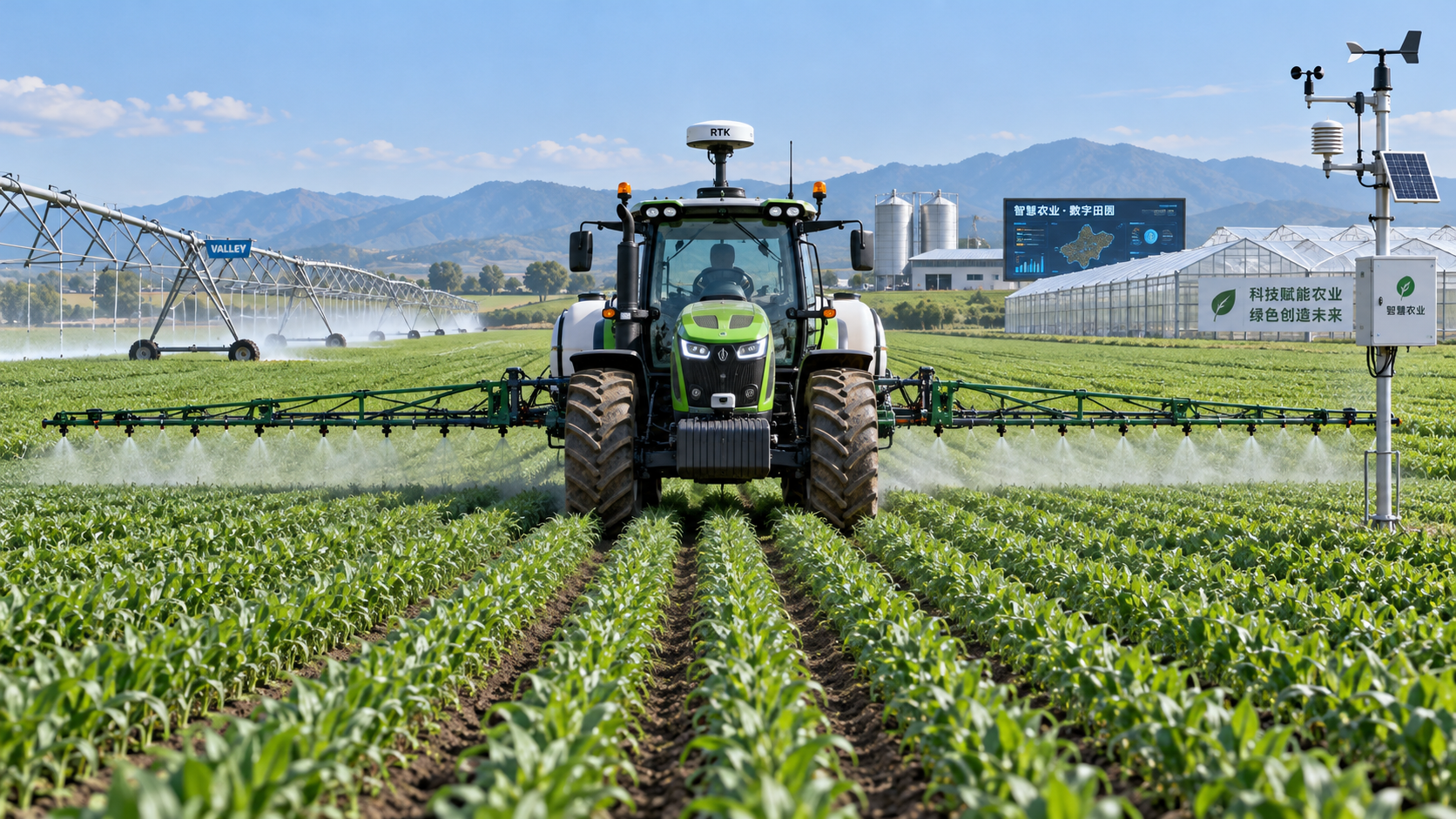
The verification process should therefore move from field and production requirements outward to technology, supplier capability, commercial terms, and lifecycle support. This approach is relevant across broad applications: RTK-enabled tractors, combine automation, precision spraying drones, variable-rate systems, irrigation controls, hydroponic fertigation, livestock feeding equipment, robotic milking, and controlled-environment agriculture.
Start With the Operating Problem, Not the Automation Category
Many purchasing projects begin with a technology label: autonomous tractor, drone program, greenhouse automation, or livestock robot. That is understandable, but it can lead to a poor shortlist. The first verification should be the production constraint that the investment is expected to address.
On broad-acre farms, the priority may be reducing overlap during planting, maintaining consistent pass-to-pass accuracy, or completing fieldwork when skilled operators are limited. In a short harvest window, a combine-related investment may need to protect throughput, grain quality, header performance, and machine uptime rather than merely add a digital display. A greenhouse operator may be trying to stabilize climate zones, improve irrigation discipline, or coordinate fertigation with crop-stage requirements. In livestock production, the bottleneck could be feeding consistency, milking routines, animal observation, or labor availability during unsocial hours.
Ask the supplier to map its proposed system to a measurable operational baseline. The baseline does not need to be perfect, but it should be specific: machine hours, fuel use, acres covered, rework, application records, water consumption, labor tasks, downtime, or crop and animal management exceptions. Without a baseline, projected return on investment becomes a generic promise.
A practical requirement brief should also state what the system must not disrupt. This may include existing implement compatibility, planting schedules, herd routines, crop traceability records, chemical handling procedures, or the ability to continue operations manually if automation is unavailable.
Verify Performance in the Conditions That Actually Matter
Agricultural automation is exposed to conditions that are difficult to reproduce in a product demonstration: dust, heat, vibration, mud, uneven terrain, foliage obstruction, poor cellular coverage, high humidity, interrupted GNSS signals, and tight seasonal timing. A system may perform well in a controlled demonstration while requiring different configuration, support, or operating limits on a real site.
Performance discussions should be tied to the application. For autonomous steering, verify the correction signal options, expected availability in the operating area, implement guidance requirements, boundary management, obstacle detection approach, and handover process when an operator must intervene. For high-horsepower tractors, automation should not be evaluated separately from hydraulic capacity, PTO requirements, implement control, transmission behavior, and serviceability. A 300–500 HP tractor used with large implements needs a complete compatibility review, not just a guidance quote.
For drone spraying, questions should cover payload configuration, terrain-following method, route planning, battery management, spray quality controls, weather limits, field access, and local operating rules. Multispectral imaging and NDVI maps can support crop decisions, but procurement teams should also ask who interprets the imagery, how prescription maps are created, and whether the farm has equipment capable of carrying out variable-rate recommendations.
Greenhouse and indoor farming systems deserve the same scrutiny. Climate sensors, CO2 control, ventilation, screens, heating, irrigation, and fertigation cannot be assessed as isolated components. The proposed control logic should reflect the structure, crop, water source, drainage approach, and local climate. In hydroponic projects, sensor selection is only one part of the decision; calibration procedures, alarm ownership, nutrient management practices, and manual override arrangements are equally material.
Treat Integration as a Procurement Requirement
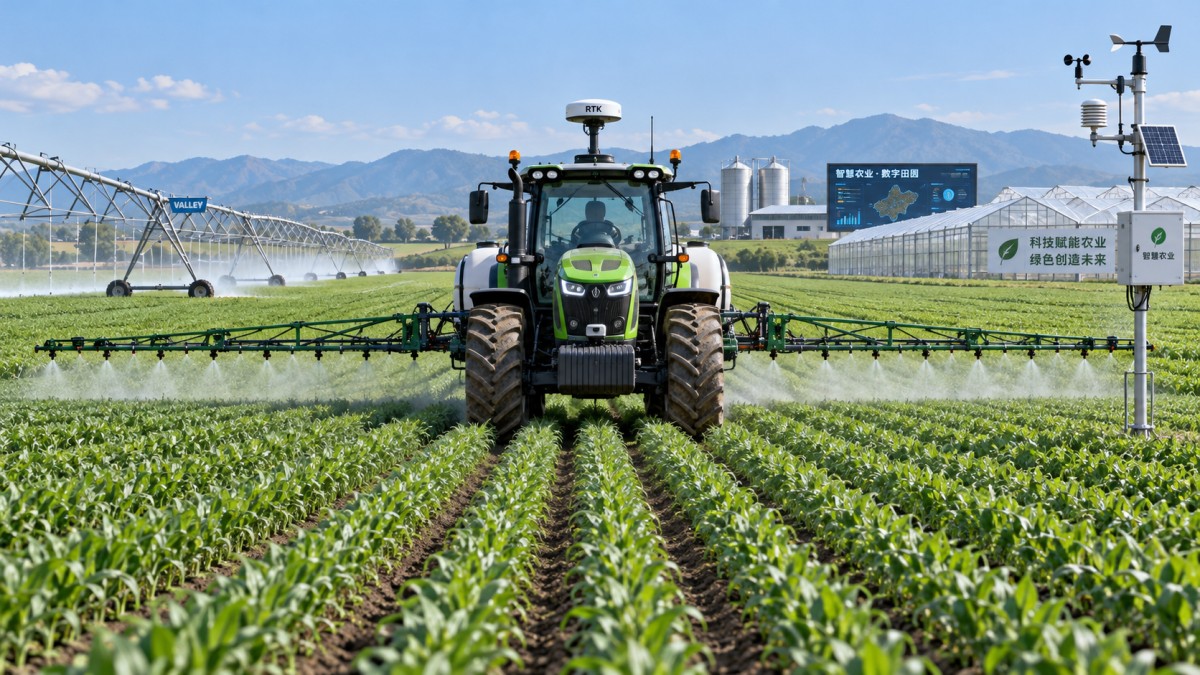
The automation market includes machinery manufacturers, specialized software firms, sensor providers, robotics companies, irrigation suppliers, and systems integrators. Their products may be technically strong but still difficult to connect. Before choosing among agriculture automation companies, determine where operational data will originate, where it will be stored, who can access it, and how it will be used.
A procurement review should examine compatibility at several levels. Can the platform receive data from existing tractors, combines, drones, weather stations, irrigation equipment, or milking systems? Can it export data in usable formats? Does it support application records, field boundaries, machine logs, task files, sensor readings, and alerts without extensive manual re-entry? If the vendor relies on proprietary hardware or cloud services, clarify what happens if the farm later changes suppliers.
Data ownership should be written into the commercial discussion rather than left to platform terms that no one reviews. The farm or operating group should understand retention periods, user permissions, cybersecurity responsibilities, backup processes, and access after contract expiry. This is especially important when production records are used for traceability, agronomic analysis, financial planning, or supplier reporting.
Connectivity is another common blind spot. Remote equipment monitoring, cloud-based climate control, and autonomous functions can depend on stable communications. Suppliers should identify minimum connectivity requirements, offline behavior, data synchronization processes, and the consequences of an outage. A system that continues operating safely with delayed synchronization is very different from one that becomes unusable when coverage is lost.
Examine the Supplier Behind the System
Equipment capability is only half of the evaluation. The other half is whether the supplier can support commissioning, training, repairs, software updates, spare parts, and seasonal troubleshooting. This becomes critical when a system supports planting, harvest, crop protection, animal feeding, milking, or climate-sensitive production.
Ask who performs installation and who accepts responsibility when components from several vendors must work together. In a greenhouse project, for example, the structure supplier, irrigation contractor, climate-control provider, electrical contractor, and grower may all influence system performance. In a precision agriculture project, the tractor dealer, guidance provider, implement manufacturer, correction-signal provider, and farm software company may each own a different part of the workflow. A clear interface matrix prevents disputes when a fault crosses those boundaries.
Service coverage should be verified in operational terms. Where are technicians located? Which repairs can be completed remotely? What critical spares are locally held? Is support available during planting, harvest, or other peak periods? How are software updates tested and scheduled? A supplier does not need to promise impossible response times, but it should explain escalation procedures and realistic service capacity.
References are useful when they match the proposed application. A reference from an indoor leafy-greens facility may not answer questions about a large, soil-based vegetable greenhouse. Likewise, success with smaller tractors does not automatically demonstrate readiness for high-horsepower equipment, complex implement control, or autonomous operations over large fields. Ask reference users about commissioning challenges, training quality, downtime handling, and what they would specify differently today.
Check Compliance, Safety, and Local Operating Constraints Early
Automation can change risk exposure. Drones may be subject to aviation, chemical application, and operator requirements. Autonomous or semi-autonomous vehicles raise questions about supervision, geofencing, emergency stops, site access, and safe interaction with workers. Electrical equipment, pressure systems, livestock machinery, and greenhouse installations may need to meet local requirements that vary by market and project type.
Procurement teams should request the technical documentation relevant to the destination market and verify it against local rules with qualified project, safety, or regulatory advisers where necessary. It is not enough for a supplier to state that a machine is “compliant.” The buyer needs to know which requirements apply, whether documentation covers the delivered configuration, and whether installation or operator procedures create additional obligations.
Safety should also be reviewed as an operating process. Verify emergency-stop locations, manual override procedures, access controls, alarm routing, training records, inspection requirements, and responsibilities for changing software settings. In livestock automation, consider animal movement, welfare observation, cleaning routines, and what happens when a feeding or milking unit is unavailable. In climate-controlled production, review alarm escalation for power failures, water interruptions, extreme temperatures, and sensor faults.
Build the ROI Model Around Adoption and Lifecycle Cost
The lowest purchase price is rarely the lowest-cost option over the life of an agricultural automation system. The proper comparison includes implementation labor, training, subscriptions, connectivity, consumables, replacement parts, service agreements, upgrades, financing, integration work, and expected downtime exposure. For a system with a useful operational role during only a narrow seasonal period, downtime risk deserves particular weight.
Benefits should be separated into direct and conditional categories. Direct benefits may include fewer machine passes, lower application overlap, reduced manual data entry, more consistent feeding, or automated climate actions. Conditional benefits depend on adoption: a prescription-map workflow will not produce value if agronomic recommendations are not reviewed and executed; a machine-vision alert is only useful if someone can respond to it.
It is wise to test the investment under conservative assumptions. What happens if labor savings arrive later than planned, if the system requires additional operator training, if connectivity is weak in part of the operation, or if a key subscription cost rises at renewal? This sensitivity check often distinguishes a resilient project from one that looks attractive only in a supplier presentation.
A phased deployment can be appropriate when the farm is introducing several connected technologies at once. Start with the workflow that has the clearest operational owner and the strongest baseline, then use the lessons from setup, data handling, and training before expanding across fields, sites, greenhouses, or livestock units.
Turn Verification Into a Decision Record
A strong selection process leaves behind more than a winning quotation. It creates a decision record that explains the application need, site assumptions, integration requirements, supplier responsibilities, lifecycle costs, acceptance criteria, and unresolved risks. This record is valuable when personnel change, when the project expands, or when performance needs to be reviewed after the first season.
Global Smart Agricultural Machinery Systems (SAMS) provides a useful intelligence framework for this type of evaluation by connecting mechanical equipment, autonomous navigation, crop sensing, greenhouse systems, livestock automation, irrigation, and digital farm management. For buyers comparing suppliers, the most useful research is rarely a single product ranking. It is the ability to place RTK guidance, CVT and PTO behavior, harvesting capacity, drone sensing, fertigation controls, machine vision, and digital records in the same operational and capital-planning conversation.
Before issuing a final order, confirm the delivered configuration, implementation scope, service responsibilities, training plan, data terms, acceptance tests, and the conditions under which the system can safely fall back to manual operation. Those details are less visible than an automation feature list, but they often determine whether the investment performs when the farm needs it most.
Related Intelligence