
How to Evaluate an Autonomous Farm Systems Supplier
Why Supplier Evaluation Has Become More Complex
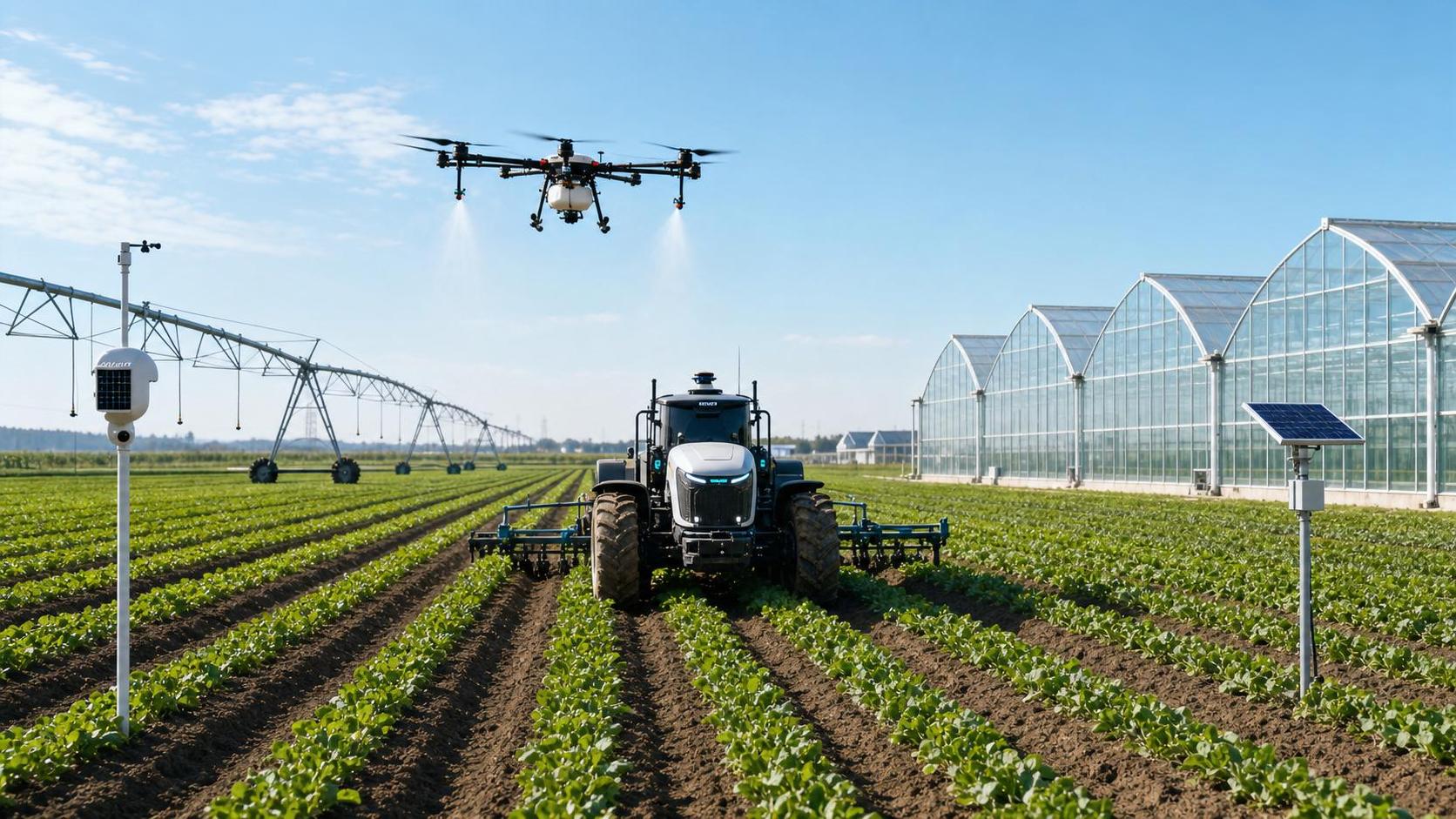
Choosing an autonomous farm systems supplier now involves far more than checking engine power, working width, or software features.
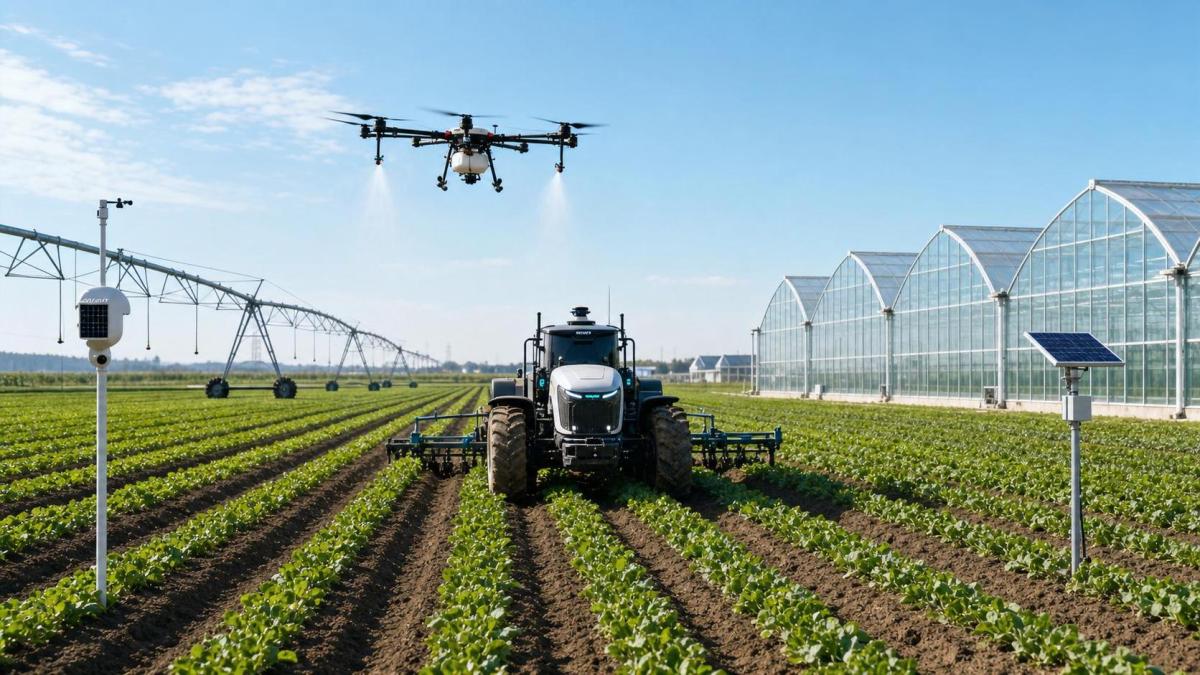
Autonomy in agriculture connects machinery, sensors, control logic, connectivity, and after-sales support into one operating environment.
That shift matters across tractors, combines, drones, irrigation platforms, greenhouse control, and livestock automation.
A weak supplier may deliver capable hardware but fail on integration, uptime, or service response during critical operating windows.
A strong autonomous farm systems supplier supports precision, labor savings, data continuity, and predictable return over several seasons.
This is why evaluation has become a strategic sourcing task, not a simple equipment purchase.
What an Autonomous Farm Systems Supplier Actually Provides
The term covers more than self-driving machines.
An autonomous farm systems supplier may provide guidance systems, machine vision, RTK steering, drones, telematics, variable-rate control, and digital farm software.
In some projects, the supplier also supports greenhouse climate automation, fertigation control, irrigation scheduling, or livestock feeding robotics.
The practical question is not whether autonomy exists on a brochure.
The real question is whether those systems work together under field conditions, with acceptable maintenance cost and operator burden.
Platforms such as SAMS are useful here because they frame autonomous agriculture as an operational system.
That includes mechanical reliability, crop sensing, climate control, CAPEX logic, and per-acre performance.
Where the Market Is Paying Attention
Current demand is driven by labor pressure, narrow harvest windows, rising input costs, and the need for consistent field accuracy.
That is why autonomous steering, precision spraying, remote monitoring, and controlled environment systems receive so much attention.
In open-field operations, buyers are comparing RTK repeatability, terrain adaptation, overlap control, and guidance stability.
In greenhouse and irrigation projects, they focus more on sensor quality, environmental response speed, and water-use efficiency.
For livestock automation, uptime and decision accuracy often matter more than feature count.
A credible autonomous farm systems supplier should already understand these different decision contexts.
The First Filter: Technical Fit With Real Operations
Evaluation should begin with operational fit, not brand visibility alone.
A supplier that performs well in broadacre grain may not be the right choice for orchards, greenhouses, or mixed livestock units.
Look closely at the environment where the system must work.
- Field size, terrain, crop type, and seasonal intensity
- Compatibility with existing tractors, implements, or control platforms
- Signal stability for RTK, connectivity, and remote access
- Power requirements, charging strategy, and backup procedures
- Operator interface, training load, and local language support
This step often removes suppliers that appear advanced but are poorly aligned with local operating reality.
Integration Is Often More Valuable Than a Standalone Feature
Many sourcing problems begin after installation, when machines, sensors, and software fail to exchange useful data.
An autonomous farm systems supplier should explain how data moves from field device to decision platform.
That includes machine telemetry, application maps, maintenance alerts, and work records.
For example, a drone provider should not be assessed only by flight time.
It should also be judged by prescription map compatibility, terrain following stability, and reporting quality after spraying missions.
The same logic applies to autonomous tractors, balers, and greenhouse systems.
If integration is weak, the automation stack becomes expensive and fragmented.
Questions worth asking early
- Which protocols, APIs, or third-party platforms are supported?
- Can agronomic data be exported in usable formats?
- How are software updates managed during peak season?
- What happens when connectivity is poor or interrupted?
Service Capacity Tells You More Than Marketing Claims
In autonomous agriculture, downtime is not just a repair issue.
It can disrupt planting windows, crop protection timing, harvest flow, or environmental control.
Because of that, service capability should be tested with the same rigor as product performance.
A dependable autonomous farm systems supplier should be able to show service records, not just sales materials.
Field Proof Matters More Than Lab Performance
Autonomy can look impressive in controlled demonstrations.
What matters is repeatable performance in dust, heat, slope variation, moisture shifts, and mixed operator conditions.
Ask for application cases that resemble the target use case.
Examples may include autonomous guidance on 300-500 HP tractors, combine optimization in short harvest windows, or drone spraying in uneven terrain.
For greenhouse automation, demand evidence on temperature uniformity, water savings, and response to sensor drift.
For livestock systems, review feeding consistency, detection accuracy, and recovery from hardware interruption.
A serious autonomous farm systems supplier should be comfortable discussing failure cases and lessons learned.
Cost Should Be Measured Over the Operating Life
Purchase price is only the visible layer of cost.
The better comparison uses total operating impact over several years.
That includes installation, subscriptions, calibration, maintenance, operator time, and downtime exposure.
It also includes the upside.
Reduced overlap, more accurate input placement, lower labor dependence, improved harvesting speed, and cleaner data can materially change ROI.
SAMS often frames these decisions through yield value, input efficiency, and per-acre return.
That is a useful lens when comparing one autonomous farm systems supplier against another.
A practical cost review should include
- Initial CAPEX and commissioning scope
- Annual software or connectivity fees
- Expected uptime during peak operations
- Labor savings that can actually be realized
- Upgrade needs over the next three to five years
How to Build a Better Shortlist
A useful shortlist usually combines technical fit, service readiness, and evidence of performance in comparable environments.
It helps to compare suppliers across a common scorecard rather than relying on isolated product pitches.
The scorecard can cover compatibility, autonomy maturity, support depth, data usability, and total cost logic.
At this stage, external intelligence becomes valuable.
A resource such as SAMS can help verify whether a supplier’s claims align with broader market signals, application cases, and technology trends.
That is especially useful in categories where innovation moves faster than conventional dealer evaluation methods.
The next step is straightforward: define the operating scenario, rank non-negotiable requirements, and test each autonomous farm systems supplier against measurable field outcomes.
A disciplined evaluation process usually leads to fewer surprises, stronger uptime, and a better long-term fit.
Related Intelligence