
Digital Farming Trends Reshaping Field Operations in 2026
Field Operations Are Entering a More Coordinated Digital Phase
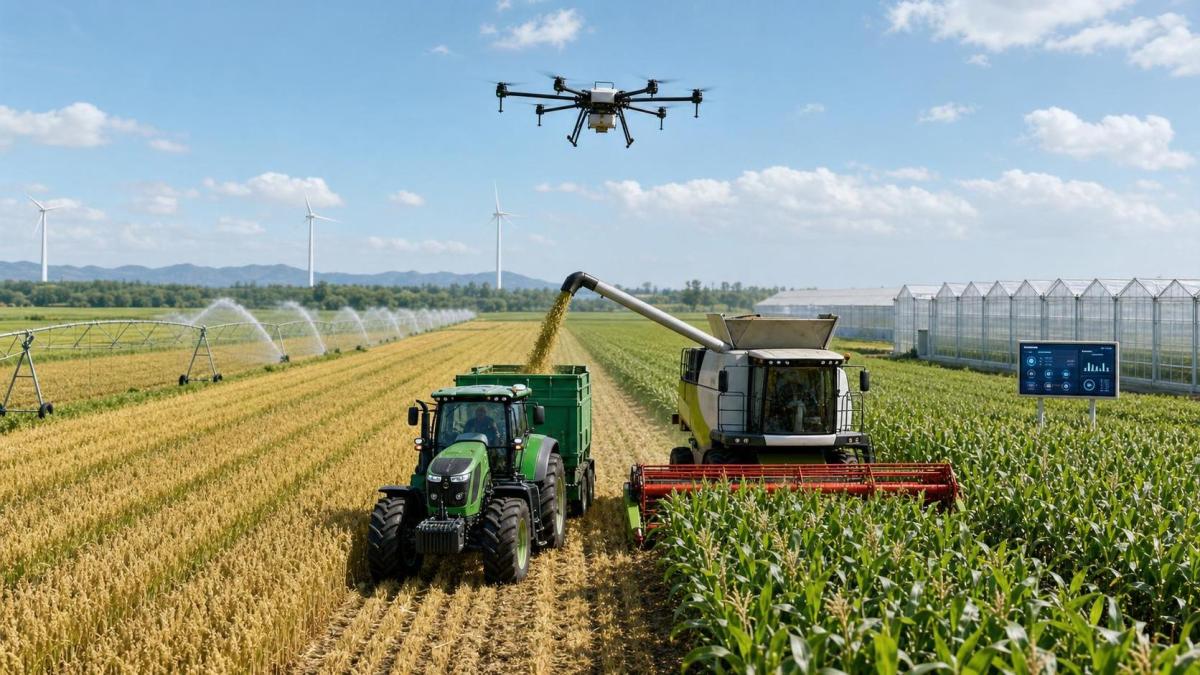
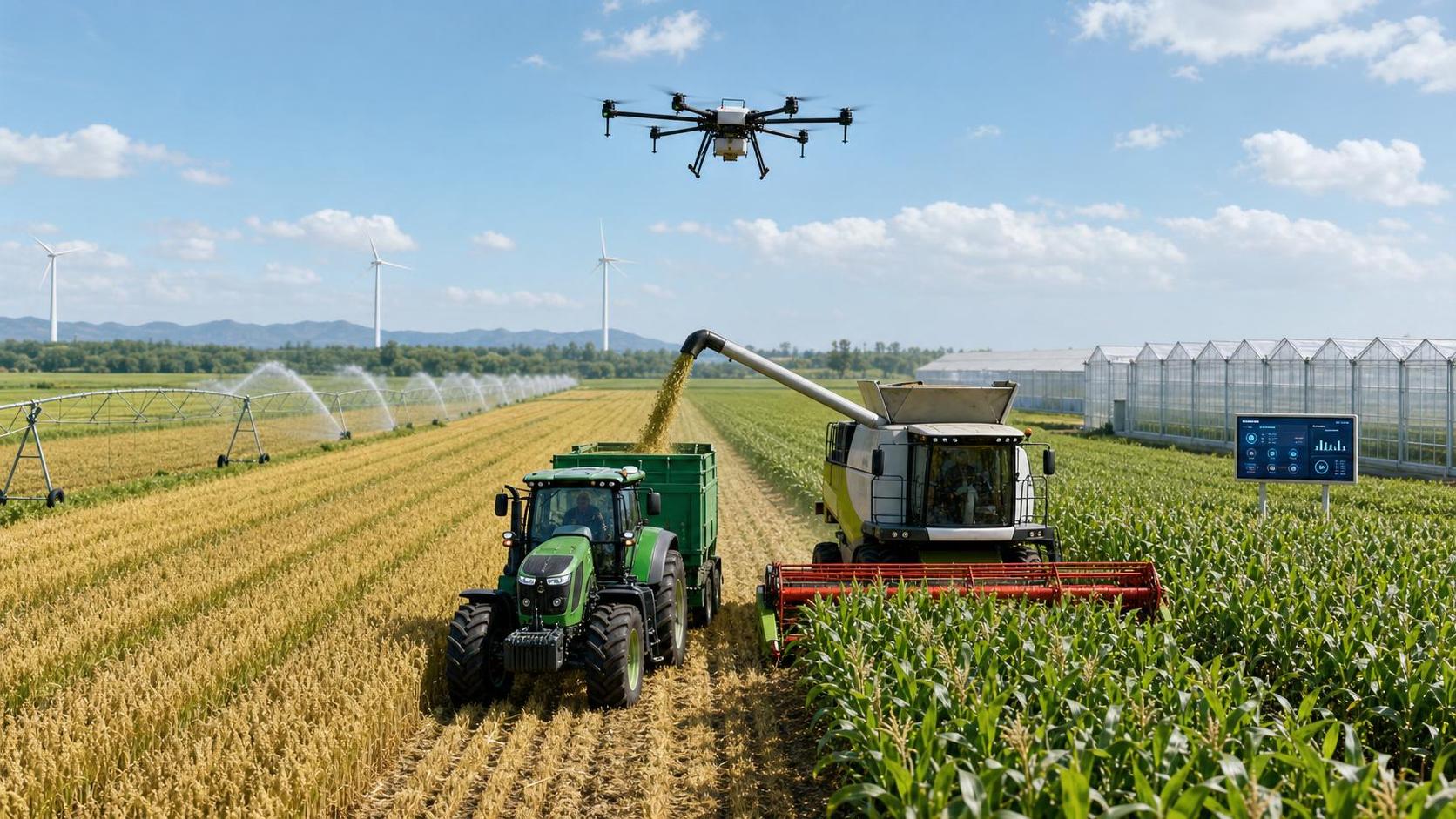
Digital farming trends are reshaping field operations in 2026 with more urgency than many expected two seasons ago.
What changed is not only the availability of technology. It is the way labor pressure, weather volatility, and input costs now hit at the same time.
That pressure is pushing farms and agricultural supply networks toward systems that connect machinery, sensing, and decision support into daily operations.
The strongest signal is practical rather than theoretical. Digital tools are no longer discussed as future upgrades. They are being measured against operating windows, fuel use, and per-acre return.
In this environment, digital farming trends are not limited to software dashboards. They extend to tractors, combines, drones, irrigation systems, livestock automation, and greenhouse control.
That broader view matters because modern agriculture increasingly depends on how well machines, agronomic data, and timing decisions work together.
Across the smart machinery landscape tracked by SAMS, the market is moving toward tighter integration between mechanical performance and digital intelligence.
The result is a new operating model: fewer isolated machines, more connected assets, and a stronger focus on execution quality during narrow planting and harvest windows.
Why Digital Farming Trends Have Become More Visible in 2026
Several forces are making digital farming trends more visible this year, and they are reinforcing each other.
Labor availability remains inconsistent. That raises the value of RTK guidance, autonomous steering, and machine interfaces that reduce operator fatigue over long field days.
Input inflation is another driver. When fertilizer, crop protection, energy, and water remain expensive, blanket application becomes harder to justify.
At the same time, climate uncertainty is exposing weak points in planning. Shorter workable windows demand faster field readiness and more accurate machine coordination.
Recent adoption patterns also show that connectivity is maturing. More equipment can now transmit performance, location, and agronomic data without requiring a separate digital layer later.
- Autonomous functions reduce repetitive steering tasks and improve pass-to-pass consistency.
- Precision drones support targeted spraying where terrain or timing limits ground equipment.
- NDVI maps and multispectral imaging help prioritize scouting and variable-rate interventions.
- IoT platforms bring machine uptime, field records, and input tracking into one operating view.
- Greenhouse and livestock controls show that digital farming trends now span open-field and controlled environments.
This is why 2026 feels different. Adoption is no longer driven only by innovation interest. It is driven by operational necessity.
The Center of Gravity Is Shifting From Single Machines to Connected Workflows
One of the clearest digital farming trends is the move away from evaluating equipment as stand-alone assets.
A 300-500 HP tractor is still judged on power, transmission behavior, and durability. But now it is also judged on guidance accuracy, data compatibility, and task coordination.
The same change applies to combines. Throughput still matters, yet so do loss monitoring, harvest mapping, and the ability to adapt settings during variable crop conditions.
In practice, digital farming trends are pulling machinery categories into shared workflows rather than separate equipment decisions.
This shift explains why platforms that connect machinery reliability, agronomic insight, and CAPEX logic are gaining more attention across the industry.
Demand Signals Now Favor Precision, Traceability, and Uptime
From recent market behavior, the most valuable digital farming trends are those that improve execution under pressure.
Precision remains central, but traceability is catching up fast. Farms want better records of where, when, and how work was completed.
That requirement affects spraying, fertilization, irrigation, forage handling, and livestock feeding routines. It also affects export readiness and compliance confidence.
More notable still is the rising importance of uptime intelligence. A machine that performs well only in specification sheets is no longer enough.
Connected diagnostics, remote monitoring, and service visibility are becoming part of asset value because field delays now carry heavier financial consequences.
This is especially relevant for high-output equipment such as combines, balers, and autonomous tractors, where a small interruption can compromise an entire operating window.
Digital farming trends therefore favor equipment ecosystems that can prove performance, not just claim capability.
The greenhouse and livestock side is following the same logic
The field machinery conversation often gets most attention, yet controlled environment agriculture shows the same market direction.
Climate sensors, CO2 control, fertigation, and hydroponic management are increasingly judged by data continuity and adjustment accuracy.
Livestock automation follows a similar path. Feeding robots, rotary milking systems, and machine vision tools matter because they stabilize routine decisions under labor constraints.
Seen together, digital farming trends are creating a cross-sector expectation: every subsystem should generate usable data and support faster intervention.
The Main Risk Is Not Slow Adoption but Fragmented Adoption
A common mistake in 2026 is assuming that adding more digital tools automatically creates a digital operation.
In reality, fragmented adoption creates new inefficiencies. Data sits in separate systems, machine settings stay inconsistent, and field teams cannot act on insights quickly enough.
This is where digital farming trends become a management issue rather than a technology issue.
The strongest operators are not necessarily buying the most advanced equipment first. They are aligning technology choices with workflow bottlenecks and return metrics.
- Check whether agronomic data can move directly into machine tasks or prescriptions.
- Review where field delays usually occur during planting, spraying, harvest, or feeding cycles.
- Compare digital features against measurable constraints such as overlap, idle time, fuel burn, and input variance.
- Treat service access and diagnostic visibility as part of lifecycle value.
That discipline matters because many digital farming trends now promise efficiency, but only integrated use turns promise into operating gain.
What to Watch Next as Digital Farming Trends Continue to Mature
Looking ahead, several developments deserve closer attention over the next planning cycle.
First, autonomy will keep expanding, but the real story will be supervised autonomy tied to practical field tasks rather than fully driverless headlines.
Second, variable-rate logic will become more valuable when it combines imagery, machine data, and local application history instead of relying on one data source.
Third, electrification and energy management will increasingly intersect with digital planning, especially in irrigation, greenhouse systems, and selected equipment categories.
Fourth, digital farming trends will be shaped by proof of interoperability. Buyers and operators are showing less patience for closed systems that limit scaling.
This is why sector intelligence platforms such as SAMS matter in a broader industry context. The value is not in promoting one machine category, but in connecting performance signals across the farm system.
That perspective helps decision-making stay grounded in use case, reliability, and return instead of feature inflation.
A Practical Response Starts With Better Questions
The next move is not simply to follow every digital farming trend. It is to identify which trend changes field execution most materially.
A useful starting point is to map decisions that still depend on delayed information, manual correction, or excessive operator judgment.
Then compare whether RTK guidance, remote sensing, machine monitoring, climate automation, or livestock control can remove those weak points.
Digital farming trends in 2026 are not about replacing farming judgment. They are about giving that judgment cleaner data, better timing, and stronger machine execution.
The businesses that benefit most will keep watching adoption signals, validate interoperability early, and build phased upgrade plans around measurable operating friction.
That approach offers a clearer path through a fast-changing market than chasing isolated features or waiting for a perfect technology cycle.
Related Intelligence