
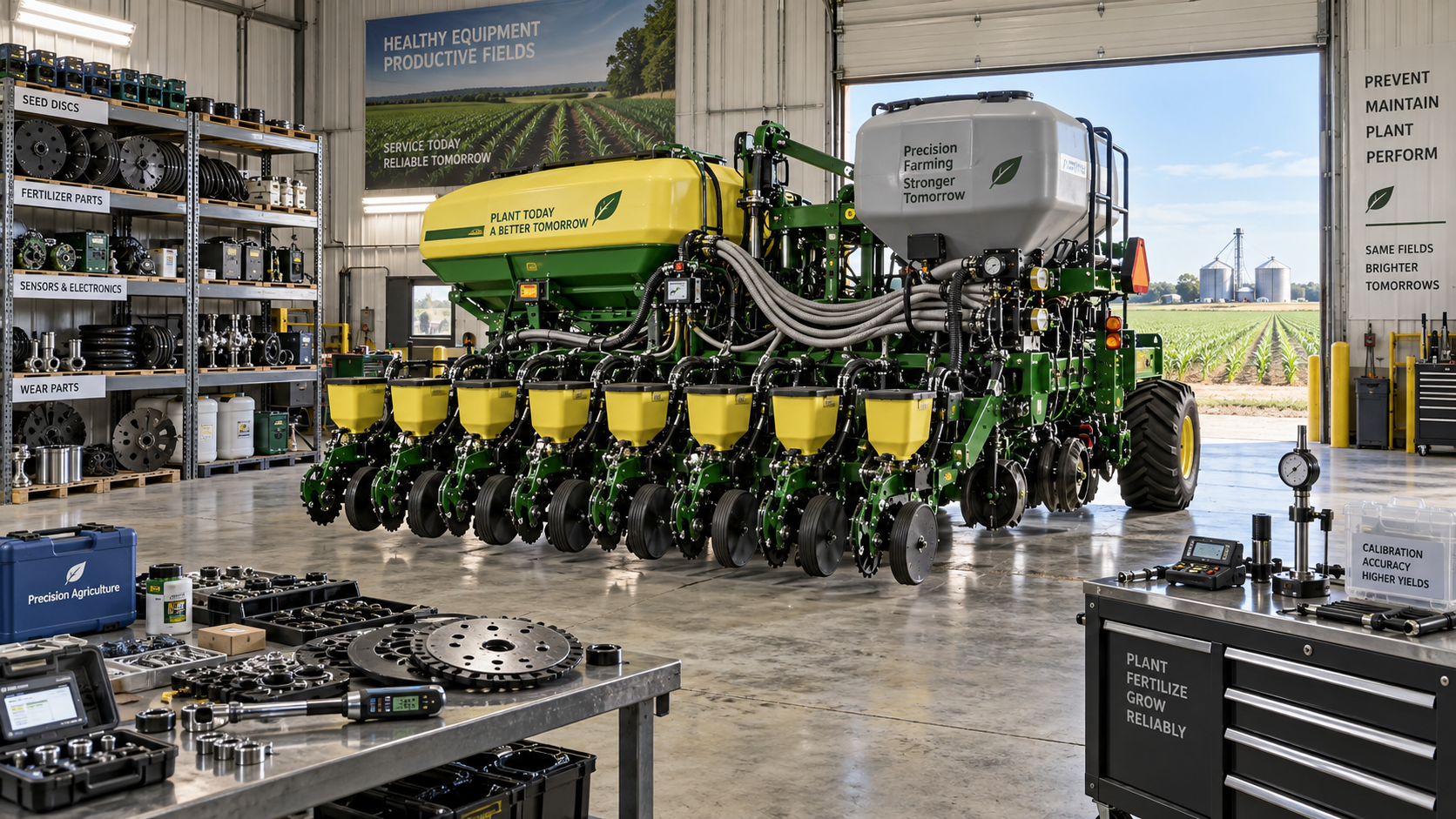
In modern farming, planting and nutrient application windows are too narrow for avoidable breakdowns. Service readiness determines whether equipment creates value or becomes a seasonal bottleneck.
The seed and fertilizer equipment services market increasingly centers on preventive maintenance, calibration, diagnostics, field response, and parts support for accuracy-critical machinery.
For after-sales maintenance teams, the practical objective is straightforward: keep machines available, correctly adjusted, and quickly recoverable during the hours customers cannot afford to lose.
What This Search Is Really Asking
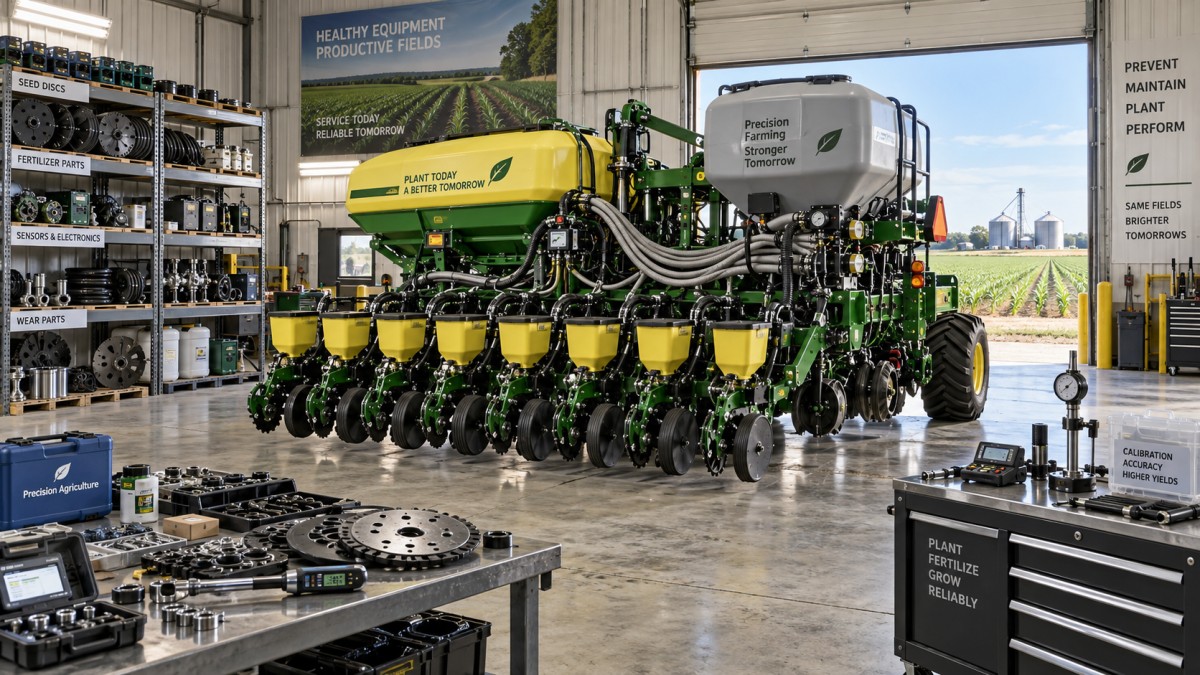
People searching this topic usually want to know when equipment service becomes economically necessary, rather than simply desirable, before planting or fertilizing operations begin.
They are assessing whether inspections, service contracts, mobile support, and stocked replacement parts can prevent downtime during compressed seasonal operating windows.
Maintenance professionals particularly need practical guidance on failure priorities, inspection timing, calibration responsibilities, troubleshooting escalation, and communication with dealers, growers, and operators.
The most useful answer connects service work with field consequences: missed planting windows, uneven emergence, fertilizer placement errors, wasted inputs, and lost customer confidence.
Generic descriptions of planters or spreaders add limited value here. The central issue is how service systems reduce risk before it becomes a costly in-season interruption.
Effective content should therefore emphasize decision triggers, maintenance routines, diagnostic workflows, parts planning, and measurable service performance instead of broad machinery market commentary.
Why Seasonal Downtime Costs More Than Repair Time
A failed seed meter may require only a short repair, yet the real cost includes idle labor, delayed field progress, weather exposure, and uneven crop establishment.
Planting delays can move crops beyond optimum soil temperature or moisture conditions. A service team should evaluate field timing risk alongside the mechanical repair requirement.
Fertilizer equipment failures carry similar consequences, especially when application timing affects crop uptake, nutrient loss, runoff exposure, or regulatory compliance requirements.
Downtime also creates indirect costs for dealers and manufacturers. Emergency calls consume technician capacity, disrupt planned work, and can damage long-term customer retention.
For large farms, a single unavailable planter bar, air seeder, or spreader can hold up multiple tractors, operators, tender vehicles, and logistics schedules.
Service priorities should reflect operational criticality. Components that stop the machine, affect rate accuracy, or create safety hazards deserve earlier intervention than cosmetic defects.
Maintenance teams should ask how many field hours are available, how much acreage remains, what weather risk exists, and whether backup equipment is available.
This assessment converts service planning from a workshop activity into an operational protection process aligned with the customer’s highest-risk seasonal periods.
When Preventive Service Delivers the Greatest Return
Preventive service is most valuable before demand peaks, when technicians have time to inspect thoroughly and replacement parts can arrive without emergency freight charges.
Post-harvest inspections provide an early opportunity to identify wear, corrosion, contamination, damaged harnesses, and inaccurate components before seasonal pressure begins.
Pre-season service should confirm that all repairs were completed, software is current, calibration tools are available, and operators understand the machine’s operating requirements.
For seed equipment, preventive work should focus on meters, seed tubes, openers, closing systems, vacuum circuits, drive chains, electric drives, and row control.
For fertilizer machinery, priorities include pumps, valves, conveyors, augers, bins, booms, discs, hoses, flow sensors, rate controllers, and corrosion-prone fittings.
Machines operating in abrasive dust, high humidity, or corrosive fertilizer environments require shorter maintenance intervals than equipment used under lighter conditions.
Service intervals should also account for annual workload. A unit covering large acreage may accumulate substantial wear within one season despite appearing relatively new.
Maintenance records should distinguish calendar-based tasks from usage-based tasks. This prevents under-servicing high-hour machines and unnecessary work on lightly used assets.
Which Failures Should After-Sales Teams Treat as Critical
Critical failures are not limited to complete machine stoppages. Any issue that compromises seed population, fertilizer rate, placement depth, or section control can create major losses.
On planters and seeders, inconsistent meter performance is a high-priority concern because skips, doubles, and population variation may not be obvious until emergence.
Worn disc openers, damaged gauge wheels, weak downforce systems, and failed closing wheels can alter seed placement even while the machine continues moving.
On fertilizer systems, inaccurate flow measurement can produce overapplication or underapplication across large areas before operators identify a discrepancy in reported rates.
Blocked hoses, leaking fittings, seized applicator discs, and malfunctioning section valves should trigger immediate action because they directly affect application uniformity.
Electrical and software faults also deserve structured attention. Modern control systems may fail intermittently, making random part replacement expensive and ineffective.
Technicians should separate symptoms from root causes. A rate-control alarm may originate in wiring, sensor contamination, hydraulic performance, controller settings, or communication networks.
A criticality matrix helps teams triage work consistently. It should score safety exposure, operational stoppage, quality impact, recurrence probability, and parts lead time.
How Calibration Protects Yield and Input Efficiency
Calibration is often treated as a final checklist item, but it should be considered a core service deliverable for every precision planting and application machine.
Seed meter calibration verifies that the system delivers target population across different seed sizes, shapes, coatings, treatment types, and operating speeds.
Technicians should inspect meter seals, brushes, disks, singulators, vacuum pressure, and sensor readings before relying on monitor data to confirm performance.
Fertilizer calibration must account for material density, granule size, moisture content, product flow characteristics, and actual conveyor or metering system behavior.
A controller can command the correct target rate while mechanical flow remains inaccurate. Physical catch tests remain essential for verifying real application output.
Variable-rate systems add another layer of responsibility. Teams must confirm prescription files, field boundaries, GPS accuracy, controller compatibility, and section-control logic.
Calibration documentation gives customers proof that service work protected agronomic performance. It also creates a baseline for investigating later claims or operational complaints.
When calibration results fall outside acceptable tolerance, the equipment should not be released until technicians identify whether wear, setup, product characteristics, or software caused it.
Building a Service Workflow That Works Under Pressure
A reliable workflow begins with machine identification, operating history, seasonal schedule, known defects, and the customer’s expected acreage before technicians start physical inspections.
Standardized checklists improve consistency, but they should support technician judgment rather than become a box-ticking exercise disconnected from actual machine condition.
Each inspection should produce clear outcomes: ready for operation, ready with monitored items, requires planned repair, or unsuitable for release until corrective work finishes.
Digital service records should capture serial numbers, meter test results, applied software versions, part replacements, photographs, fault codes, and operator observations.
This information helps the next technician understand prior work, recognize recurring issues, and avoid repeating diagnostic steps during a time-sensitive customer call.
Teams should assign ownership for every open item. Ambiguous responsibility between workshop personnel, field technicians, parts staff, and customers causes preventable delays.
Before a machine leaves the service bay, technicians should test relevant functions under realistic conditions, including drive engagement, rate response, sensor feedback, and section operation.
A final handover discussion should explain completed work, remaining watch points, recommended spares, and any operating practices that could reduce future reliability.
Why Parts Availability Is a Core Service Capability
The seed and fertilizer equipment services market is shaped heavily by parts availability because a correct diagnosis still fails the customer when critical components remain unavailable.
Dealers should identify high-failure and high-impact parts using service records, warranty trends, seasonal demand patterns, and machine populations within their territory.
Recommended stock commonly includes sensors, harnesses, bearings, seals, hoses, meter components, chains, drive motors, hydraulic fittings, valves, and controller-related accessories.
Parts stocking should not be based only on purchase price. The right calculation compares inventory carrying cost with emergency downtime exposure and lost service revenue.
Some components require advance planning because suppliers have long lead times. These include electronic modules, specialized hydraulic parts, custom hoses, and major structural assemblies.
Technicians should record failed parts accurately, including failure mode and operating conditions. That data improves stocking decisions and supports manufacturer quality improvement efforts.
Mobile service vehicles need carefully selected inventory rather than excessive stock. Their purpose is to resolve common field failures without returning to the dealership.
Clear parts communication is essential when repairs cannot be completed immediately. Customers need confirmed availability, realistic arrival dates, and practical options for temporary continuity.
Using Remote Diagnostics Without Ignoring Mechanical Reality
Connected machinery allows service teams to review fault codes, controller status, GPS data, application records, and machine alerts before traveling to the field.
Remote diagnostics can reduce travel time and help technicians arrive with appropriate tools and parts, especially across dispersed agricultural regions during peak seasons.
However, remote data cannot replace physical inspection of worn openers, blocked tubes, leaking hoses, damaged bearings, incorrect adjustment, or contaminated product flow paths.
The strongest service model combines remote triage with field verification. Digital information narrows the probable fault, while hands-on inspection confirms the repair path.
Maintenance teams should establish escalation rules for alerts. Not every warning requires an immediate visit, but rate, population, hydraulic, and safety alarms often deserve priority.
Operators also need guidance on what evidence to provide. Photos, screen captures, error codes, product details, and recent machine changes speed up diagnosis significantly.
Remote support is particularly useful for configuration problems, prescription setup, monitor troubleshooting, and basic sensor checks when qualified operators are available on site.
Service managers should measure remote resolution rates carefully. A quick phone fix has value only when it restores accurate field performance rather than masking a developing failure.
Metrics That Show Whether Service Is Reducing Downtime
After-sales teams need measures that show more than completed work orders. The real question is whether maintenance activity improved customer availability during critical operating periods.
Seasonal machine availability is a useful metric. It compares expected operational time with time lost to repair, waiting for parts, diagnostics, and repeat failures.
First-time fix rate indicates whether technicians, documentation, tooling, and parts preparation were sufficient to resolve issues during the initial service intervention.
Mean time to repair should be tracked by failure category. This reveals whether delays result from diagnosis, authorization, technician scheduling, transport, or parts supply.
Calibration pass rates provide another valuable signal. Repeated failures may indicate operator setup problems, product variability, component wear, or insufficient pre-season inspection standards.
Repeat-call frequency is especially important. A machine that returns repeatedly for similar problems weakens customer trust even when each individual repair appears minor.
Customer feedback should include questions about field timeliness, communication quality, repair effectiveness, and confidence in equipment accuracy after service completion.
These measures give managers evidence for staffing decisions, training investments, inventory levels, mobile service coverage, and manufacturer escalation of recurring technical problems.
How to Prioritize Improvements for the Next Season
Begin with a review of the previous season’s downtime events. Identify which failures occurred most often, caused the longest delays, or affected the greatest acreage.
Next, compare those events with inspection findings. If failures were predictable from visible wear or diagnostic trends, strengthen the relevant preventive maintenance procedures.
Review whether service capacity matched demand. A technically capable team still struggles when too few technicians are available during narrow planting and application periods.
Training should target actual failure patterns, not only new product introductions. Technicians need confidence with hydraulics, electronics, calibration, software, and mechanical adjustment.
Customer education also matters. Many avoidable failures result from incorrect setup, insufficient cleaning, unsuitable product handling, delayed lubrication, or ignored monitor warnings.
Create separate plans for high-acreage customers, older machines, newly introduced models, and equipment operating in corrosive or demanding environments. Their risk profiles differ materially.
Service managers should meet with parts teams before peak season to validate stocking assumptions, supplier lead times, emergency ordering procedures, and mobile inventory allocations.
Finally, communicate the plan early. Customers are more likely to schedule inspections when they understand that pre-season service protects both machine uptime and agronomic results.
Conclusion: Service Is a Seasonal Risk-Control System
Seed and fertilizer equipment services reduce seasonal downtime when they are planned around field risk, not merely around workshop availability or routine maintenance calendars.
For after-sales maintenance teams, the highest-value work combines preventive inspection, accurate calibration, disciplined diagnostics, critical-parts readiness, and clear customer communication.
The strongest programs recognize that a machine can be mechanically mobile while still creating agronomic risk through poor seed placement or inaccurate fertilizer application.
By measuring availability, repair speed, calibration outcomes, repeat failures, and parts delays, service organizations can improve decisions before the next high-pressure season begins.
In the seed and fertilizer equipment services market, reliable support is ultimately measured in protected field hours, consistent application quality, and customer confidence when timing matters most.