
Intelligent Irrigation Systems Australia: Cost vs Water Savings
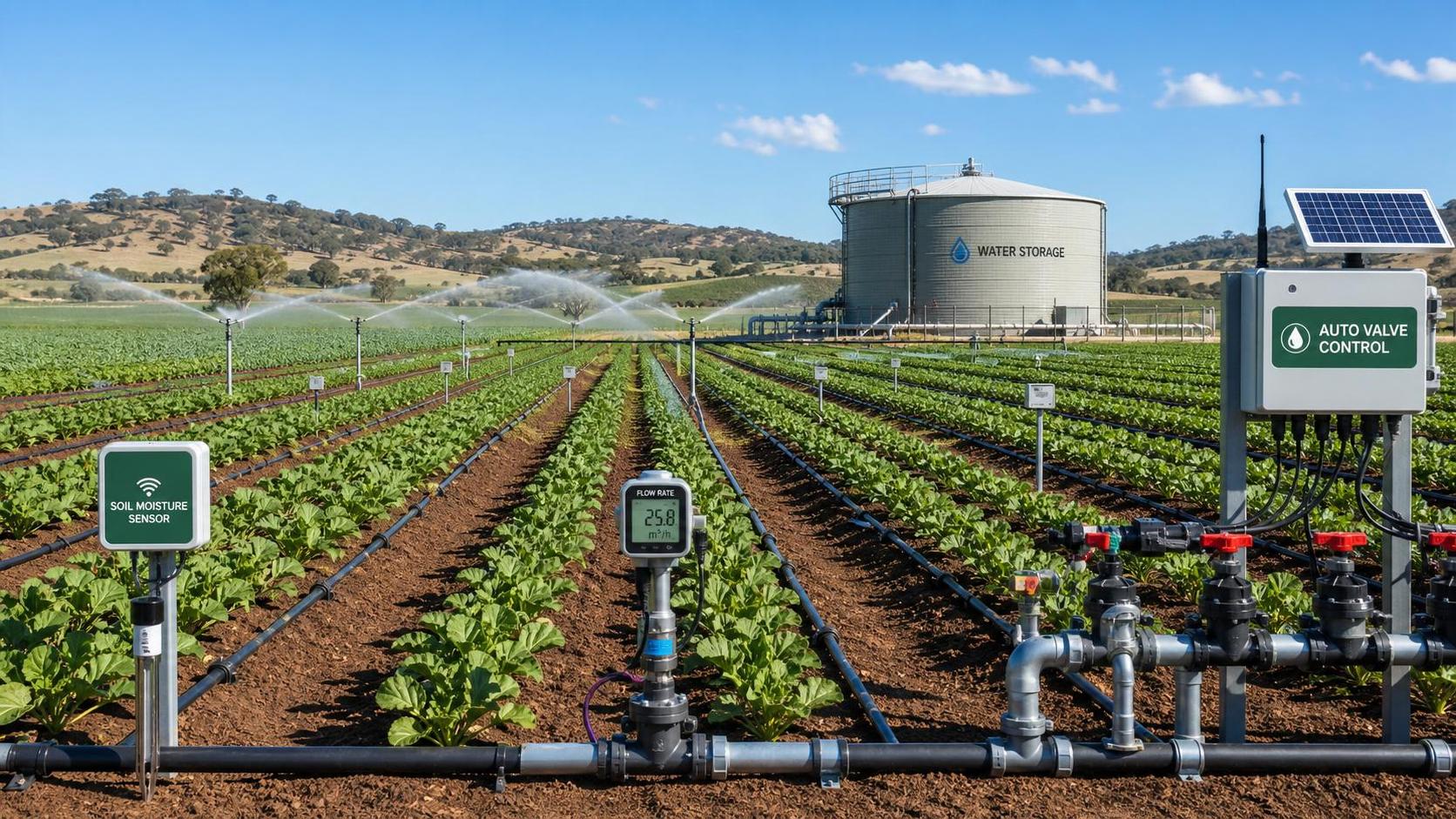
Intelligent Irrigation Systems Australia: why this cost question matters now
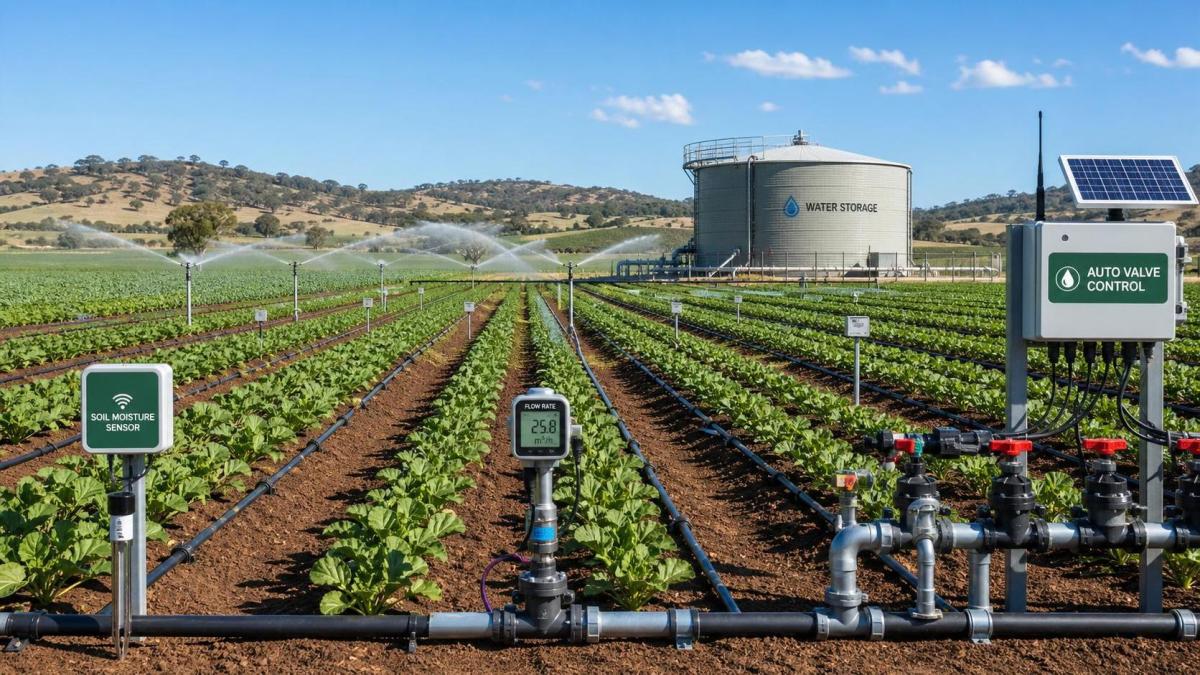
In Australia, irrigation spending is no longer judged by equipment price alone.
Water availability, pumping energy, labor pressure, and crop consistency now sit in the same approval discussion.
That is why intelligent irrigation systems Australia are gaining attention across broadacre farming, horticulture, greenhouses, and intensive production sites.
The real question is not whether smart control sounds useful.
It is whether the capital outlay produces measurable water savings and acceptable payback under Australian operating conditions.
In practical terms, an intelligent irrigation system combines sensors, flow monitoring, weather inputs, valve control, scheduling software, and remote visibility.
On larger sites, it often links with digital farm management, fertigation, climate control, or telemetry already used elsewhere on the business.
That broader systems view matters.
Platforms such as SAMS track these technologies because irrigation performance increasingly affects crop output, input efficiency, and investment risk together.
What counts as an intelligent irrigation system, and what are buyers really paying for?
The term covers more than automated timers.
Most intelligent irrigation systems Australia include several layers of capability, each adding cost for a different reason.
- Field sensing, such as soil moisture probes, pressure sensors, and flow meters.
- Control hardware, including valves, pump automation, and controller units.
- Software functions, such as scheduling, alerts, remote dashboards, and irrigation history.
- Connectivity, usually cellular, radio, LoRaWAN, or farm network integration.
- Commissioning, mapping, calibration, and training.
This means pricing varies sharply by site complexity.
A greenhouse zone upgrade differs from a multi-pivot broadacre installation or a drip-irrigated orchard retrofit.
More commonly, the biggest hidden cost is not hardware.
It is integration with existing pumps, filtration, fertigation, and legacy control infrastructure.
That is where technical diligence matters.
A low quote may exclude telemetry reliability, software subscriptions, installation downtime, or sensor replacement cycles.
A useful way to separate cost components
If these items are not separated, comparing suppliers becomes difficult and approval risk rises.
How much water can intelligent irrigation systems Australia actually save?
The honest answer is that water savings depend on the starting point.
Sites already using disciplined scheduling will usually see smaller gains than sites relying on manual judgement or fixed intervals.
In actual deployments, intelligent irrigation systems Australia often reduce water waste through three mechanisms.
- They stop overwatering caused by habit-based schedules.
- They detect leaks, pressure anomalies, or blocked zones earlier.
- They align irrigation timing with crop stage, evapotranspiration, and weather shifts.
For many operations, the saving range may be meaningful even before yield effects are counted.
That said, water saved is not the only financial outcome.
Better timing can lower pumping hours, reduce runoff-related nutrient loss, and protect crop uniformity during hot periods.
These secondary gains often determine whether payback looks average or compelling.
This is especially true in greenhouse, hydroponic, and fertigation-linked environments, where water and nutrient control are tightly connected.
A simple savings check before approval
Before accepting a savings claim, ask for site-based evidence around these points.
- Baseline annual water use by zone or crop block.
- Historic pumping energy cost tied to irrigation volumes.
- Expected reduction in irrigation events or duration.
- Evidence from comparable climate and soil conditions.
- Estimated effect on yield variability, not just water volume.
Without those inputs, projected ROI is usually too generic to trust.
When does the investment make sense, and when is the payback too weak?
This is where many evaluations become more useful.
Instead of asking whether the technology is good, ask whether the operating profile is suitable.
Intelligent irrigation systems Australia usually make stronger financial sense under several conditions.
- Water is scarce, allocated, or expensive to access.
- Pumping energy is a significant operating cost.
- Crop value is high and quality variability is costly.
- Labor availability limits manual monitoring.
- The site has multiple zones needing different irrigation decisions.
Payback tends to weaken when low-value crops, simple layouts, and already-optimized water routines leave little waste to remove.
Another weak case appears when poor infrastructure is mistaken for a control problem.
If pumps, pipes, emitters, or pressure balance are unreliable, software alone will not fix system losses.
Quick judgement table
Where do buyers misread the numbers on intelligent irrigation systems Australia?
The most common mistake is using water savings as the only benefit line.
That sounds conservative, but it can also distort the decision.
An irrigation upgrade may influence energy, labor, fertilizer efficiency, crop rejection rates, and risk exposure during heat events.
Ignoring those effects can understate value.
The reverse mistake also happens.
Some proposals assume perfect adoption, flawless connectivity, and immediate agronomic improvement from day one.
That usually overstates returns.
A more reliable review separates controllable savings from aspirational gains.
Watch these approval risks closely
- Subscription fees omitted from total cost of ownership.
- Sensor placement too limited for soil variability.
- Savings modeled from another crop type or climate zone.
- No plan for calibration, seasonal review, or operator training.
- Weak data integration with existing farm software or climate systems.
That last point deserves attention.
SAMS often frames irrigation inside a broader precision agriculture stack, not as an isolated control box.
If irrigation data cannot connect with digital farm management, fertigation records, or climate monitoring, the strategic value falls.
What should be checked before approving a system or shortlisting suppliers?
A sound review process is usually more important than chasing the cheapest quote.
For intelligent irrigation systems Australia, the strongest approvals are built on comparable field evidence and a clear implementation scope.
Before moving forward, confirm the following:
- Which zones, pumps, and crop blocks are included in phase one.
- How baseline water and energy use will be measured.
- Whether the proposal includes integration with existing telemetry or farm software.
- What support model applies during the first irrigation season.
- How success will be reported after installation.
For many sites, a phased rollout is the more defensible choice.
It allows one block, pivot, or greenhouse section to establish baseline savings before full deployment.
That approach reduces approval risk and gives better local data for later expansion.
In the end, intelligent irrigation systems Australia should be assessed as infrastructure with data value, not just as a water-saving accessory.
The best next step is to build a short comparison sheet covering installed cost, annual water reduction, energy effect, subscription burden, integration fit, and expected payback range.
Once those numbers are clear, the approval decision becomes less about promise and more about operational evidence.
Related Intelligence