
How to prevent bottlenecks in agricultural bulk handling automation
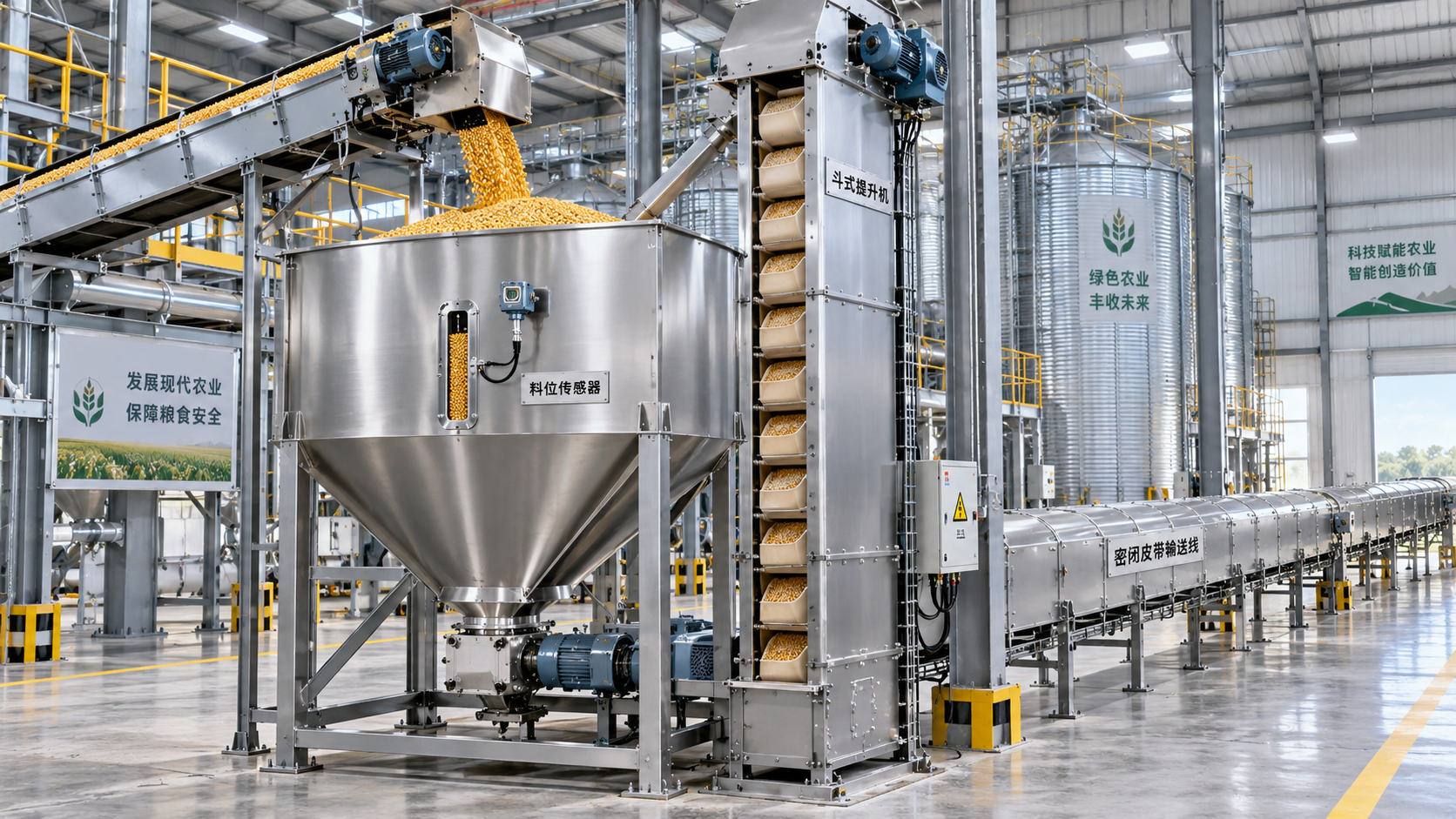
A bottleneck in agricultural bulk handling automation is rarely caused by one obviously slow machine. More often, material reaches one point faster than the next stage can accept it: grain arrives at an intake pit before the elevator clears, feed is mixed before the receiving bin is ready, or fertilizer is available at the hopper while the transfer line is blocked by bridging material. The practical response is not simply to install a larger conveyor. It is to identify the constraint, protect it from interruptions, and make every connected machine respond to the real flow condition.
For grain, feed, seed, fertilizer, and similar materials, the system only moves as well as its slowest active stage. Agricultural bulk handling automation works reliably when storage capacity, conveying equipment, control logic, material behavior, and operator procedures are treated as one process rather than separate purchases.
Find the real constraint before increasing capacity
When a line backs up, the nearest stopped conveyor often gets blamed. That can be misleading. A conveyor may stop because its downstream bin is high, its elevator is overloaded, its discharge gate is slow to open, or an interlock has correctly prevented a spill. Replacing that conveyor with a faster model can make the problem worse by sending material to an already restricted point more quickly.
Trace the material path from receiving to final storage or loading. Observe the system during its highest-demand period, not during a calm part of the day. Note when each transfer starts, pauses, and restarts. The important questions are simple:
- Where does material wait longest?
- Which machine runs continuously, and which repeatedly cycles or stops?
- Does the delay occur only with one material, moisture condition, or delivery method?
- Are stoppages caused by mechanical limits, a full destination, a control signal, or an operator decision?
- Can upstream equipment be slowed or paused before material accumulates in an unsafe location?
Measure the process in time and events, not only in rated tonnes per hour. Equipment nameplate capacity assumes suitable material, proper loading, clean components, and stable operation. Field conditions introduce uneven truck unloading, variable crop moisture, fines, lumps, dust, and changing demand at the receiving end. A line that appears properly sized on paper can still spend much of the shift waiting for one poorly coordinated handoff.
A useful way to think about capacity is to distinguish between peak flow and sustained flow. The system must accommodate short surges without overflowing, but it also needs a sustainable rate that downstream cleaning, drying, storage, mixing, or loading equipment can maintain. Buffer storage absorbs variation; it does not fix a permanent mismatch in capacity.
Build buffers where variation actually occurs
Intermediate bins, surge hoppers, and holding sections are valuable when they separate two processes that operate at different rhythms. Truck unloading is intermittent and fast. Drying may be continuous but limited. Feed mixing is batch-based, while livestock feeding may follow scheduled delivery windows. Without a buffer, every upstream interruption becomes a downstream disruption.
The best location for a buffer is usually just before the process that cannot be allowed to starve or cannot quickly increase output. For example, a surge bin before a dryer can maintain a steady feed while trucks arrive unevenly. A bin before a pellet mill or feed mixer can prevent a receiving delay from stopping the whole formulation sequence. Conversely, placing extra storage after a slow process does little to prevent that process from becoming the limiting point.
Buffer capacity needs usable level range, not merely physical volume. High-level alarms and low-level cutoffs reduce spills and empty-running, but settings that are too close together can make equipment start and stop repeatedly. That cycling increases wear and creates unstable flow. Set control thresholds with enough separation for the system’s response time, conveyor run-out, and the material still in transit.
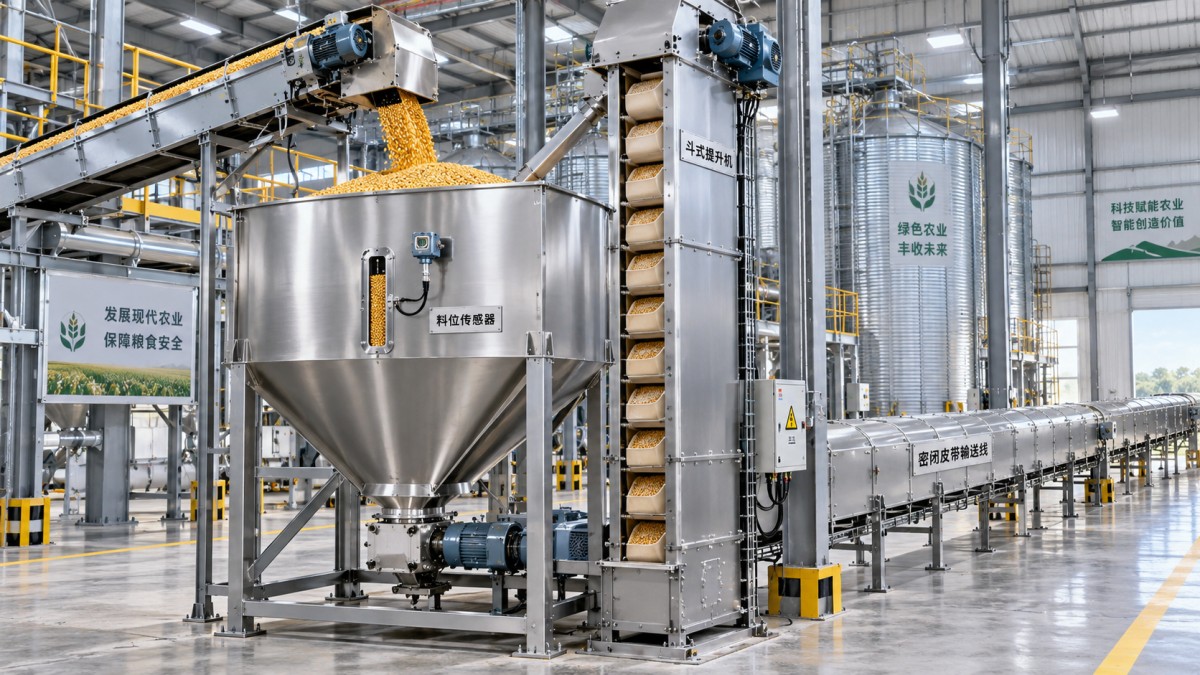
It is also important to recognize when a buffer is the wrong solution. A bin cannot solve chronic bridging, inconsistent moisture, a plugged spout, or a conveyor that lacks sufficient conveying capacity. It can hide the issue long enough for it to become harder to diagnose. If the buffer stays near empty or near full for most of the operating period, it is acting as evidence of a mismatch rather than a stabilizer.
Make controls follow material flow, not just equipment status
Automation prevents bottlenecks when the controls understand what the material is doing. A basic start sequence may turn on the discharge conveyor, then the elevator, then the receiving conveyor. That protects against immediate blockage, but it does not necessarily manage changing flow conditions. More resilient systems use level sensors, speed feedback, motor load, gate position, and fault status to regulate the line.
At a minimum, each transfer route should have a clear permissive sequence. Downstream equipment must be proven available before upstream equipment starts. If a destination reaches a high level, the system should stop the source in an orderly sequence rather than allowing material to pile up in a chute or elevator boot. During shutdown, upstream equipment should stop first and downstream equipment should run long enough to clear material already in the route.
However, an excessive number of interlocks can create a different problem: nuisance stops that operators bypass because the reason is unclear. Each interlock should have a defined purpose, a visible status, and a meaningful alarm message. “Conveyor fault” is not as useful as “transfer route unavailable: receiving bin high-high level” or “elevator speed signal missing.” Operators need to know whether they should wait, clear a blockage, select another destination, or call maintenance.
Use variable speed carefully
Variable-speed drives can smooth flow by allowing conveyors, screw feeders, or augers to match the capacity of downstream equipment. They are particularly useful where a process has a stable but lower target rate than the upstream supply. A speed-controlled feeder can reduce surges into cleaning, drying, mixing, or weighing equipment.
They are not a universal answer. Some materials become less stable at very low feed rates, while long screw conveyors and certain belt arrangements may require a minimum speed for consistent discharge. Controls also need a reliable process signal. Reducing conveyor speed based only on motor current may respond too late when a bin is already nearing its limit. Combine speed control with level measurement and a defined operating range.
Material behavior is often the hidden cause
Automation cannot make difficult material flow like clean, dry grain. Moist feed ingredients, sticky fertilizer, fine powders, high levels of broken grain, and variable particle sizes can bridge, segregate, compact, or cling to chutes. The resulting stoppages may look random because the mechanical equipment is functional until a particular material condition appears.
Look closely at where flow changes direction, narrows, or falls into a bin. Sharp transitions, shallow hopper walls, worn liners, damaged belt scrapers, and partially closed gates can all create a restriction. A material that works well in a straight conveyor may plug at a transfer point. Dust accumulation can also interfere with sensors, limit switches, and inspection access.
For recurring problems, record the material involved, its condition, the route selected, and the exact location of the restriction. This separates a true equipment capacity issue from a material-flow issue. The remedies differ: capacity issues may require changes to conveying or storage; flowability issues may require hopper geometry improvements, improved chute design, agitation suited to the material, cleaning routines, or changes in how materials are received and stored.
Do not respond to bridging by sending someone into a hopper or relying on improvised clearing methods. A stopped bulk-material system can still contain unstable material and stored energy. The safer operational goal is to detect abnormal flow early, isolate the route, and use established lockout and cleaning procedures before the blockage becomes a major recovery job.
Protect the bottleneck from avoidable downtime
Once the limiting process is identified, its availability deserves more attention than equipment that has spare capacity. If a dryer, central elevator, mixer, or loading station sets the practical throughput, a minor unplanned stop there affects the entire operation. Maintenance planning should reflect that importance.
Routine checks should focus on failure points that disrupt flow without necessarily causing an immediate motor trip: belt tracking, chain tension, pulley and bearing condition, scraper wear, sensor alignment, gearbox lubrication, loose covers, buildup in boots and chutes, and gate movement. A sensor that reads falsely high can stop a line just as effectively as a mechanical blockage. A worn belt can carry material until peak loading exposes the issue.
Maintenance is most useful when it is tied to operating symptoms. Repeated high motor load, longer transfer times, frequent start-stop cycles, unexplained level changes, or the need to reset the same alarm are early warnings. Treating these as normal operator inconvenience allows small restrictions to develop into a stoppage during the period when downtime is least acceptable.
Give operators clear choices during abnormal conditions
Even well-designed agricultural bulk handling automation needs human intervention when deliveries change, material quality varies, or a fault develops. Operators should not have to guess whether material can be diverted, whether a route can be restarted, or what must be checked before clearing an alarm.
Screen layouts and local controls should make the material route visible: source, active conveyors, selected destination, bin levels, and any unavailable equipment. This is more useful than a display full of individual motor indicators. When several routes share an elevator or diverter, show which route has control and why another route cannot start.
A short response procedure for common conditions prevents rushed decisions:
- Stop or reduce material entering the affected route.
- Confirm whether the downstream destination is available and has usable capacity.
- Identify the first abnormal point in the flow direction, rather than restarting every machine.
- Clear material only through the approved isolation and access process.
- Restart from downstream to upstream, then watch the route until flow stabilizes.
- Record the cause if the event repeats, especially when it is linked to a material type or operating condition.
Manual override should be available only where it has a clear operational purpose and does not defeat essential protection. Repeated overrides are not evidence that operators need to “work around” the system; they usually indicate that the controls, alarm logic, or equipment design needs adjustment.
Coordinate receiving, storage, and dispatch schedules
Some bottlenecks are created before equipment starts. A grain receiving system may be capable of handling normal arrivals but not several vehicles unloading into the same route while storage space is being reassigned. A feed operation may have enough conveying capacity but still delay production because ingredient deliveries, batching, and dispatch all compete for one transfer path.
Use the automation system’s operating data to plan around these conflicts. Review which bins fill first, which routes are requested at the same time, when queues form, and which alarms occur during peak activity. The goal is not to eliminate every wait. It is to avoid avoidable overlaps at shared equipment and to reserve capacity for the operation that has the narrowest timing window.
Before harvest, a major feed run, or seasonal fertilizer receiving, verify empty storage, route availability, sensor operation, and the expected destination for each material. This preparation is more valuable than discovering during peak flow that a bin has insufficient usable capacity or a diverter is assigned to another route.
Improve in the right order
When a bulk handling system struggles, start with the operating evidence: route history, alarm patterns, bin levels, material characteristics, and the point where waiting begins. Correct poor sequencing, sensor faults, transfer restrictions, and maintenance issues before committing to a major capacity upgrade. These changes often restore usable throughput because they reduce the lost time between transfers.
If the same point remains fully utilized after those corrections, it is likely a genuine capacity constraint. Then an upgrade can be evaluated properly: not as a larger standalone machine, but as part of a route with compatible intake, discharge, storage, controls, and safe access. That approach keeps automation focused on its real job: maintaining predictable material flow when the operation is under pressure.
Related Intelligence