
Grain Cleaning System Price: Cost Drivers and Payback
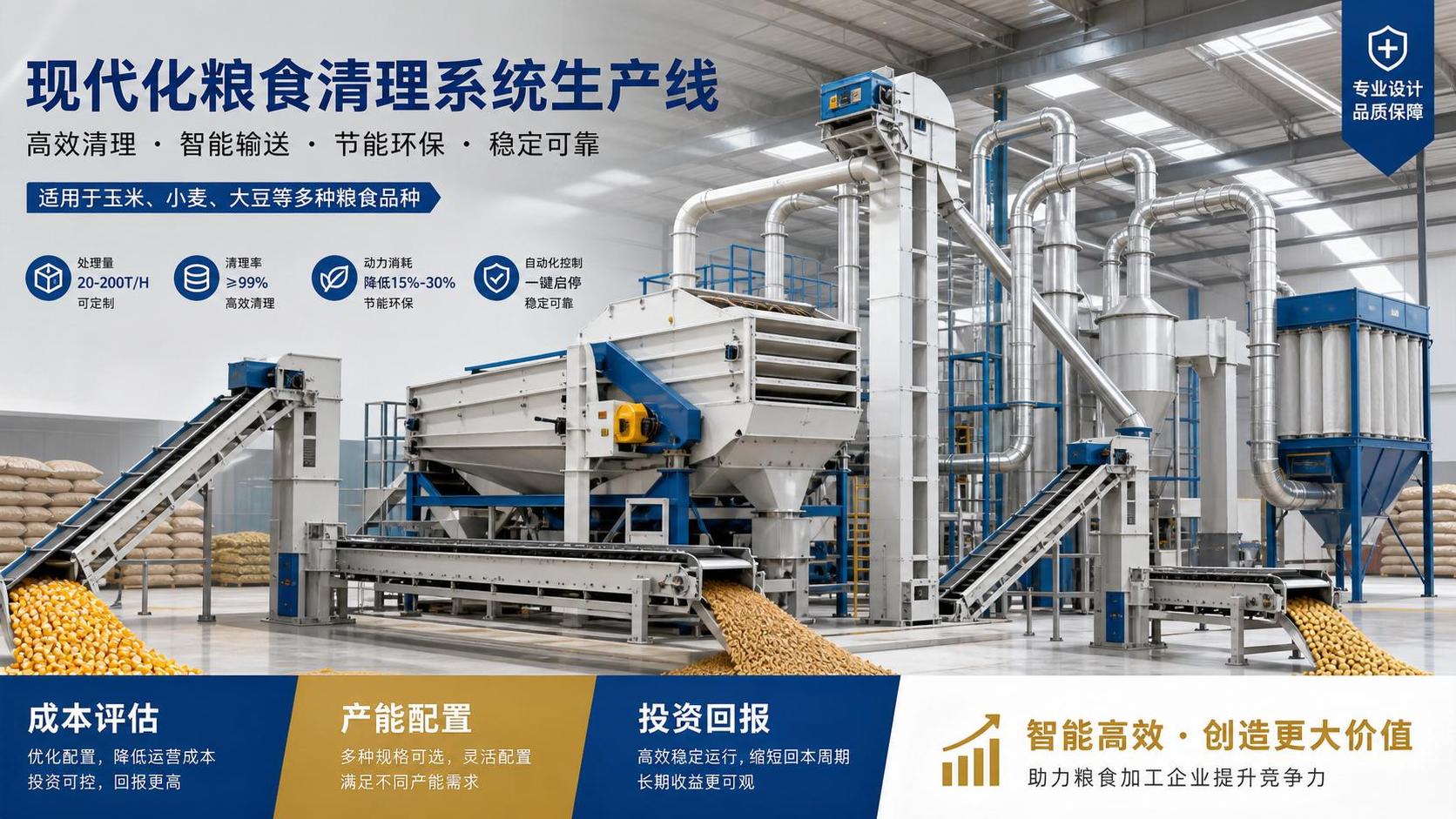
Why does grain cleaning system price vary so much between suppliers?
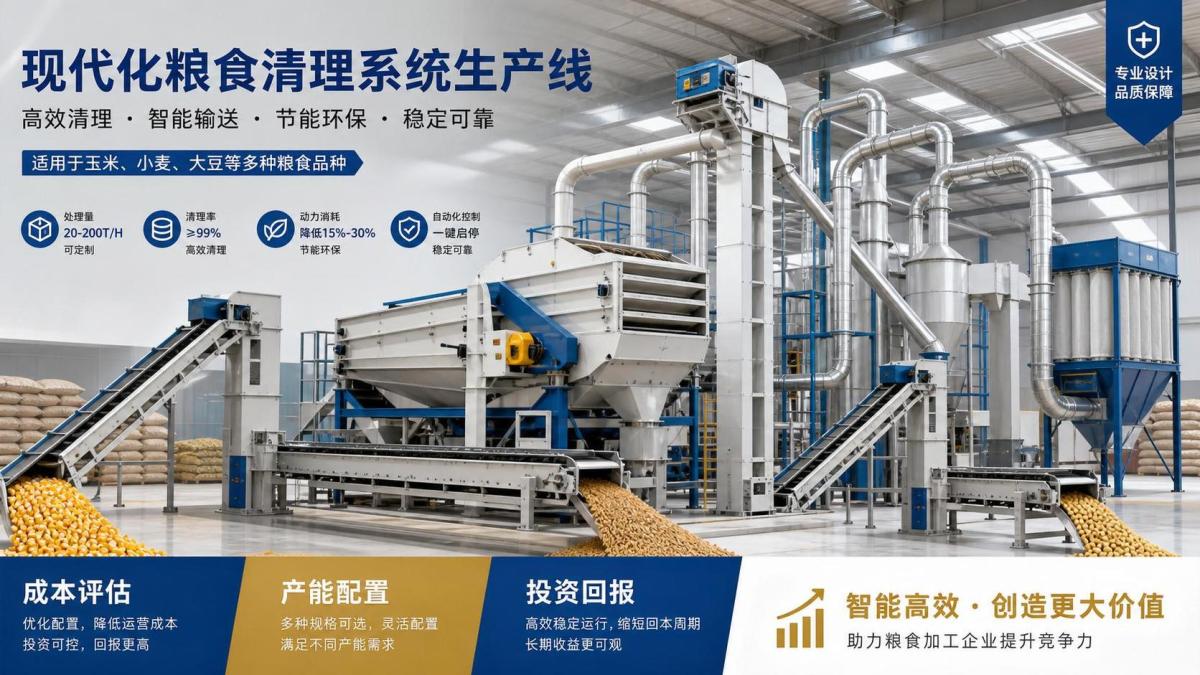
The short answer is that grain cleaning system price reflects process design, not just machine size.
Two quotations may look close on paper, yet serve very different operating realities.
One line may suit a seasonal grain intake point.
Another may support continuous cleaning before storage, drying, export grading, or seed preparation.
In practical terms, the largest cost drivers usually include hourly throughput, impurity removal target, crop diversity, and automation depth.
A system handling corn, wheat, soybean, and sunflower often needs more flexible screens, airflow control, and material routing.
That pushes grain cleaning system price above a single-crop setup.
Layout complexity matters too.
A compact standalone cleaner costs less than a line integrated with conveyors, bucket elevators, dust control, sensors, and digital monitoring.
This is why experienced buyers rarely evaluate grain cleaning system price as a one-number comparison.
They review the full process path, expected contamination level, and the cost of downtime during harvest.
That broader view aligns with how modern agricultural equipment decisions are assessed across mechanized operations.
Platforms such as SAMS often frame machinery value through output stability, labor efficiency, and return per acre, not list price alone.
What is usually included in grain cleaning system price, and what gets quoted separately?
This is where many budget assumptions fail.
A base quote may cover the cleaner body, motors, and standard screens only.
Installation steel, civil work, electrical panels, cable trays, dust aspiration, and commissioning may sit outside the number.
Some suppliers also separate freight, spare parts kits, training, and performance validation.
For that reason, grain cleaning system price should be broken into equipment cost and project cost.
That distinction helps avoid a low initial quote turning into a higher final investment.
A useful review table is below.
If a quotation cannot clearly separate these items, comparison becomes unreliable.
The better approach is to request a line-by-line commercial scope and a line-by-line excluded scope.
Which technical choices have the biggest impact on payback?
Payback is usually driven by avoided loss, not only by faster cleaning.
That point is easy to miss when focusing only on grain cleaning system price.
For example, a system that removes fines, broken kernels, stones, and light impurities more consistently can improve storage behavior.
Cleaner grain may reduce hot spots, insect pressure, and drying inefficiency.
The result is fewer quality claims and less shrink loss.
Several technical decisions often shape that outcome.
- Capacity matching: Oversized systems waste capital and energy at partial load.
- Air-screen precision: Better separation improves marketable grade and storage performance.
- Automation level: Sensors and auto-adjustment reduce operator dependence during peak intake periods.
- Dust management: Cleaner airflow protects motors, bearings, and work areas.
- Access for maintenance: Faster screen changes lower downtime between crops.
In operations already using connected machinery, digital visibility becomes more valuable.
That is consistent with broader smart agriculture trends covered by SAMS.
Machines are no longer judged only by horsepower or mechanical output.
They are judged by uptime, control quality, and predictable return.
So when reviewing grain cleaning system price, it helps to ask which features directly reduce annual operating loss.
When does a lower grain cleaning system price become the more expensive option?
Usually when the cheaper system creates hidden cost after installation.
This can happen through unstable throughput, difficult maintenance access, high screen wear, or weak supplier support.
A lower grain cleaning system price may also depend on narrow test conditions.
Real incoming grain often carries moisture variation, weed seeds, straw, dust, and inconsistent bulk density.
If the system struggles under those conditions, cleaning efficiency drops exactly when intake volume rises.
That can be expensive during short harvest windows.
A practical checkpoint list helps expose these risks.
- Ask whether the rated capacity is based on wheat, corn, or another crop.
- Confirm impurity level assumed in the capacity claim.
- Review wear part replacement intervals and local availability.
- Check power consumption at expected operating load, not theoretical peak load.
- Request references from sites with similar crop mix and climate conditions.
- Clarify who owns startup tuning and post-installation performance correction.
A quote that looks efficient in spreadsheet form can become weak once these questions are answered.
That is why grain cleaning system price should always be tested against operating assumptions.
How should grain cleaning system price be evaluated against ROI, not just CAPEX?
A useful ROI review starts with annual tonnage and current loss points.
Those loss points may include dockage penalties, storage spoilage, labor hours, product rehandling, and downtime.
Then connect those numbers to the proposed system.
Not every project will justify premium automation.
But many projects justify better cleaning consistency if grain quality drives sale value.
The comparison matrix below can sharpen the decision.
This method keeps grain cleaning system price connected to measurable outcomes.
It also fits the wider investment logic used in advanced farm systems, where equipment value is tied to data, labor savings, and output reliability.
What should be confirmed before approving a supplier or project budget?
Before approval, the goal is not simply to get a lower grain cleaning system price.
The goal is to reduce uncertainty around performance, timing, and lifecycle cost.
A disciplined review usually covers five points.
- Process fit: Match crop type, moisture range, impurity profile, and target cleanliness.
- Commercial clarity: Confirm inclusions, exclusions, warranty terms, and startup support.
- Implementation timing: Check lead time, site readiness, and harvest-season constraints.
- Service structure: Verify spare parts access, response time, and local technical coverage.
- Return model: Test best case, expected case, and stress case payback assumptions.
More careful evaluations also compare the cleaning system with the rest of the grain handling chain.
If drying, conveying, storage, or digital monitoring remain bottlenecks, the return may be delayed.
That system-level thinking is increasingly common across agricultural mechanization.
The same logic used to assess combines, precision application tools, or climate control equipment also applies here.
Grain cleaning system price only makes sense when viewed within the full operating workflow.
A practical way to move from quote comparison to decision
If there is one reliable takeaway, it is this.
Grain cleaning system price should be treated as a financial model input, not a final answer.
The strongest decisions usually come from comparing three things together.
- The real technical scope behind each quotation.
- The operating assumptions used to support throughput and quality claims.
- The payback path through labor savings, quality protection, and lower loss.
That review often reveals whether a low quote is genuinely efficient or merely incomplete.
It also clarifies when a higher grain cleaning system price is justified by stronger uptime and cleaner output.
The next step is straightforward.
Build a comparison sheet around capacity, included scope, energy use, support terms, and annual value recovery.
Then test each supplier against the same operating scenario.
That approach leads to a clearer investment decision and a more defensible budget approval.
Related Intelligence