
FCC Reclassifies Heavy Crop-Spraying Drones
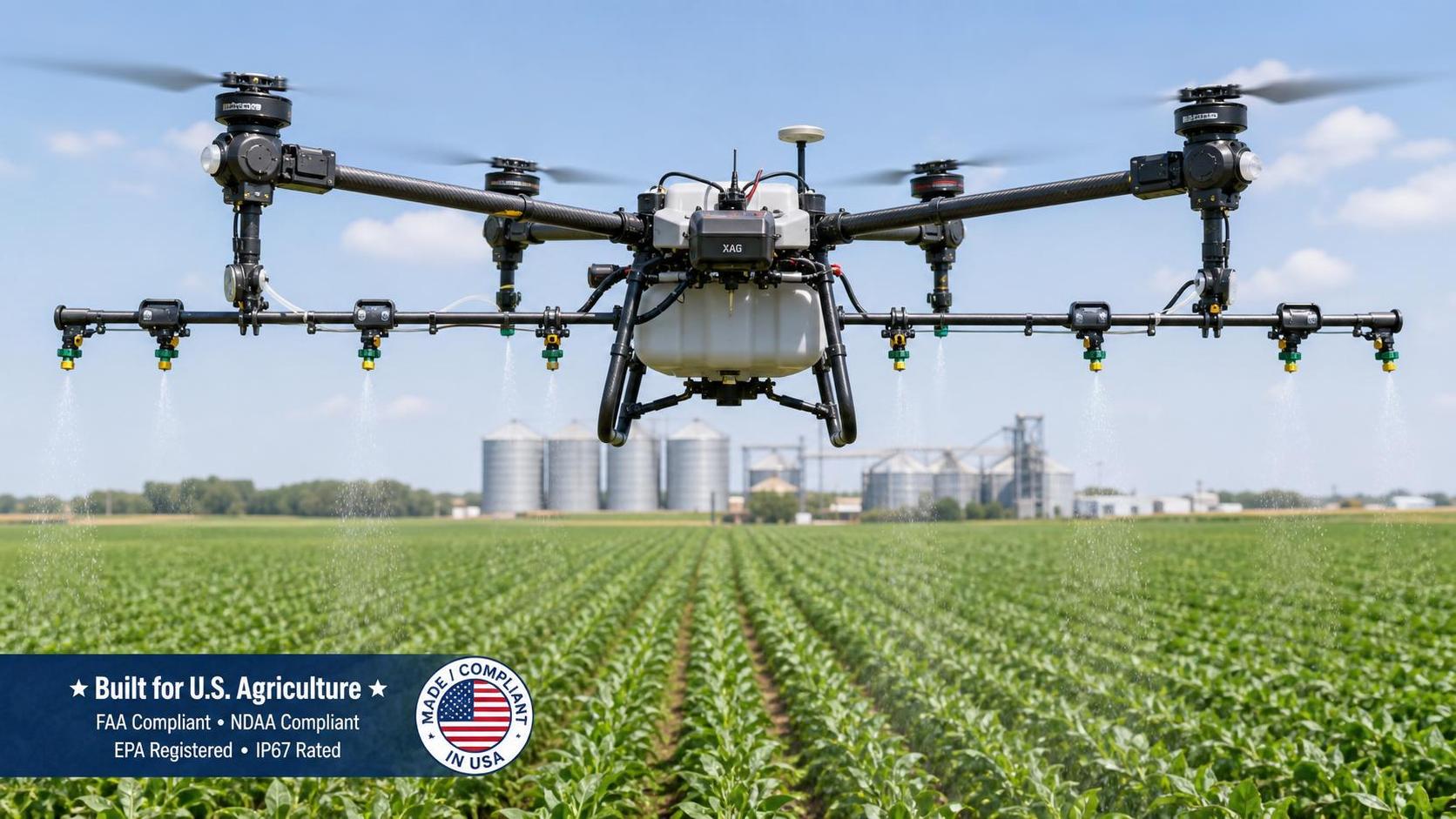
On June 18, 2026, the U.S. Federal Communications Commission (FCC) issued an advisory notice that changes how certain agricultural drones are treated for regulatory filing. Heavy crop-spraying models with a maximum takeoff weight of 25 kg or more, and with terrain-following plus AI route-planning functions, are now classified as Autonomous Flight Systems. The change takes effect immediately, requires FCC Part 101 certification together with an FAA airworthiness declaration, and is especially relevant for exporters, certification teams, procurement planners, distributors, and after-sales operators linked to mainstream plant-protection drone models entering the U.S. market.
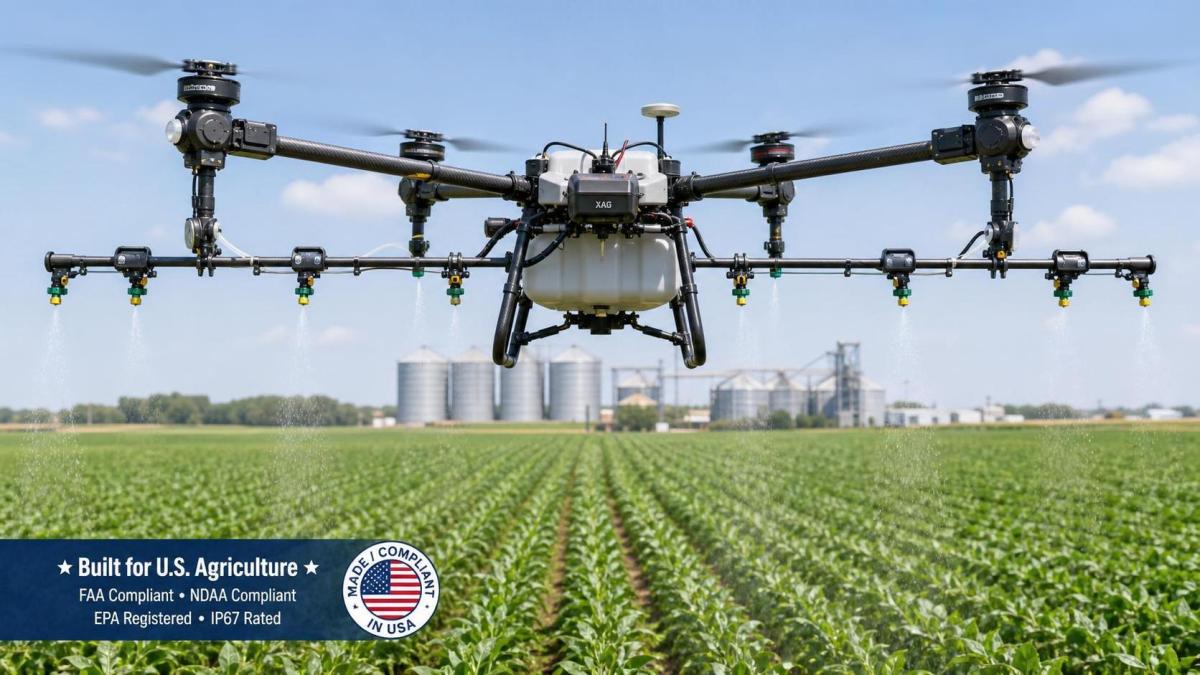
What the FCC changed on June 18
The confirmed facts are limited but commercially significant. The FCC released the Agricultural UAS Classification Advisory Notice on June 18, 2026. Under that notice, heavy agricultural spraying drones are reclassified as Autonomous Flight Systems when they meet both of the stated conditions: a maximum takeoff weight of at least 25 kg, and the presence of terrain-following and AI path-planning capabilities.
The same notice makes FCC Part 101 certification mandatory for the affected products, specifically in connection with remote identification and spectrum management. It also requires a concurrent FAA airworthiness declaration. The rule is effective immediately. The input information further states that the change affects more than 70% of mainstream Chinese plant-protection drone export models.
Where the operational pressure is likely to appear first
Export transactions may face a new filing threshold
From an industry perspective, exporters are likely to feel the impact first because product classification now directly affects whether a shipment is commercially ready for the U.S. market. The practical issue is no longer only product performance or buyer acceptance, but whether the model falls into the newly defined category and whether the required FCC Part 101 certification and FAA declaration are in place before delivery. What deserves closer attention is the risk of mismatch between legacy product descriptions and the new filing basis.
Manufacturers and compliance teams will need tighter model screening
For manufacturers, the rule change is not simply about labeling. It links technical features such as terrain-following and AI route planning to a different regulatory identity. Analysis shows that engineering, regulatory, and documentation teams may need to review existing model portfolios, technical specifications, and export documentation together to determine which products now require revised compliance treatment. This matters most where one platform has multiple configurations or market-specific variants.
Procurement and channel partners may need to reassess delivery assumptions
Procurement-side participants, distributors, and channel partners may also be affected because immediate-effect rules can alter assumptions around lead times, customs readiness, acceptance milestones, or contract documentation. Observably, any transaction that relied on prior classification logic may now require additional compliance confirmation before shipment, handover, or market launch. The key point is not that delays are certain, but that certification and declaration status becomes a more visible condition in purchasing and delivery decisions.
Certification and testing service providers may see earlier-stage involvement
Certification-related companies and testing service providers are likely to become involved earlier in the sales cycle. Analysis shows that affected businesses may need support not only for certification execution but also for pre-assessment of product scope, document consistency, and the relationship between technical features and regulatory classification. This is particularly relevant when customers need to decide whether an existing export model can still move forward under prior assumptions.
What companies should verify now
Check whether affected models fall within the new trigger conditions
The first practical step is to verify which drone models meet the stated threshold of 25 kg or above and also include terrain-following and AI path-planning functions. Where product lines include optional software or configuration differences, companies should pay closer attention to how those differences are described in technical and commercial materials.
Review whether certification files and airworthiness statements align
Because the notice requires FCC Part 101 certification together with an FAA airworthiness declaration, businesses should review whether their current compliance files, declarations, technical reports, and submission materials are aligned with the new classification. The input does not provide execution detail on document format or review sequence, so this should be treated as a compliance checkpoint rather than a confirmed procedural roadmap.
Recheck bid, contract, and delivery documentation
What deserves closer attention is the wording used in tender documents, quotations, contracts, packing documents, and product specifications. If a model is still described under an older category while its functions place it within the new one, that inconsistency could create downstream issues in delivery, buyer review, or regulatory screening. The event therefore has implications beyond certification alone.
Track execution language after the immediate-effective notice
Since the rule is already in force, companies should continue watching for how the new classification is reflected in official wording, certification practice, procurement requirements, and market-facing documents. Observably, the input confirms the rule change itself, but not the full operating detail of how every review point will be applied in practice.
Why this looks like an execution signal rather than a distant policy discussion
Analysis shows that this development is better understood as an immediate compliance signal than as a preliminary policy concept, because the notice is already effective and ties product classification directly to certification and declaration requirements. At the same time, it would be premature to describe all market consequences as settled. The input confirms the new rule and its immediate effect, but further observation is still needed on implementation language, review consistency, buyer-side adjustments, and how affected exporters reorganize documentation and delivery planning.
How the market may need to read this change
For the agricultural drone segment, the main significance of this notice is that certain technical features and weight thresholds now carry direct consequences for market access preparation. A reasonable reading at this stage is that the rule has already landed as a real compliance change, while the full rhythm of execution still needs continued observation. Companies do not need to assume every transaction will be disrupted, but they do need to treat classification, certification, and declaration readiness as active commercial variables.
Basis of this article and what still needs verification
This article is generated from the user-provided news title, event date, and event summary. For developments of this type, relevant source categories usually include official notices, regulator publications, trade or customs information, industry association releases, standards documents, and reporting by established sector media. No specific official source link was provided in the input, so the exact official publication path still requires follow-up verification. Further monitoring is also needed on detailed implementation language, certification practice, procurement document changes, market feedback, and how affected companies carry out compliance adjustments.
Related Intelligence