
Manure Belt Conveyor for Poultry Farms: Cleaning Efficiency and Installation
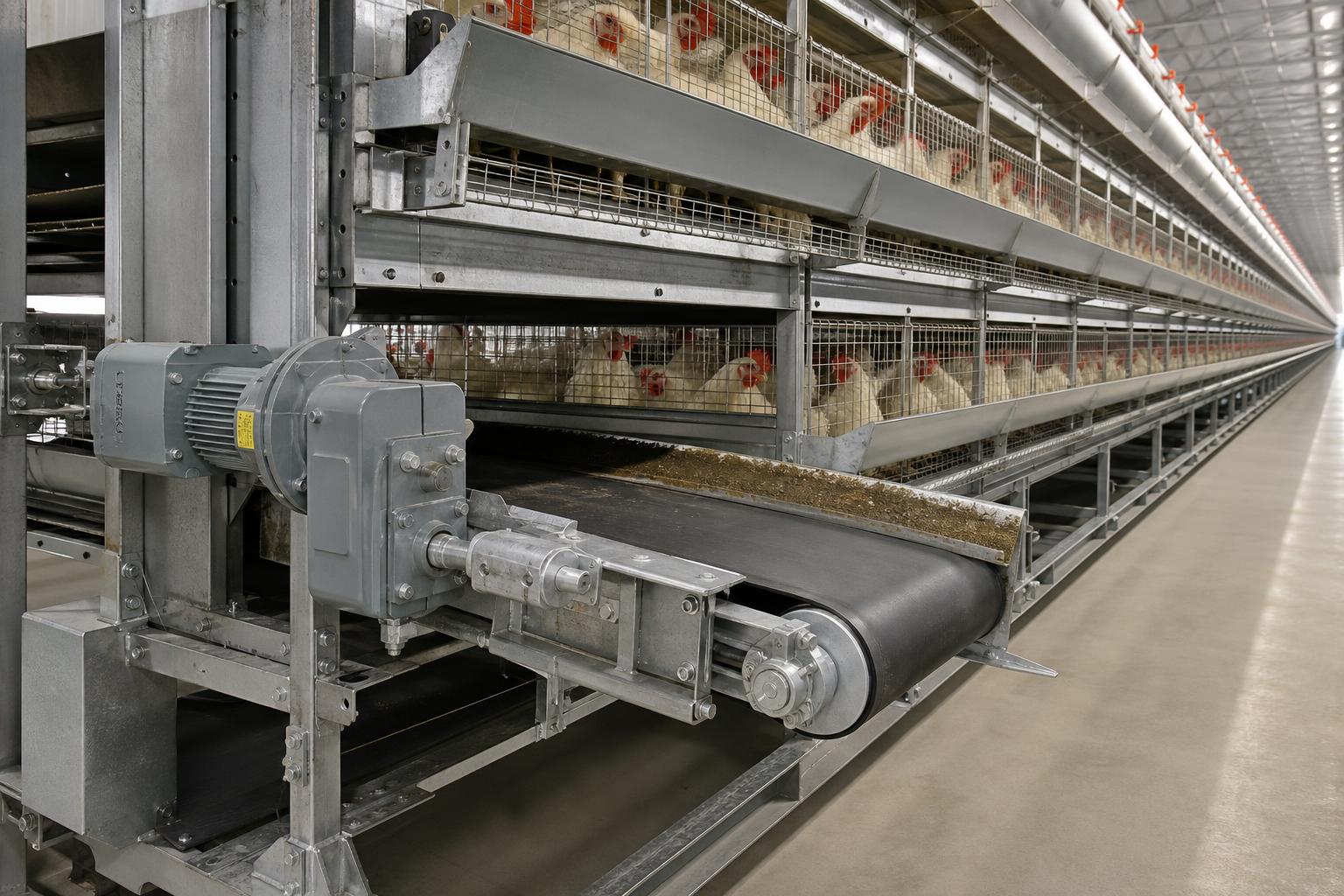
Manure handling is one of the daily tasks that decides whether a cage poultry farm stays orderly or slowly becomes difficult to manage. Feed and water systems are often discussed first, but the manure route deserves the same level of planning. If waste is removed late, unevenly, or through a poor working path, the house can face stronger smell, higher fly pressure, wetter floors, extra labor, and more cleaning downtime.
A manure belt conveyor is used to move poultry manure out of cage rows or away from a house discharge point. It is not a decorative add-on. It is part of the farm's hygiene, labor, ventilation, and maintenance plan. Buyers who treat the conveyor as only a belt and motor often miss the practical details: belt width, frame alignment, discharge direction, scraping performance, motor access, manure moisture, and how workers will clean the system after each run.
This guide explains how poultry farm buyers can evaluate belt-based manure removal equipment before placing an order. It focuses on cage poultry farms, especially layer houses where manure removal, air quality, and steady daily routines have direct operating value.
Why Manure Removal Needs Its Own Design
In a cage house, manure falls below the birds and must be moved away without disturbing feeding, drinking, egg collection, and inspection work. A simple manual cleaning routine can work in a small house, but it becomes difficult when the house is longer, rows are stacked, or labor is limited. A conveyor system can reduce repeated manual movement, but only when it is matched to the house layout and the farm's cleaning routine.
Manure is not always dry and uniform. Its condition changes with feed, water leakage, drinking line pressure, climate, bird age, ventilation, and cleaning frequency. Wet manure is heavier and harder to discharge. Very dry manure can create dust. A farm that chooses belt equipment without thinking about manure condition may face belt slip, poor scraping, or more frequent cleaning than expected.
The conveyor also interacts with ventilation. When manure remains in the house for too long, ammonia and moisture pressure can rise. A better removal routine helps the farm keep the bird area cleaner, but it does not replace ventilation. Fans, air inlets, curtains, and belt cleaning should be planned as one working system.
Main Parts Buyers Should Understand
Most buyers compare price first, but it is more useful to understand the parts behind the quotation. A manure conveyor may include belt material, drive motor, reducer, rollers, frame, support legs, scraper, tensioning device, discharge section, electrical control, and installation accessories. If the quotation is not itemized, it is difficult to know whether two offers are truly comparable.
House Layout and Conveyor Position
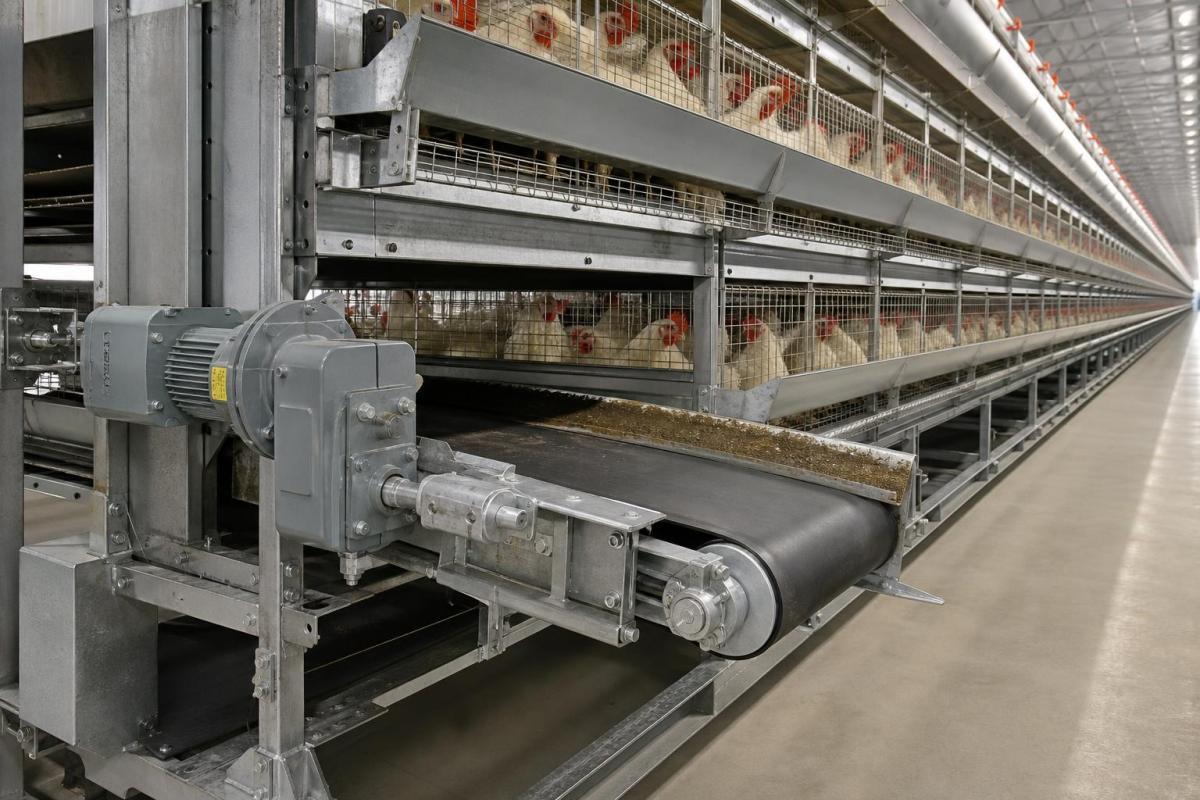
The conveyor route should be planned before the house and cage layout are finalized. In many cage farms, manure belts sit below cage tiers, then move waste to a cross-discharge conveyor or collection point. The belt width and path must match the cage design. If the belt is too narrow, manure can miss the belt or build up along the sides. If the frame does not align well, tracking problems can appear after installation.
Discharge direction matters. The farm should know where manure goes after it leaves the house: a collection area, manure shed, drying area, truck loading point, or composting location. If the discharge point is placed badly, workers may have to move manure again by hand, which reduces the benefit of automation. The route should also keep manure movement away from clean egg handling and feed storage as much as the site allows.
Access is another practical detail. Workers need space to inspect the belt, remove buildup, adjust tension, check rollers, and clean the scraper. A farm may save a small amount of construction space by making the equipment area tight, but maintenance will be harder every week. For long houses, inspection points should be planned so small problems are found early.
Installation Checks Before Start-Up
Installation quality has a strong effect on conveyor performance. The frame should be level and aligned. Rollers should turn freely. Belt tracking should be tested before manure load is added. The drive and tensioning system should be checked under no-load and light-load conditions. Electrical protection should match the farm's power supply and local installation practice.
Before daily use begins, the farm should run several test cycles. Staff should observe whether the belt drifts to one side, whether the scraper cleans the belt evenly, whether manure would discharge into the planned collection point, and whether any part is difficult to reach. Testing is also the right time to train workers on start-up, shut-down, emergency stop, and cleaning routines.
When comparing a manure belt conveyor system, buyers should ask for equipment drawings, included parts, installation guidance, belt specifications, motor details, and recommended spare parts rather than only a final price.
Cleaning Routine and Operating Discipline
A conveyor system still needs routine operation. If manure is allowed to stay too long, the belt may carry heavier loads and the house may face stronger air-quality pressure. If the belt is run too often without checking water leakage or scraper condition, the system may still become messy. The farm should set a routine based on bird age, manure condition, house climate, labor schedule, and discharge capacity.
Water leakage should be corrected quickly. A leaking nipple line can wet manure and make the conveyor work harder. Wet manure can stick to surfaces, increase belt load, and create more cleaning work near the discharge area. Feed spills should also be watched because spilled feed mixed with manure can change texture and attract pests.
Operators should not treat unusual sound, belt drift, or motor heat as normal. Small warnings often appear before a larger failure. A weekly inspection routine can include belt tracking, roller movement, scraper contact, frame bolts, motor temperature, reducer condition, wiring, and discharge area cleanliness.
Maintenance Items to Review With the Supplier
Maintenance should be part of the purchase discussion. Buyers should ask which parts normally wear first, how to adjust belt tension, how to replace the scraper, how to correct belt tracking, and what spare parts should be stored on the farm. If a farm is far from a service center, keeping basic parts on site can prevent long cleaning delays.
Suppliers should also explain cleaning limits. Some belt materials should not be exposed to harsh chemicals or careless scraping tools. Motors and electrical controls must be protected from wash water. If workers use high-pressure water, the farm should understand where it is safe and where it may damage bearings, electrical parts, or controls.
A good maintenance plan is simple enough for farm staff to follow. It should not depend on a specialist for every adjustment. Clear photos, drawings, labels, and training notes can make a major difference after the installer leaves.
Cost Factors Without Guessing Prices
Manure conveyor cost varies because farm layouts are different. Belt length, belt width, drive power, frame material, discharge design, cage compatibility, installation scope, shipping, and spare parts all affect the final quote. It would be misleading to publish one fixed price without the house drawing and equipment configuration.
Buyers can still compare quotations in a disciplined way. Ask each supplier to show the same basic information: belt specification, frame material, motor and reducer details, quantity, discharge method, included accessories, installation support, warranty terms, and excluded items. If one quotation is much lower, check whether it leaves out controls, support frames, discharge sections, installation accessories, or spare parts.
The lifetime cost also matters. A system that needs frequent belt adjustment, has weak corrosion protection, or lacks spare parts support can become expensive through downtime and labor. The best value is usually the system that fits the house, runs predictably, and can be maintained by the farm team.
Buyer Checklist Before Ordering
- Confirm the cage type, house length, row count, tier number, and manure path.
- Ask whether the belt width and discharge section match the cage layout.
- Review belt material, thickness, roller quality, frame protection, motor, and reducer.
- Check whether the quotation includes scraper, controls, support parts, and installation accessories.
- Ask how the belt is tensioned and how tracking is adjusted after installation.
- Confirm where manure will go after discharge and whether workers need to move it again.
- Plan water leakage checks because wet manure increases cleaning difficulty.
- Request a spare parts list for belts, scrapers, rollers, bearings, switches, and vulnerable parts.
- Confirm training for start-up, shut-down, emergency stop, and routine inspection.
- Separate equipment cost, shipping, installation support, electrical work, and local civil work in the budget.
Common Mistakes in Manure Conveyor Projects
The first mistake is adding the conveyor after the cage layout is already fixed. This can create poor discharge paths, tight service space, or belt dimensions that do not match the manure fall area. The second mistake is ignoring the manure collection point. If the belt removes manure from the cage rows but drops it into an inconvenient place, workers may still do heavy manual work.
The third mistake is underestimating water leakage. Drinking system problems can turn a manageable cleaning routine into a heavy, sticky load. The fourth mistake is buying a system without spare parts planning. A small scraper, roller, switch, or belt problem can interrupt cleaning if the farm has no replacement path.
The fifth mistake is judging only by the purchase price. A manure handling system is part of the daily management structure. Its value comes from reducing repeated labor, supporting hygiene, and keeping manure movement predictable. Those benefits depend on fit, installation, operation, and maintenance, not only the invoice amount.
FAQ
What does a belt conveyor do in a poultry farm?
It moves manure from cage rows or a discharge point to a collection area. In cage houses, it helps organize waste removal and can reduce repeated manual cleaning when installed and operated correctly.
Is a belt conveyor necessary for every poultry farm?
No. Small farms may use manual cleaning. A conveyor becomes more useful when bird numbers, house length, cage tiers, labor limits, or hygiene requirements make manual routines difficult.
What causes belt tracking problems?
Common causes include poor frame alignment, uneven tension, worn rollers, side buildup, installation errors, or load imbalance. Tracking should be checked during test runs and routine maintenance.
Can wet manure damage the system?
Wet manure can increase load, stick to surfaces, and make scraping harder. The system should be selected for the farm's manure condition, and water leakage from drinkers should be repaired quickly.
What should buyers ask before purchasing?
Ask for layout drawings, belt specifications, motor details, included parts, discharge design, installation guidance, spare parts recommendations, and maintenance instructions. A clear offer is easier to compare than a short price line.
Editorial Review Note
This article is buyer-facing guidance for poultry farm equipment planning. It avoids fabricated prices, unsupported performance promises, and invented case numbers. Before final upload, the publisher should check formatting, category placement, and headline style against the destination portal's house style.
Related Intelligence