
Poultry Cage Design Guide for Commercial Layer Farms
By SectorNewsNode Editorial Desk | Published July 3, 2026
Choosing between deep litter and cage housing is one of the first practical decisions in a layer farm project. The choice affects building layout, stocking density, labor, manure handling, egg hygiene, ventilation, and daily supervision. It also shapes the type of equipment a farm will need from the beginning.
The comparison of deep litter system vs cage system should not be treated as a simple argument about which one is "better." Both systems can work when they are matched to the right farm size, climate, labor condition, and management skill. A small farm with available labor may have different priorities from a commercial egg operation that needs high capacity and predictable daily routines.
This guide looks at the two systems from a buyer's point of view. It focuses on the factors that matter when planning a commercial layer farm: space use, bird management, manure control, labor, ventilation, and long-term upgrade options.
What Is a Deep Litter System?
A deep litter system keeps birds on the floor, usually over bedding material such as wood shavings, rice husk, chopped straw, or similar absorbent material. Birds can move freely inside the house, scratch the litter, and use feeders, drinkers, and laying areas arranged across the floor.
The system is familiar to many farm workers because it is simple to understand. It usually has a lower starting equipment cost than a fully caged layer house. The building does not need cage rows, cage frames, manure belts, or automatic egg collection lines at the first stage.
However, deep litter management depends heavily on good litter condition. Wet litter, poor ventilation, water leakage, and overcrowding can quickly create ammonia, foot problems, dirty eggs, and higher disease pressure. The lower starting cost can disappear if management is weak.
What Is a Cage System?
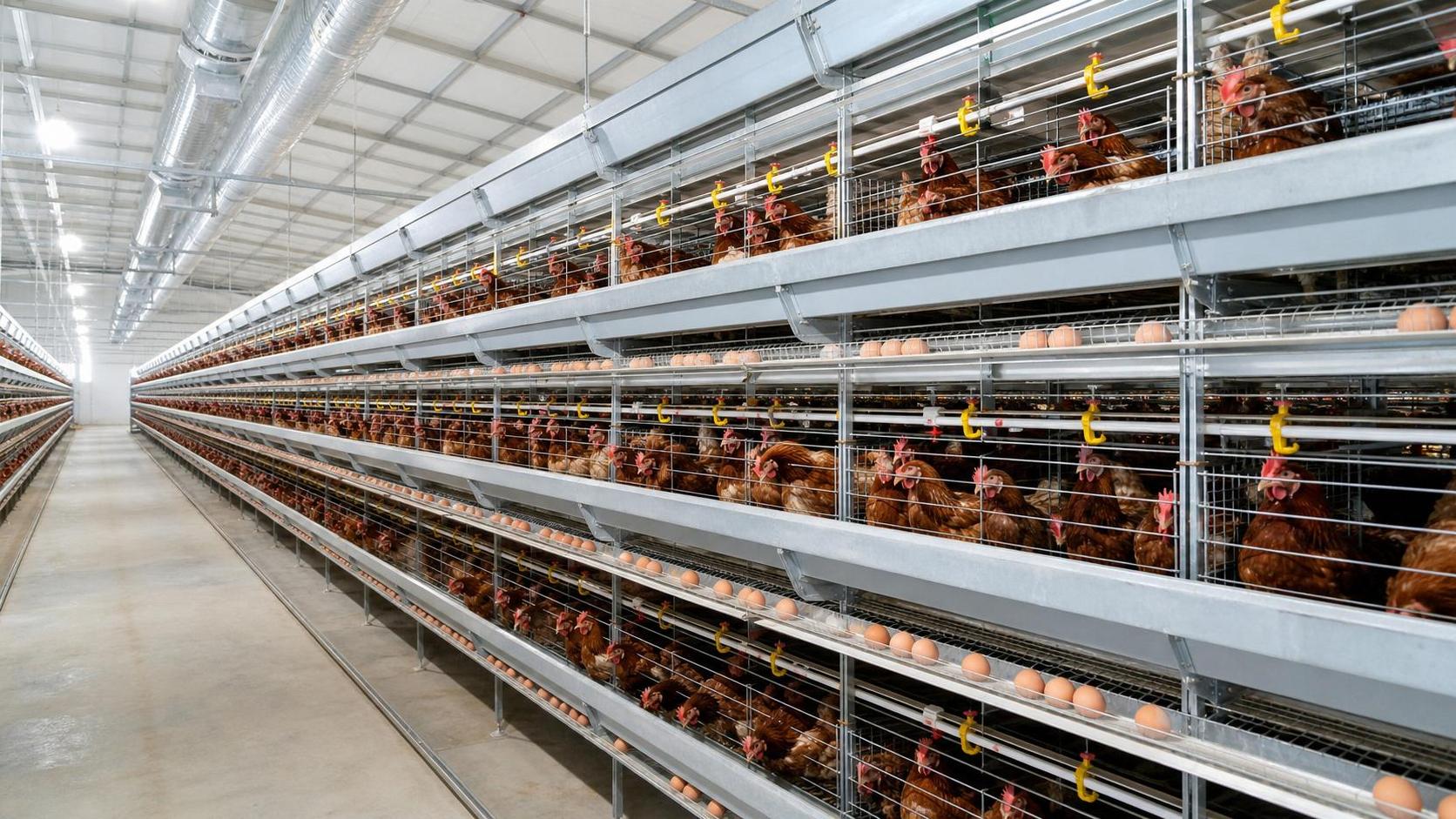
A cage system keeps birds in structured cage rows. In layer farms, cages are designed to separate birds from manure, make egg collection easier, and allow higher bird capacity in the same house area. The system may be manual, semi-automatic, or fully automatic depending on the project budget.
A-type cages are often used in smaller and medium farms because they are easier to inspect and ventilate. H-type cages are common in larger projects where higher stocking density and automation are important. A cage system may include feeding equipment, nipple drinkers, manure belts, egg collection lines, and climate-control equipment.
The starting investment is usually higher than a simple floor system. But for farms that need stable egg output, cleaner egg collection, and better labor efficiency, cages can provide stronger long-term control.
Space Use and Stocking Density
Space use is one of the clearest differences between the two systems. Deep litter requires more floor area per bird because the birds live and move on the floor. Cage systems use vertical space, especially in multi-tier designs, which allows more birds in the same building footprint.
For land-limited farms, this can be a major advantage. Higher capacity per house can reduce the cost per bird for building walls, roof, lighting, wiring, and land preparation. But it also increases the need for stronger ventilation and better manure management.
Deep litter can feel more flexible at a small scale. It is easier to adjust partitions, move equipment, or change flock size. At commercial scale, however, floor management becomes more labor-intensive, especially when litter moisture and bird density rise.
Labor and Daily Management
Deep litter farms usually require more manual observation and floor management. Workers need to check litter condition, remove wet patches, manage nests, collect eggs, control drinker leakage, and monitor bird behavior across the house.
Cage systems organize birds into rows and tiers. This can make counting, feeding, egg collection, vaccination, and inspection more systematic. In automatic systems, feeding and manure removal can be handled with machines, reducing routine labor pressure.
The trade-off is that cage systems require workers who understand equipment checks. Motors, drinkers, belts, feeding lines, and cage doors need regular inspection. A cage farm is easier to standardize, but it should not be ignored after installation.
Manure Handling and House Hygiene
Manure is a central issue in both systems. In deep litter houses, manure mixes with bedding material. If the litter stays dry and loose, it can work reasonably well. If it becomes wet, compacted, or poorly ventilated, ammonia and pathogen pressure can rise quickly.
In cage systems, manure drops below or behind the birds depending on cage design. It may be removed manually, by scraper, or by manure belt. Automatic manure removal can keep the house cleaner and reduce direct contact between birds and waste.
For larger farms, manure handling often becomes one of the strongest arguments for cages. Cleaner manure separation can improve air quality, reduce labor, and make routine sanitation easier. Still, the manure system must be designed together with the house layout, not added as an afterthought.
Ventilation and Barn Climate
Ventilation is not optional in either system. Deep litter houses need airflow to control moisture, ammonia, heat, and dust. Cage houses need airflow to remove heat and gases from higher-density bird areas. In both cases, poor ventilation can damage production performance.
Deep litter systems can have more floor moisture, especially around drinkers. Cage systems can have higher bird density and more concentrated heat load. The right ventilation plan depends on house width, roof height, bird number, climate, fan capacity, and inlet design.
In hot regions, tunnel ventilation, cooling pads, or stronger exhaust systems may be needed. A cage house with good equipment but weak ventilation can still perform poorly. A deep litter house with good bedding but bad airflow can also create disease and odor problems.
Egg Cleanliness and Collection
Egg handling is another practical difference. In deep litter farms, eggs may be laid in nests, but some birds may lay on the floor. Floor eggs are more likely to become dirty, cracked, or missed during collection. Good nest management can reduce this problem, but it requires discipline.
Layer cage systems are usually designed so eggs roll forward to a collection area. This improves collection efficiency and can reduce contamination. In larger farms, automatic egg collection can reduce labor and make handling more consistent.
For farms selling into markets that care about egg appearance and hygiene, this difference can matter. Cleaner collection does not guarantee better profit by itself, but it helps reduce avoidable losses.
Cost Is Not Only the Starting Price
Deep litter often has lower initial equipment cost. Cage systems often require higher investment. But the real comparison should include labor, egg loss, disease control, manure handling, building capacity, and long-term management.
A farm owner should compare the total cost of running the system, not only the first purchase price.
Which System Fits a Commercial Layer Farm?
For small farms, training farms, or low-budget projects, deep litter may be a practical starting point. It is easier to build, easier to understand, and requires less specialized equipment at the beginning.
For commercial layer farms, cage systems often provide stronger control over space, feeding, drinking, manure, and egg collection. They are especially useful when the farm needs predictable production, higher bird capacity, and lower routine labor per bird.
The decision should be based on:
- available land and house size
- bird capacity target
- labor availability and cost
- climate and ventilation conditions
- egg hygiene requirements
- manure disposal plan
- investment budget
- future expansion plan
If the farm expects to grow, planning the housing system early is important. Changing from deep litter to cages later can require major changes to the building, ventilation, and electrical layout.
Equipment Planning for Cage Farms
A cage system should be planned as a complete farm layout, not only as cage rows. The buyer should consider feed distribution, drinking lines, manure removal, ventilation, lighting, aisle width, and service access.
For commercial projects, it is useful to review cage options and layout support from experienced poultry equipment suppliers. A structured equipment plan helps connect cage capacity with daily operation, house climate, and manure handling. For buyers comparing housing systems and cage layouts, Taiyu(HK) poultry farm equipment provides a useful reference point for layer cage configuration and complete poultry farm planning.
Buyer Checklist Before Choosing a System
Before choosing deep litter or cages, buyers should write down the basic farm conditions. This avoids choosing a system only because it looks cheaper or more familiar.
Use this checklist:
- planned number of layers
- house dimensions and roof height
- expected egg production scale
- local temperature and humidity
- available labor per day
- water quality and pressure
- manure disposal method
- power supply stability
- budget for future automation
- target market for eggs
These details make the system comparison more practical. They also help suppliers give better layout advice.
Final Thoughts
The deep litter system vs cage system question has no single answer for every farm. Deep litter can be simple and affordable at the start, but it needs careful litter, moisture, and egg management. Cage systems cost more at the beginning, but they can improve space use, manure handling, egg collection, and labor efficiency.
For a commercial layer farm, the best choice is usually the system that fits the building, climate, bird number, labor plan, and long-term business target. A good housing decision should make daily management easier, not only reduce the first invoice.
FAQ
Is a cage system better than deep litter for layers?
A cage system is often better for commercial layer farms that need higher capacity, cleaner egg collection, and more organized manure handling. Deep litter can still work for smaller farms with good floor and litter management.
Which system has a lower starting cost?
Deep litter usually has a lower starting equipment cost because it does not require cage rows, manure belts, or automatic egg collection. However, long-term labor, egg hygiene, and disease-control costs should also be considered.
What should buyers check before choosing a poultry cage system?
Buyers should check bird capacity, cage type, house dimensions, ventilation plan, feeding and drinking equipment, manure removal method, installation support, and future expansion needs.
Related Intelligence