
Smart Seeding Systems: What Improves Emergence Accuracy?
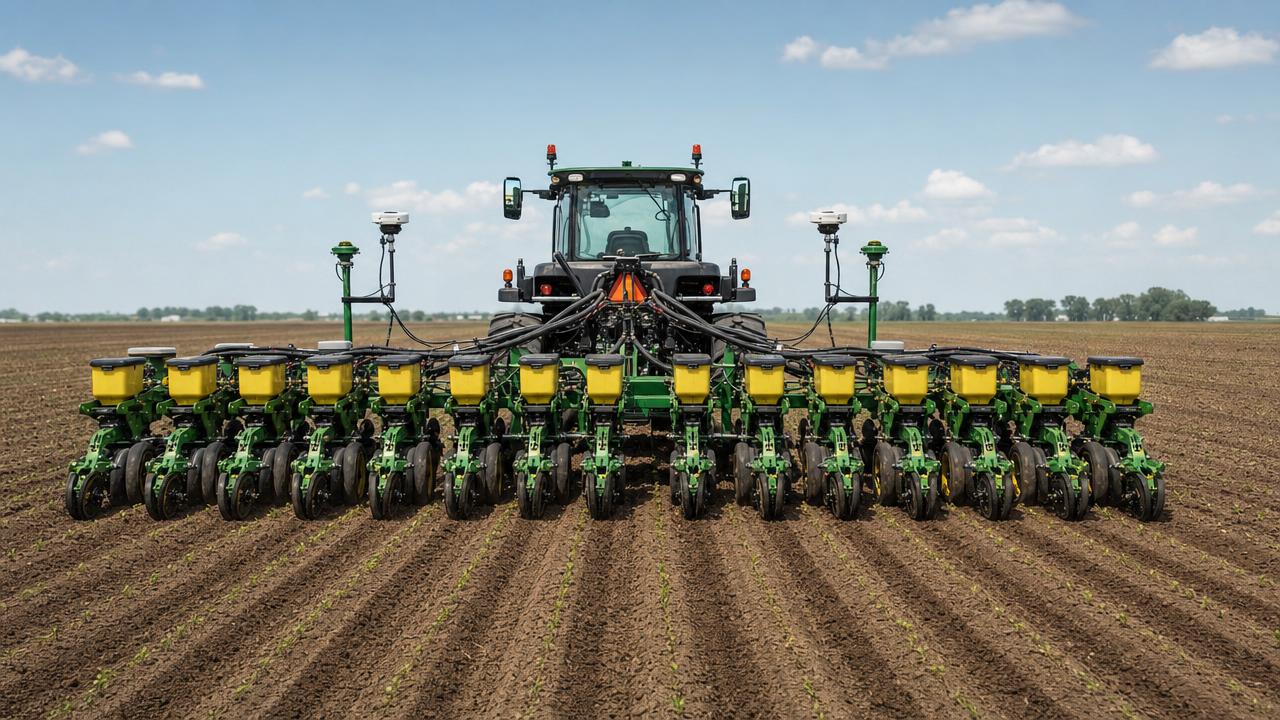
Smart Seeding Systems have moved beyond simple metering upgrades. They now combine row-unit mechanics, electronic control, guidance data, and agronomic feedback to improve one outcome that matters most: uniform emergence.
For field operations, that shift changes how planting performance is judged. Seed spacing still matters, but emergence accuracy depends on depth stability, soil contact, travel speed, downforce response, and the planter’s ability to stay consistent in changing conditions.
That is why Smart Seeding Systems are gaining attention across the broader smart machinery market tracked by SAMS. They sit at the intersection of mechanical reliability, sensor intelligence, per-acre economics, and digital farm management.
Why emergence accuracy has become the real benchmark
Seed placement data looks impressive on a monitor, but stand establishment is the more decisive indicator. A planter can show acceptable singulation while still producing uneven emergence across variable soil zones.
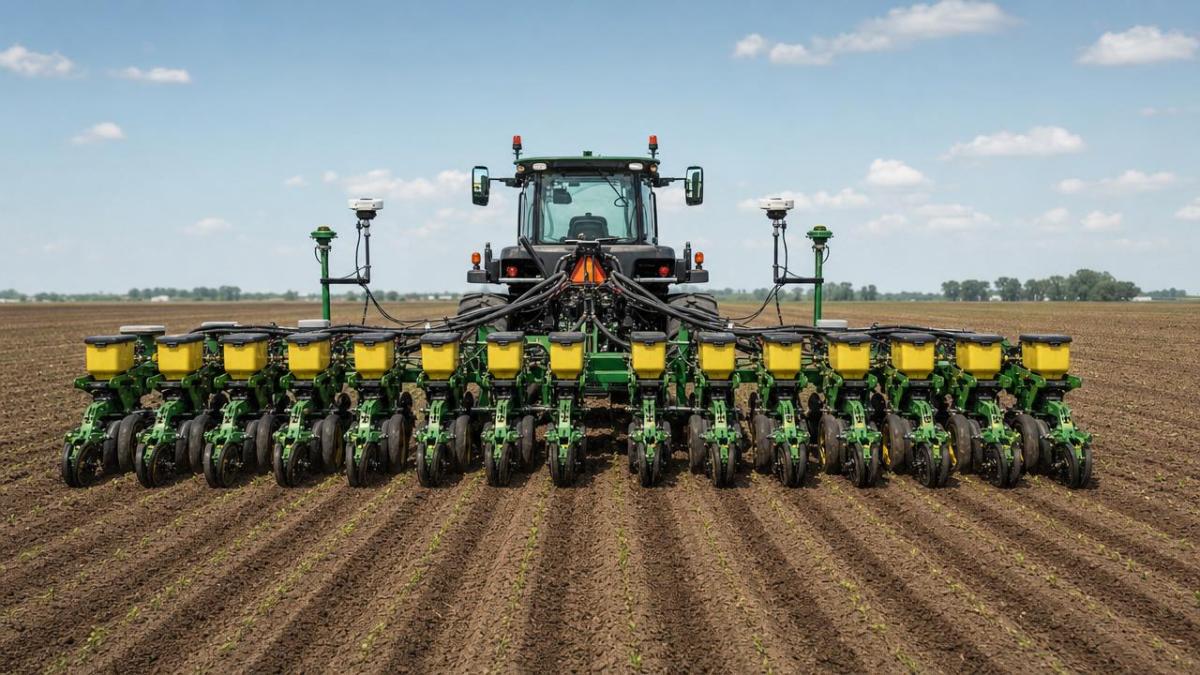
Emergence accuracy matters because crop competition begins early. Plants that emerge later often lose access to light, moisture, and nutrients, reducing yield potential even when population targets are technically met.
In practical terms, Smart Seeding Systems are valuable when they reduce variation, not just when they add more screens, automation, or data layers. The field result is more important than the feature list.
The system is mechanical first, digital second
A strong emergence profile starts with hardware discipline. Meter accuracy, opener condition, gauge wheel contact, closing wheel performance, and row-unit stability still set the baseline for every digital function.
If the row unit bounces, rides too shallow, or fails to maintain trench shape, software cannot fully recover performance. Smart Seeding Systems work best when the mechanical platform is already robust.
This is especially relevant in high-speed planting programs. As travel speed rises, vibration, residue flow, and row-unit dynamics become more difficult to control. Emergence accuracy can decline even when theoretical output increases.
Core hardware factors that influence emergence
- Meter design that maintains singulation across seed sizes and treatment types.
- Row-unit mass and linkage stability that limit bounce in rough ground.
- Consistent opener and gauge wheel interaction for depth control.
- Closing systems that create uniform seed-to-soil contact without sidewall issues.
- Residue management that keeps furrow conditions predictable.
Control logic and sensors make the difference in variable fields
Where Smart Seeding Systems separate themselves is in their ability to react. Modern planting rarely happens in uniform soil, moisture, or compaction conditions from one end of the field to the other.
Downforce automation is one of the most important upgrades. Too little force reduces depth stability. Too much force creates sidewall compaction and can limit root development after emergence.
Sensor quality also matters. Load sensing, ride monitoring, trench environment sensing, and seed flow data are only useful when the control loop responds quickly and accurately enough to support row-by-row adjustment.
Integration with RTK guidance adds another layer. Better pass-to-pass accuracy reduces overlap, improves row alignment, and helps maintain consistent operating behavior, especially in large-scale operations using high-horsepower tractors and precision steering.
What to evaluate in the control system
Operating conditions often explain performance gaps
Two Smart Seeding Systems with similar specifications can perform very differently in the field. The usual reason is not brochure-level capability, but operating context.
Soil texture, tillage system, moisture variability, residue load, slope, and planting window pressure all shape emergence. A system optimized for clean conventional seedbeds may struggle in heavy residue or no-till environments.
Speed discipline is another common issue. Some platforms advertise higher field capacity, but emergence accuracy may fall when speed exceeds the row unit’s ability to maintain contact and trench consistency.
This is where SAMS-style machinery evaluation becomes useful. Looking at the entire operating stack, from tractor guidance and hydraulic response to planter control and data capture, gives a more realistic view than isolated component comparisons.
Field conditions that deserve close review
- Moisture transitions within the same pass.
- Compaction layers and wheel-track effects.
- Residue density after corn or cereal harvest.
- Hydraulic stability under long working hours.
- Night planting visibility and alert management.
Where business value appears beyond agronomy
Better emergence is an agronomic outcome, but the business case is broader. More uniform stands support cleaner crop development, more predictable maturity, and tighter harvest planning.
For large operations, Smart Seeding Systems can also improve labor efficiency. Fewer manual adjustments, stronger in-cab visibility, and better guidance support reduce operator fatigue during narrow planting windows.
Data value matters too. When seeding data connects with later imagery, NDVI layers, variable-rate programs, and yield maps, it becomes possible to separate true agronomic issues from planting execution problems.
That connection fits the wider digital agriculture framework covered by SAMS, where machinery performance is judged not only by horsepower or automation, but by measurable contribution to return per acre.
How to compare Smart Seeding Systems without overvaluing features
A practical comparison should focus on repeatable field outcomes. It is easy to overvalue display sophistication, connectivity claims, or isolated precision metrics without testing how the machine behaves under real agronomic stress.
A better approach is to compare systems across several dimensions at once.
- Depth consistency across variable soil zones.
- Emergence uniformity by row and by management zone.
- Stability at realistic operating speeds, not ideal demonstration speeds.
- Calibration demands across different seed lots.
- Ease of service, parts access, and season uptime.
- Compatibility with existing guidance, telemetry, and farm software.
This kind of evaluation is especially useful when equipment decisions influence several seasons of CAPEX and affect downstream operations such as spraying, fertility timing, and harvest scheduling.
A practical next step for stronger evaluation
The most useful question is not whether a platform is labeled smart. The better question is which Smart Seeding Systems maintain emergence accuracy when weather, soil resistance, speed pressure, and operator variability all push performance off target.
That means building a review process around field evidence. Compare row-unit stability, control response, data clarity, and post-emergence results together. If possible, connect planting records with stand counts and later yield variation.
From there, the decision becomes clearer. The right Smart Seeding Systems are not simply the most advanced on paper. They are the ones that deliver stable emergence, fit the operating environment, and support a measurable improvement in whole-farm performance.
Related Intelligence