
Precision Planter Systems: Key Features That Affect Emergence
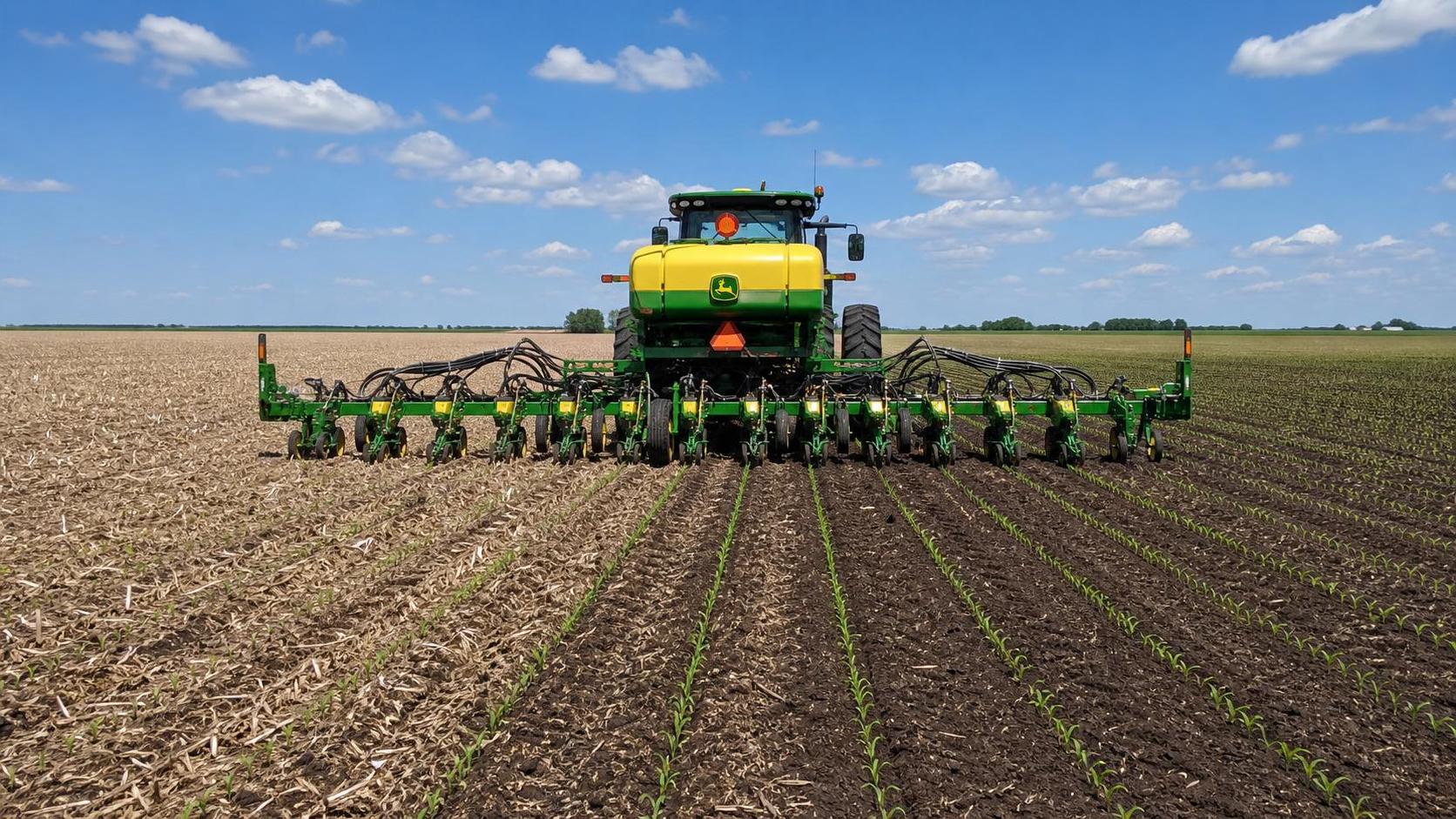
Uniform emergence is the real proving ground for precision planter systems. A planter can show strong specifications on paper, yet still lose yield potential if seed spacing, depth, and soil contact vary across the toolbar.
That is why emergence has become a central comparison point in smart agricultural machinery. Across large-scale grain operations, technology reviews now look beyond capacity alone and focus on how planter design performs under changing soil, residue, and operating speeds.
Within the broader SAMS view of farm modernization, planters sit at the intersection of mechanical precision, automation, field data, and return per acre. The systems that matter most are the ones that translate seed prescriptions into a consistent stand.
Why emergence is the right benchmark
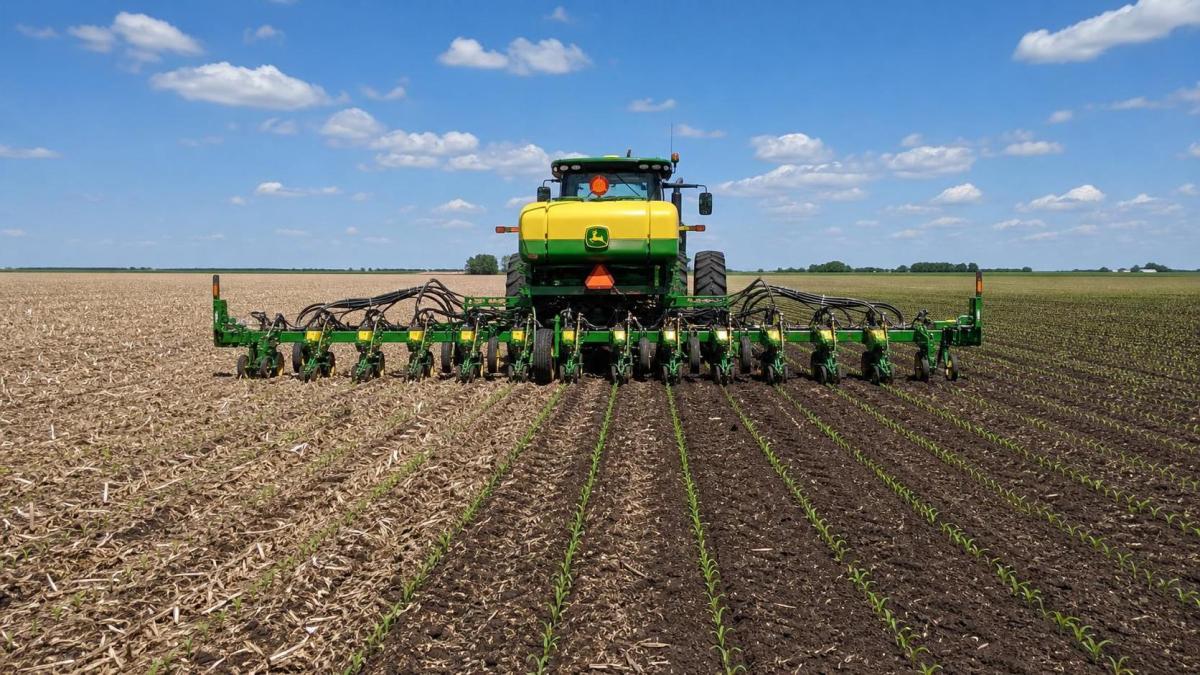
The image above reflects the core issue: two planters may place the same seed population, but only one produces a field that comes up evenly.
Emergence matters because it combines several planter functions into one visible agronomic result. Seed singulation, furrow formation, closing action, residue handling, and toolbar stability all show up in the stand.
In practical terms, uneven emergence creates plant-to-plant competition. Earlier plants capture light, moisture, and nutrients first. Later plants often remain weaker, even if final population appears acceptable.
For technical comparison, this makes precision planter systems easier to judge. The focus shifts from isolated component claims to the integrated outcome that affects yield, replant risk, and operating confidence.
The planter features that most influence stand establishment
Not every feature contributes equally. The most important ones are the features that preserve consistency row by row and meter by meter.
Metering accuracy under real field conditions
Metering is not just about singulation in ideal test conditions. Good precision planter systems must maintain seed spacing when seed size varies, vibration increases, and forward speed changes.
Vacuum control, disc design, seed release timing, and sensor feedback all matter. A row unit that meters accurately in the shed but loses rhythm in residue or rough ground will reduce emergence uniformity.
Downforce control and depth stability
Depth consistency is often the difference between an even stand and a staggered one. If one row runs shallow while another runs deep, emergence timing separates quickly.
Active downforce systems are now a major differentiator. They help row units respond to soil variability, wheel tracks, moisture zones, and compaction layers without forcing operators into one fixed setting.
Seed-to-soil contact and furrow closing
The seed can be perfectly metered and still fail to emerge evenly if the trench is poorly closed. Closing wheels, angle settings, and pressure control influence moisture contact and oxygen balance around the seed.
This becomes more critical in reduced tillage and no-till systems. Sidewall compaction, residue hairpinning, and open slots are still common reasons why precision planter systems underperform in the field.
Row-unit stability at operating speed
Higher-capacity operations often plant faster to protect timing windows. Speed helps logistics, but it also amplifies row bounce, seed tube movement, and depth variation.
Parallel linkage quality, gauge wheel control, toolbar flex, and weight distribution all shape row-unit stability. The better the stability, the more likely the planter can hold consistent seed placement at realistic field speeds.
What evaluators should compare beyond the brochure
Specification sheets can hide the difference between component presence and system performance. A more useful review looks at how each subsystem behaves under variable field load.
This is where precision planter systems fit naturally into wider smart farming decisions. The planter is no longer an isolated implement. It is part of a data-connected equipment chain that includes guidance, farm software, and post-plant analysis.
Field conditions change the meaning of planter performance
One reason planter evaluation is difficult is that no single setup works everywhere. Soil texture, tillage system, residue load, moisture variation, and field speed all change the demands placed on the row unit.
In conventional tillage, the challenge may be speed and depth consistency across smoother ground. In no-till corn residue, the bigger issue may be residue cutting, trench cleanliness, and reliable closure.
Large planters working with high-horsepower tractors also introduce another layer. Hitch behavior, hydraulic capacity, and guidance accuracy influence how well precision planter systems maintain performance across long operating days.
For that reason, a field-ready evaluation should not rely on one benchmark number alone. It should ask how the planter holds its placement quality when conditions move away from ideal.
Operational and economic value
The business case for precision planter systems is broader than seed savings. Uniform emergence improves the probability that other investments, from fertilizer to crop protection, perform against a more even crop base.
This matters in operations that measure return per acre and machine productivity together. A planter that supports consistent stands can reduce replant exposure, stabilize crop development, and simplify later field operations.
There is also a management value. Better row-by-row data, clearer alarms, and repeatable setup shorten the gap between machine capability and actual field performance. That is especially relevant when labor experience varies.
From a platform perspective like SAMS, this links planter design to the same strategic questions seen across agricultural machinery: reliability, automation quality, operating window protection, and capital efficiency.
A practical checklist for comparing precision planter systems
A useful comparison framework should stay close to field outcomes rather than feature count.
- Review emergence uniformity data, not only singulation claims.
- Check whether active downforce responds row by row or only in larger sections.
- Assess seed placement quality at the target operating speed, not at a reduced demo speed.
- Inspect residue management performance in the actual tillage system used.
- Confirm compatibility with guidance, monitors, and farm data platforms already in use.
- Look at wear parts, calibration effort, and service access, because consistency depends on upkeep.
- Ask how the machine performs across moisture changes during a full planting window.
These points help separate advanced precision planter systems from machines that simply carry more electronics. In the field, emergence depends on stable mechanical execution supported by useful automation.
Where to look next
The strongest planter decision usually comes from matching machine architecture to field conditions, tractor capacity, agronomic goals, and available data workflows. That creates a more realistic view than brand comparison alone.
For deeper evaluation, the next step is to compare row-unit behavior, control logic, and field evidence from operations with similar residue levels, speeds, and soil variability. That is where precision planter systems reveal their true value.
A disciplined review of emergence metrics, adjustment range, digital integration, and service demands will usually narrow the field quickly. In a market shaped by tighter planting windows and higher input costs, that discipline is worth keeping.
Related Intelligence