
Smart Farm Planning Services: When Do They Improve ROI?
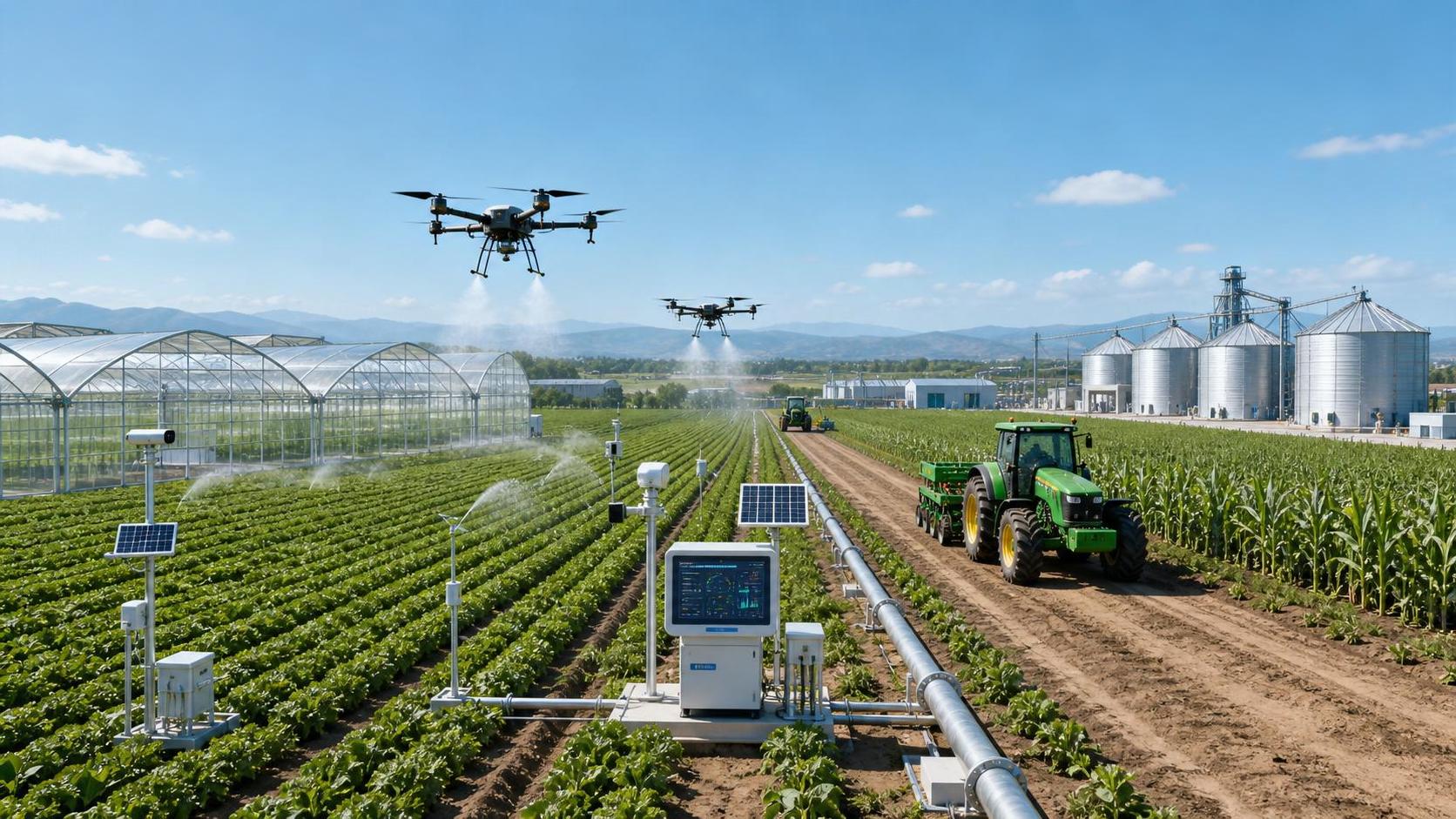
Smart farm planning services are no longer a niche advisory layer. They are becoming a financial filter for technology decisions across machinery, automation, irrigation, livestock systems, and digital farm platforms.
The real question is not whether planning sounds useful. It is whether planning changes cost structure, output stability, and asset utilization enough to improve ROI within a realistic operating cycle.
That answer depends on more than technology itself. Farm size, labor pressure, crop intensity, data quality, and capital timing all shape whether smart farm planning services create measurable returns or simply add another layer of analysis.
What smart farm planning services actually cover
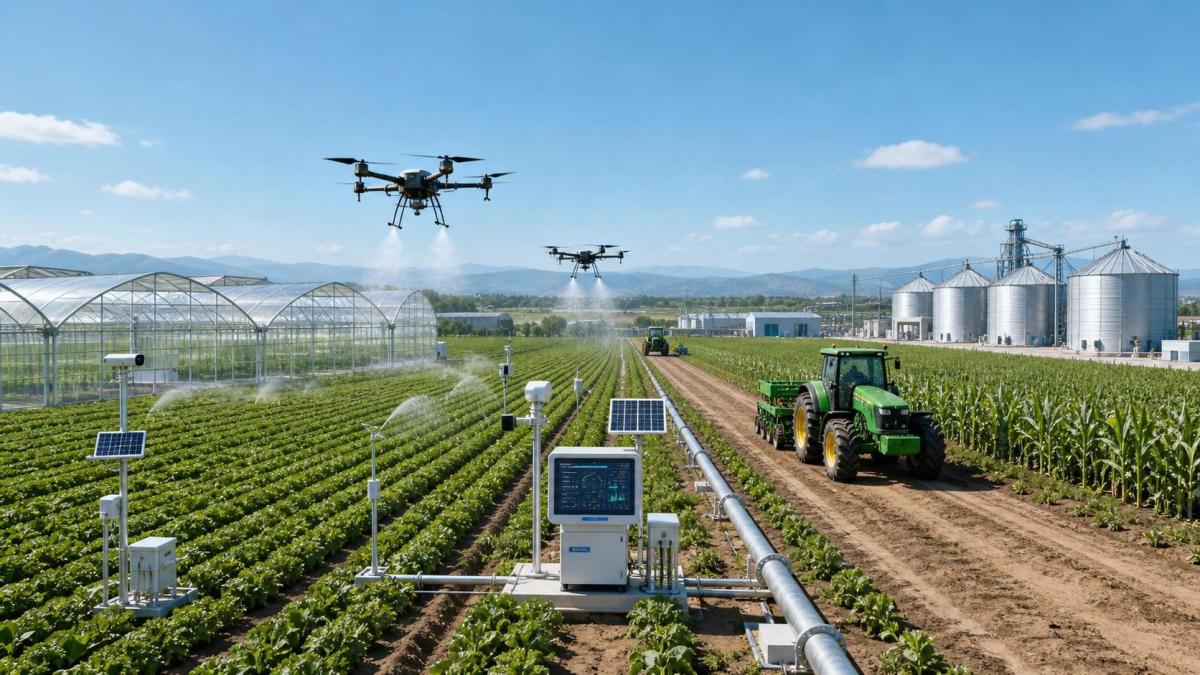
At a practical level, smart farm planning services connect business targets with field operations, equipment choices, digital tools, and infrastructure priorities.
They usually begin with a baseline review. That includes crop systems, field conditions, labor availability, fleet age, water management, energy use, and current software or sensor coverage.
From there, planning turns scattered purchase ideas into a sequence. Instead of buying one machine after another, the farm or investor evaluates how tractors, combines, drones, fertigation, climate control, or feeding automation work together.
This is where smart farm planning services matter most. They do not only ask what to buy. They ask what constraint is limiting return today, and which upgrade removes it fastest.
Why ROI improvement has become a sharper issue
Agriculture is carrying more operational volatility than many capital plans assumed a decade ago. Labor shortages, weather variability, input inflation, and tighter harvest windows raise the cost of poor coordination.
A high-horsepower tractor with RTK guidance may reduce overlap and operator fatigue. A combine with better threshing efficiency may protect output in a short harvest period. A drone may improve spray precision on uneven terrain.
Yet returns weaken when these assets are selected in isolation. A farm can own advanced machinery and still lose margin through poor field logistics, weak data integration, mistimed deployment, or undertrained staff.
That is why smart farm planning services are gaining attention across mixed operations, greenhouse systems, open-field crops, and livestock production. Planning helps link technology value to business performance rather than brochure features.
When smart farm planning services improve ROI most clearly
ROI tends to improve when operations are already large enough, complex enough, or constrained enough for coordination gains to compound.
Scale creates hidden inefficiencies
As acreage expands, small inefficiencies become expensive. Extra passes, fuel waste, overlap, idle transport time, and uneven machine loading can erode margins more than expected.
In these cases, smart farm planning services often improve ROI by redesigning work sequences, machine matching, route logic, and replacement timing.
Labor pressure changes the economics
Where skilled labor is difficult to secure, automation creates value beyond wages. It reduces dependence on operator availability during planting, spraying, harvesting, feeding, or climate control adjustment.
Planning becomes essential here because the best return may come from workflow redesign, not the most advanced machine on the market.
Crop or production complexity is rising
Multi-crop farms, greenhouse clusters, dairies, and integrated livestock systems often struggle with timing conflicts and uneven data visibility.
Smart farm planning services improve ROI when they align sensing, equipment scheduling, fertigation, storage, and output targets into one operating plan.
Capital deployment needs staging
Large investments rarely fail because the technology is useless. They fail because the order of investment is wrong.
A farm may need guidance systems before autonomy, water control before greenhouse expansion, or data standardization before variable-rate applications. Good planning protects sequencing, which protects ROI.
Where weak planning usually destroys value
The most common losses are not dramatic. They build slowly through mismatched specifications and disconnected systems.
- Oversized machinery increases capital cost without raising actual field productivity.
- Precision tools generate data, but no operational response follows.
- Greenhouse climate systems save energy on paper, yet poor integration reduces crop consistency.
- Livestock automation cuts manual tasks, but bottlenecks move to feeding, health checks, or maintenance.
- Software platforms collect records, while managers still rely on fragmented spreadsheets.
This is also why platforms such as SAMS are useful in evaluation work. They frame machinery, autonomy, crop sensing, irrigation, greenhouse control, and livestock automation within one return-oriented decision context.
Typical ROI pathways across farm systems
Not every operation captures value in the same way. The return path changes by production model.
The table shows why smart farm planning services should not be treated as a generic consulting layer. They are only valuable when tied to an operational bottleneck and a measurable financial path.
How to judge whether planning is worth the cost
A useful test is to compare planning cost against avoidable waste, delayed expansion, and misallocated CAPEX. If one wrong purchase can lock in years of inefficiency, planning often pays for itself quickly.
The stronger cases usually share several signals.
- Multiple technology categories are being considered at once.
- Current machines are underused or poorly synchronized.
- Input costs are rising faster than output gains.
- Expansion is planned, but infrastructure readiness is unclear.
- Different suppliers provide fragmented recommendations.
When these signals appear together, smart farm planning services often improve ROI by reducing decision noise and making investment priorities visible.
A practical way to apply the process
The most effective planning approach is usually phased, not all-at-once.
Start with one performance baseline
Track machine utilization, labor hours, water use, application accuracy, downtime, yield variability, and timing losses. Without a baseline, ROI claims stay abstract.
Prioritize constraints, not trends
If harvest delay is the main loss point, better combine flow may matter more than another analytics dashboard. If irrigation inefficiency is the issue, sensor-led water control may come first.
Build an integration map
List how equipment, sensors, software, operators, and maintenance teams interact. This often reveals hidden incompatibilities before procurement begins.
Set ROI checkpoints by season
Annual ROI can hide useful signals. Seasonal checkpoints make it easier to judge field accuracy, input response, labor relief, throughput, and payback timing.
What to examine before the next investment decision
Before moving forward, it helps to review the operation through a connected lens. That means comparing machinery capability, autonomy readiness, sensor value, infrastructure limits, and expected per-acre or per-animal return together.
SAMS is relevant in this stage because it brings supplier visibility, technology analysis, application cases, and ROI interpretation into one frame. That makes it easier to compare options beyond simple specification sheets.
In practical terms, smart farm planning services improve ROI when they reduce uncertainty before capital is committed, and when they make operations more coordinated after deployment.
A useful next step is to map the biggest operational constraint, identify the technologies linked to it, and test whether planning can shorten payback, reduce execution risk, or improve long-term asset performance.
Related Intelligence