
Precision Agriculture Equipment Price Guide: What Drives Total Cost?
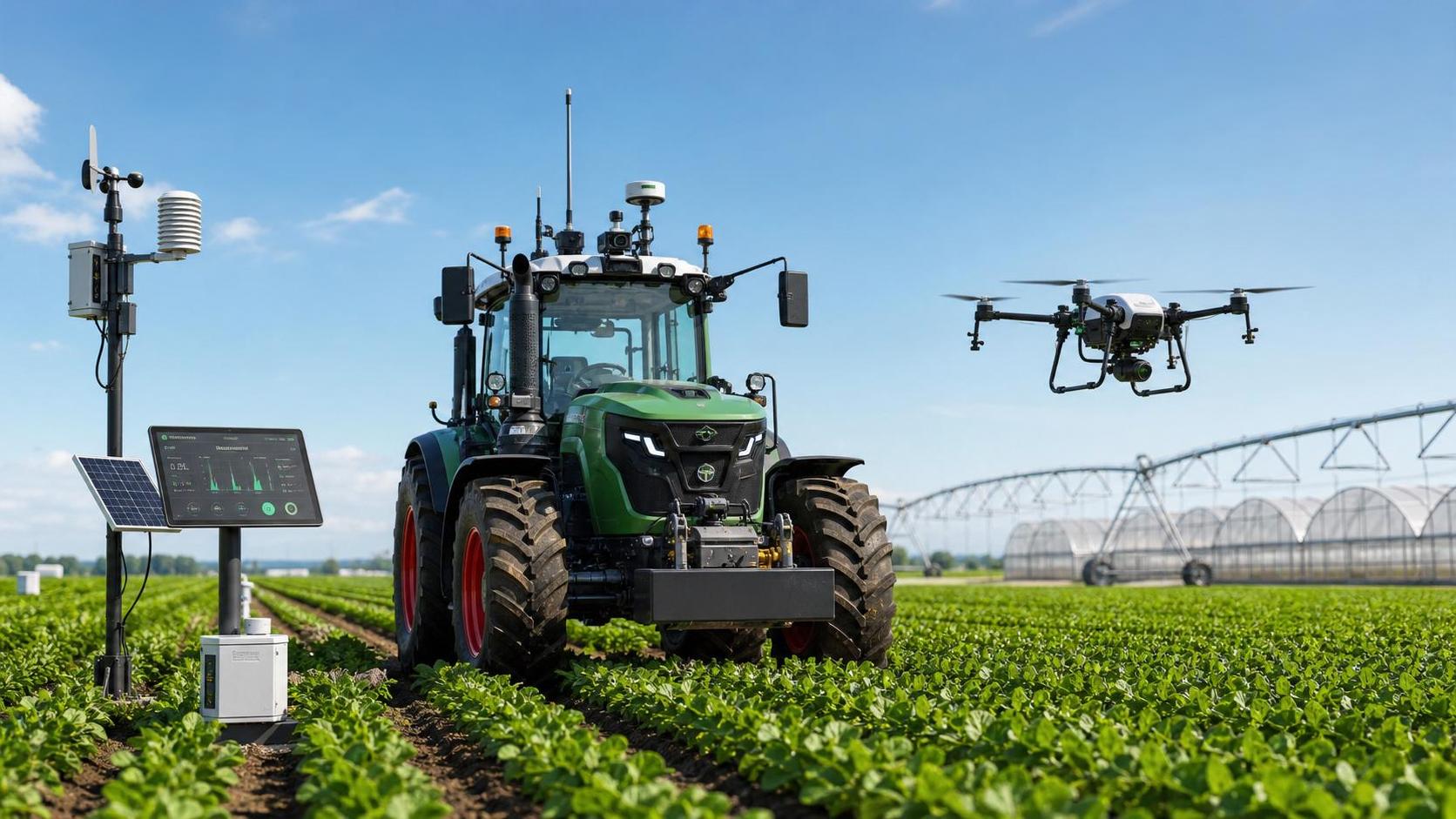
Precision agriculture equipment price is rarely defined by the machine alone. In capital planning, the visible quote is only the starting point. Total cost is shaped by guidance precision, automation depth, software compatibility, operator training, service response, and the value created per acre or per labor hour.
That matters more now because farms are balancing labor pressure, input volatility, climate risk, and tighter return expectations. Across tractors, drones, planters, irrigation controls, greenhouse systems, and digital farm platforms, the real question is not what equipment costs today, but what it will cost to own, integrate, and justify over time.
Why price discussions have become more complex
A modern precision package combines hardware, software, positioning technology, sensors, and support services. That makes precision agriculture equipment price a system-level issue rather than a single procurement line.
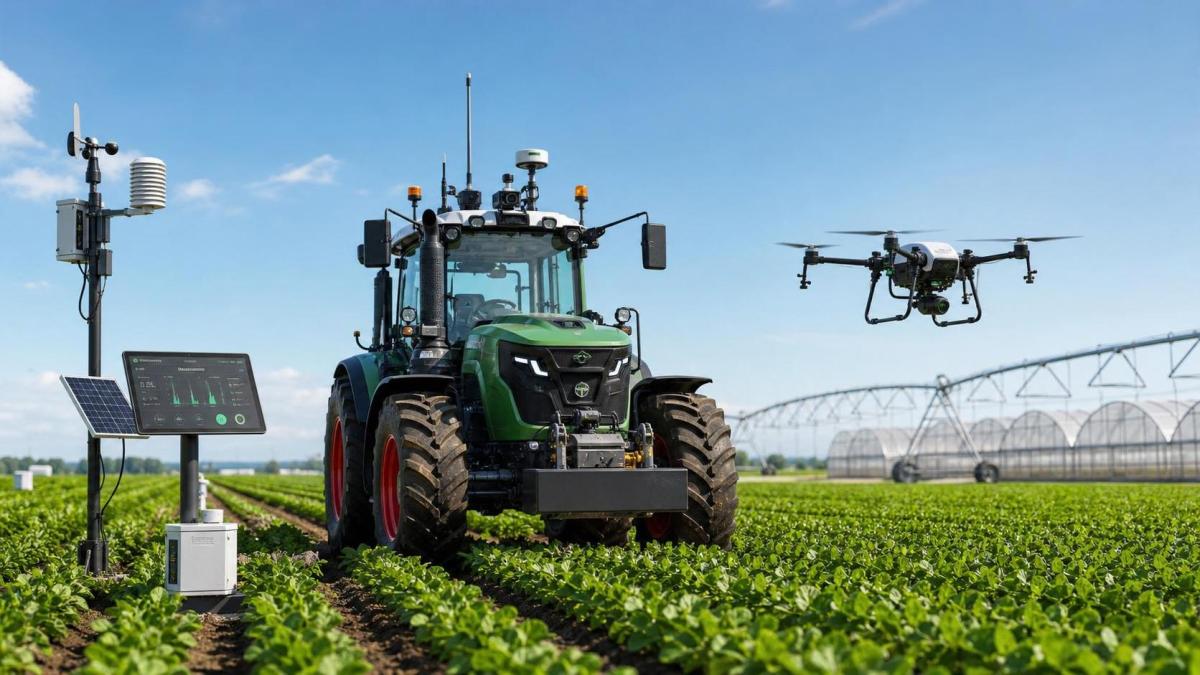
In field operations, a guidance-ready tractor may need RTK correction, display terminals, hydraulic steering interfaces, and data subscriptions. A spraying drone may require batteries, terrain-following radar, mapping software, and pilot certification support.
The same logic applies in controlled environment agriculture and livestock automation. Climate sensors, fertigation controls, feeding robots, and machine vision systems often look affordable in isolation, yet integration and uptime requirements can shift the budget sharply.
This is why market intelligence platforms such as SAMS focus on complete operating value. In practice, machinery performance, digital compatibility, reliability, and return modeling belong in the same pricing conversation.
What usually sits inside the total cost
Sticker price remains important, but it is only one layer. A useful review separates capital expenditure from activation cost and recurring cost.
Core equipment and specification tier
Base machine pricing changes quickly with horsepower, working width, payload, tank capacity, or automation capability. Higher-output equipment usually improves productivity, yet oversizing can weaken payback if acreage or usage hours stay limited.
For example, precision agriculture equipment price for a planter with section control and variable-rate capability will differ significantly from a mechanically simpler unit. The same pattern appears in autonomous steering kits, combines with yield mapping, and irrigation systems with sensor-linked dosing.
Positioning, sensing, and control layers
Accuracy carries a price premium. Sub-meter guidance, decimeter guidance, and RTK-level correction support different use cases and risk profiles. In high-value cropping, planting accuracy and overlap reduction can justify tighter tolerances.
Sensors also change cost structure. Multispectral cameras, NDVI tools, flow meters, soil probes, greenhouse climate stations, and livestock monitoring devices can improve decisions, but each adds data management and maintenance obligations.
Software, data, and subscriptions
Many buyers still underestimate this category. Precision agriculture equipment price often looks competitive until annual platform fees, correction signals, cloud storage, prescription mapping, or remote diagnostics are added.
If the system cannot exchange data smoothly with existing tractors, harvesters, drones, or farm management platforms, hidden administrative cost appears quickly. Manual data transfer, duplicated records, and delayed decisions all reduce expected efficiency gains.
The cost drivers that most influence approval decisions
Not every price driver has equal strategic weight. Some raise acquisition cost but lower total ownership risk. Others look cheaper initially yet create expensive friction later.
Among these factors, service and integration are often decisive. During planting, harvest, spraying, or greenhouse climate events, delays are expensive. A lower quote may become the higher-cost choice if support is weak or interoperability is poor.
How pricing differs by application scenario
Precision agriculture equipment price should always be read in context. The same technology can have different economic logic depending on crop type, farm scale, labor structure, and operating intensity.
Broadacre field operations
Large grain and oilseed operations usually benefit most from guidance, section control, variable-rate application, and yield data. Here, overlap reduction and operating speed can produce measurable seasonal savings.
Higher-horsepower tractors, combines, and balers also amplify the value of reliable digital systems. A short harvest window raises the cost of every hour lost to calibration issues or software faults.
High-value crop and drone use
In orchards, vegetables, and specialty crops, drones, machine vision, and prescription spraying often justify a higher precision agriculture equipment price. Input savings may matter, but crop protection accuracy and reduced crop damage matter more.
Battery cycles, charging logistics, replacement parts, and local compliance can materially affect annual cost. These items should sit beside the purchase quote from the beginning.
Greenhouse, irrigation, and livestock systems
In protected cultivation and livestock settings, equipment economics depend on year-round utilization. Climate control, hydroponic fertigation, feeding automation, and sensor networks often support continuous data-driven management.
That means recurring software, calibration, and service costs deserve more attention than in lower-frequency field tasks. On the other hand, stable utilization can improve payback visibility.
A practical way to evaluate precision agriculture equipment price
Useful comparison starts with operating outcomes rather than brochure features. A disciplined review asks how the system changes labor, input use, yield stability, field timeliness, and data quality.
- Define the target problem first, such as overlap, missed spray windows, irrigation inconsistency, or low harvest visibility.
- Separate one-time acquisition cost from annual licenses, support, connectivity, and replacement parts.
- Check compatibility with current tractors, implements, farm software, and data formats.
- Estimate value under realistic utilization, not peak-season assumptions only.
- Model downtime risk, especially where seasonal timing has direct revenue impact.
This approach helps explain why two offers with similar advertised functions can produce very different total ownership outcomes. The lower initial precision agriculture equipment price may not be the lower financial exposure.
Where many cost assessments go wrong
A common mistake is treating digital agriculture tools as accessories. In reality, once guidance, sensors, and platforms are embedded in operations, they influence workflow discipline, reporting quality, and machine uptime.
Another weakness is ignoring the learning curve. If adoption is partial, expected ROI may never appear, even when the technical package is sound. Training time, setup discipline, and internal ownership are cost variables, not side notes.
It is also risky to compare across brands only by nominal specification. SAMS and similar intelligence sources are useful because they connect machine capability with field application, service readiness, and longer-term procurement logic.
What to prepare before moving forward
Before approving any package, build a short cost map. Include equipment price, installation, software, correction signals, operator training, maintenance cycles, warranty terms, and expected residual value.
Then compare those figures against the operational gains that matter most: reduced overlap, lower chemical use, better planting accuracy, stronger harvest efficiency, improved climate consistency, or labor savings.
Precision agriculture equipment price becomes clearer when it is tied to a specific production system and a measurable return path. The next step is not simply requesting more quotes. It is establishing a decision framework that links technology features, service quality, and expected field economics in one view.
Related Intelligence