
IoT Smart Irrigation Solutions: Trends Shaping Water-Saving Agriculture
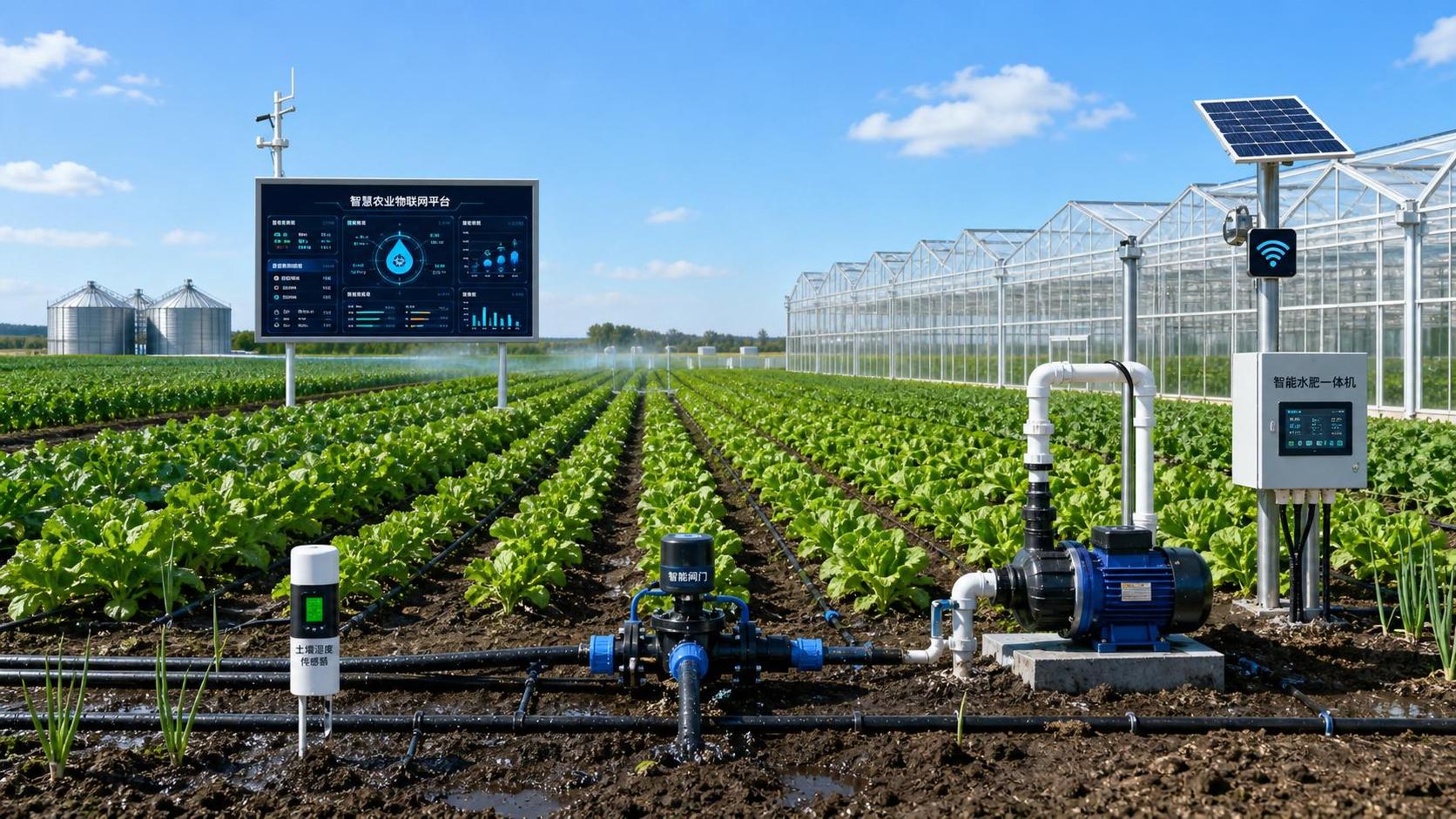
IoT smart irrigation solutions are moving from efficiency tool to strategic farm infrastructure
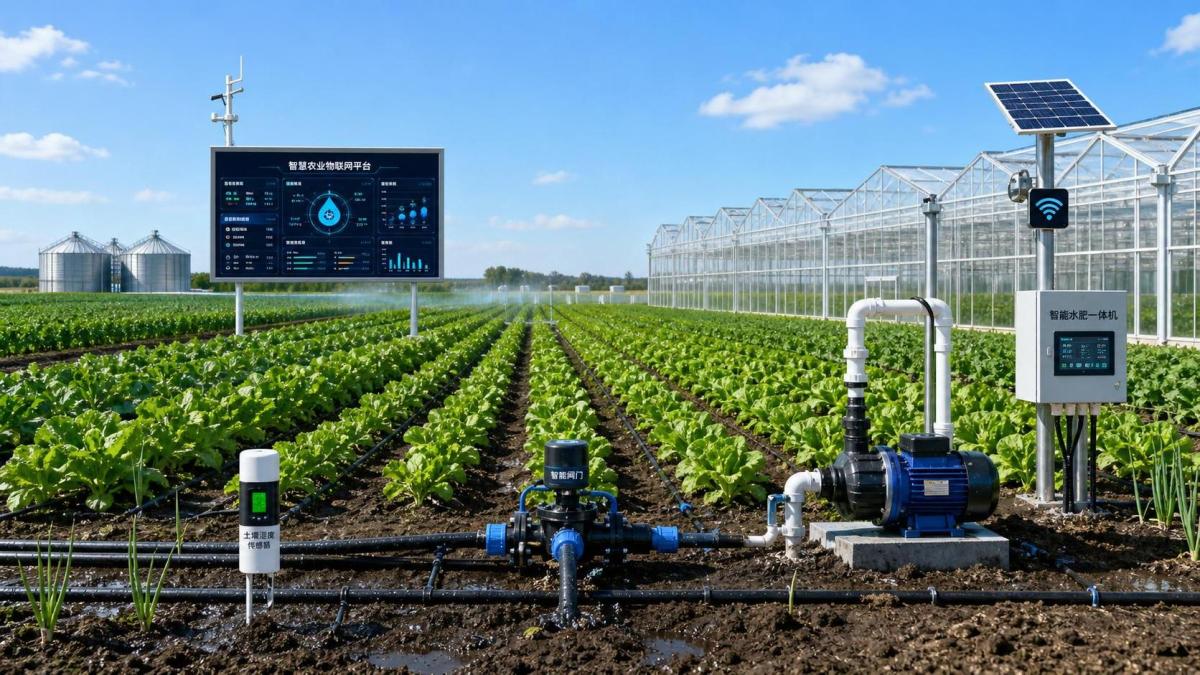
Water management is no longer a narrow operational issue. It now sits close to yield planning, energy control, labor allocation, and climate risk response.
That shift explains why IoT smart irrigation solutions are gaining attention across open-field farming, greenhouses, and controlled environment agriculture.
The technology is not only about sensors in the soil. It connects moisture readings, weather forecasts, pump status, fertigation timing, and field-level decisions.
In practical terms, connected irrigation helps reduce overwatering, stabilize crop performance, and expose weak points that were previously hidden inside routine irrigation schedules.
For agriculture, this matters because water stress now intersects with input inflation, tighter sustainability expectations, and growing pressure to prove resource efficiency with data.
Across the broader SAMS landscape, irrigation is also becoming more connected to climate sensors, digital farm platforms, hydroponic fertigation, and precision application systems.
Recent market signals show a clear change in how irrigation is evaluated
A few years ago, many projects treated irrigation automation as an isolated upgrade. Today, buyers increasingly assess it as part of a wider digital operating model.
This is a meaningful change. The question has moved from “Can the system automate watering?” to “Can the system improve decisions under variable field conditions?”
That difference affects system design, data expectations, and return calculations. It also raises the value of interoperability with climate control, crop sensing, and farm management software.
From recent demand patterns, four signals stand out:
- More interest in zone-specific irrigation rather than whole-field scheduling.
- Higher demand for alerts tied to pressure loss, leakage, and abnormal flow behavior.
- Closer integration between irrigation data and variable-rate agronomic planning.
- Greater scrutiny of water-use proof for compliance, financing, and customer reporting.
These signals suggest that IoT smart irrigation solutions are being judged less as hardware packages and more as decision systems.
Why this acceleration is becoming more visible now
The rise of IoT smart irrigation solutions is not driven by one factor. It comes from several pressures arriving at the same time.
More importantly, the technology stack is improving. Sensors are more affordable, connectivity is broader, and dashboards are becoming easier to interpret in daily operations.
That lowers the barrier between collecting data and actually using it to change irrigation behavior.
The impact is spreading beyond the irrigation team
One of the clearest developments is that irrigation decisions now influence more than water delivery. They shape planning across the production chain.
Open-field operations are using data to narrow variability
In row crops and large-acreage production, IoT smart irrigation solutions help identify uneven moisture zones that often reduce yield without obvious visual warning.
When combined with prescription maps or drone-based field observation, irrigation becomes a targeted adjustment rather than a uniform routine.
Greenhouses are pushing toward tighter water-energy coordination
In greenhouse systems, irrigation can no longer be separated from climate control, fertigation, humidity, and crop-stage management.
This is where IoT smart irrigation solutions create outsized value. They help align irrigation timing with substrate condition, radiation patterns, and ventilation behavior.
Investment decisions are becoming more evidence-based
Capital planning now looks more closely at payback under unstable climate conditions. Simple automation claims are less convincing than traceable water and yield data.
That fits the wider SAMS view of agricultural technology, where machinery, sensors, automation, and per-acre return must be assessed together rather than in isolation.
What the market is starting to reward in IoT smart irrigation solutions
The market is not rewarding connectivity for its own sake. It is rewarding systems that help operators respond faster and plan with more confidence.
Several capabilities are becoming more important than headline device counts:
- Reliable soil moisture interpretation across different depths and crop stages.
- Actionable alerts instead of dashboards crowded with passive data.
- Integration with pumps, valves, fertigation units, and weather services.
- Clear records that support water-use reporting and internal performance review.
- Scalability across fields, greenhouse zones, or multi-site operations.
A notable shift is the move from reactive maintenance to predictive oversight. Flow anomalies, pressure irregularities, and valve response delays can now be detected earlier.
That prevents small technical issues from becoming major water losses during critical growth periods.
The main risk is not weak technology, but weak implementation logic
Many irrigation projects underperform because data is collected without a clear operating model behind it. More sensors do not automatically create better irrigation decisions.
In actual deployment, the biggest issues usually appear in calibration, staff routines, data interpretation, and system integration.
For that reason, evaluation should move beyond device specifications. It should test whether the system can fit real field variability, crop cycles, and maintenance capacity.
Three checkpoints deserve close attention:
- Whether data thresholds match local soil, substrate, and crop behavior.
- Whether irrigation recommendations can be translated into daily operating actions.
- Whether the platform connects with broader digital farm management workflows.
This matters especially in mixed technology environments, where tractors, drones, climate systems, and irrigation assets increasingly feed into a shared decision framework.
The next phase will be defined by integration, not standalone automation
Looking ahead, IoT smart irrigation solutions are likely to become more tightly linked with agronomic modeling, remote sensing, and energy optimization.
That means the most valuable systems may not be the most complex. They may be the ones that connect water decisions with real production outcomes.
A useful next step is to review irrigation strategy through three lenses: data quality, control responsiveness, and economic relevance.
It is also worth comparing whether current irrigation logic still fits present climate behavior, cropping intensity, and reporting expectations.
For organizations tracking farm modernization through platforms such as SAMS, the stronger signal is clear. Water-saving agriculture is becoming part of a connected machinery and intelligence ecosystem.
Those monitoring the market should keep watching integration standards, proof-of-savings methods, and the growing link between irrigation data and whole-farm resilience planning.
That is where the next competitive gap is likely to open.
Related Intelligence