
Vietnam Tightens Venlo Greenhouse Import Filing
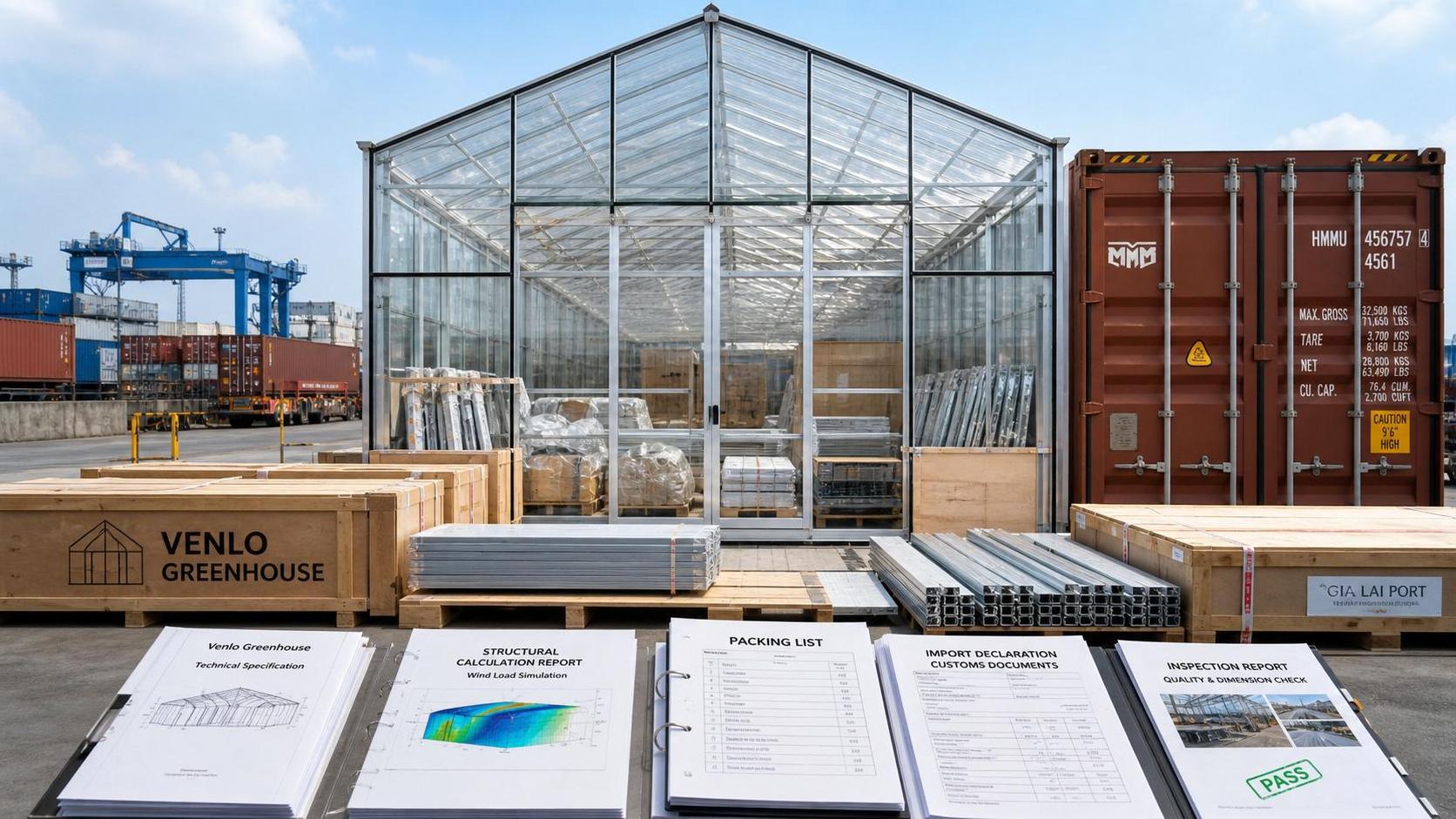
On July 8, 2026, Vietnam’s Ministry of Agriculture and Rural Development (MARD) announced a new compliance requirement for imported Venlo glass greenhouse systems. From September 1, 2026, importers must submit a wind load simulation report issued by an institution recognized by the Vietnam Meteorological and Hydrological Administration (VNMH), together with tropical high-humidity climate adaptation parameters, to VINAQAS before customs clearance. This is worth close attention from greenhouse exporters, project suppliers, procurement teams, and cross-border logistics operators because it directly affects document preparation and delivery timing.
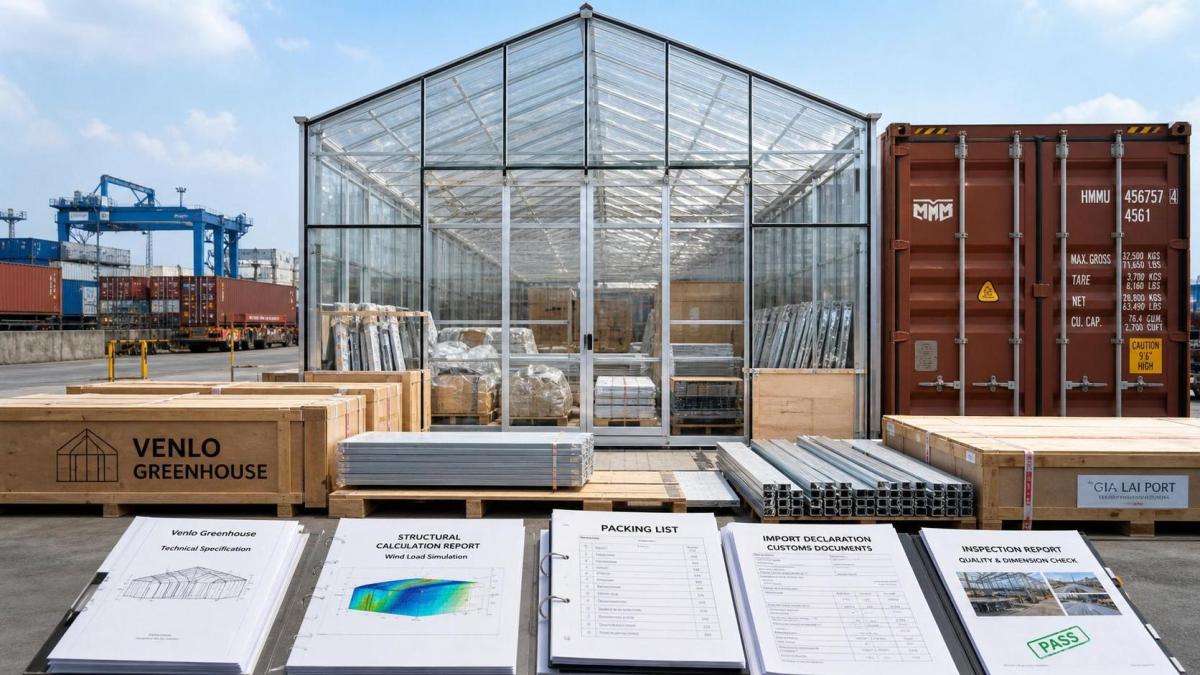
What the New Filing Requirement Confirms
The confirmed facts are limited but clear. MARD issued the announcement on July 8, 2026, and set September 1, 2026 as the effective date. The rule applies to all imported Venlo glass greenhouse systems. Before customs clearance, the required filing must be made to VINAQAS.
The submission package must include two core elements. One is a wind load simulation report issued by an institution recognized by VNMH. The other is a set of tropical high-humidity climate adaptation parameters, including condensation control thresholds and the self-cleaning attenuation rate of the glass. The information provided also indicates that this requirement will affect export document preparation and delivery cycles for Chinese suppliers.
Where the Operational Pressure Is Likely to Appear
Exporters and project suppliers face a documentation shift
From an industry perspective, companies exporting Venlo glass greenhouse systems to Vietnam may be affected first because the new rule changes what must be ready before customs clearance. The immediate impact is likely to fall on compliance files, technical submissions, and shipment scheduling rather than on product movement alone.
Manufacturing and engineering teams may need closer technical coordination
Analysis shows that the requirement is not limited to basic trade paperwork. It refers to wind load simulation and climate adaptation parameters tied to tropical high-humidity conditions. That means manufacturing, engineering, or technical support teams may need to coordinate more closely with export and documentation staff to ensure that the required materials are complete and consistent.
Logistics and customs-facing service providers may see timing risks
What deserves closer attention is the pre-clearance nature of the filing. For freight forwarders, customs brokers, and other supply chain service providers, the practical issue is likely to be timing. If the required report or parameters are incomplete or not ready in sequence, delivery schedules may face additional pressure.
Buyers and procurement teams should watch contract timing
For procurement-side participants, the main concern is not only product specification but also filing readiness. Observably, any purchase plan tied to fixed project milestones may need to account for longer document preparation windows and more detailed supplier communication.
What Companies Should Track Before September 1
Whether official wording develops further
Analysis shows that companies should closely track any follow-up clarification around submission scope, accepted formats, and interpretation of the required parameters. The current confirmed information establishes the filing obligation, but practical execution often depends on how official wording is applied in customs and inspection workflows.
Whether recognized institutions can support project timelines
What deserves closer attention is the report issuer requirement. Because the wind load simulation report must come from a VNMH-recognized institution, exporters and import-side partners should pay attention to whether their existing technical documentation pathways align with that requirement and whether lead times remain workable.
Whether internal document sets are ready for tropical adaptation review
The climate adaptation part of the rule includes condensation control thresholds and glass self-cleaning attenuation rate. For companies already preparing export files, the immediate practical question is whether these parameters are already documented in a usable form or whether additional coordination will be needed before shipment planning.
Whether customer communication reflects the new clearance sequence
Observably, this is also a communication issue. Sales, project management, and fulfillment teams may need to explain that compliance timing now has a more explicit pre-clearance component, especially for orders expected to ship around or after the September 1 effective date.
Why This Looks More Than a Routine Paperwork Update
Analysis shows that the significance of this development lies in the type of documents being required. The rule points beyond standard import filing and toward a closer review of structural suitability and climate adaptation for Venlo glass greenhouse systems entering Vietnam. That does not by itself prove a broader policy shift, but it does suggest that technical compatibility with local conditions is becoming more visible in import compliance.
It is more appropriate to understand this as a concrete short-term operational change with possible longer-term regulatory signaling. The immediate effect is procedural. The longer-term question, which still requires observation, is whether similar technical documentation expectations will become more common in related greenhouse or controlled-environment imports.
How the Industry Should Read This Now
At this stage, the clearest conclusion is practical rather than speculative. The rule creates a defined new filing requirement for imported Venlo glass greenhouse systems and introduces timing and coordination considerations for exporters, suppliers, and service providers involved in shipments to Vietnam. It should not yet be overstated as a fully settled industry outcome beyond the confirmed scope of this measure.
Current observation suggests that businesses should treat it as an active compliance change that can affect documentation flow and delivery planning in the near term, while continuing to monitor how the requirement is implemented in practice after September 1, 2026.
Basis of This Article and What Still Needs Verification
This article is based on the user-provided news title, event date, and event summary concerning Vietnam’s new filing requirement for imported Venlo glass greenhouse systems. For this type of industry update, relevant source categories typically include official government announcements, company notices, industry association releases, authoritative media coverage, and standards-related documents.
A specific official source link was not provided in the input, so the exact source document and any later explanatory materials still need ongoing verification. Follow-up attention should focus on whether further official clarification is issued on filing procedures, recognized report issuers, and implementation details after the rule takes effect.
Related Intelligence