
MIIT Issues First Green Export Certificates
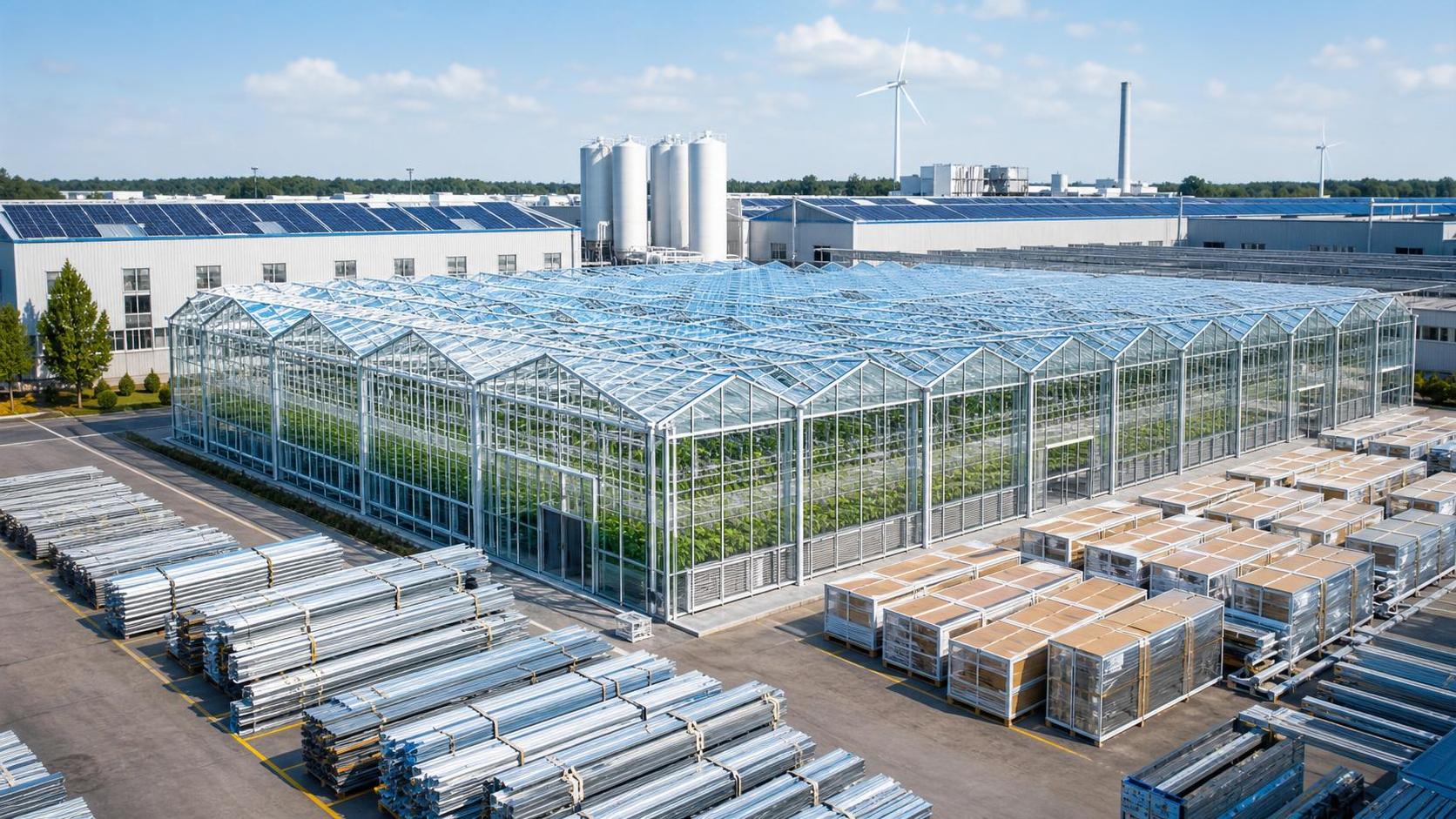
On June 30, 2026, China’s Ministry of Industry and Information Technology issued the first 12 Green Export Certificates under its new Low-Carbon Agricultural Infrastructure Export Protocol for Venlo glass greenhouse systems shipped to the EU, Canada, and South Korea. The development is relevant not only as a certification update, but as a trade and compliance signal for greenhouse exporters, manufacturers, procurement teams, and supply chain service providers, because certificate eligibility is tied to embodied carbon and manufacturing energy conditions while also affecting customs handling and tariff treatment in partner markets.

What the first batch confirms
The confirmed facts are limited but clear. MIIT approved the first 12 Green Export Certificates on June 30, 2026 under the newly launched Low-Carbon Agricultural Infrastructure Export Protocol. The certificates apply to Venlo glass greenhouse systems exported to the EU, Canada, and South Korea. The certification requires verified embodied carbon of no more than 320 kg CO₂e/m² and manufacturing powered by renewable energy. According to the event summary, certified exports can receive preferential customs clearance and tariff treatment in partner markets.
Where the rule change may start to affect business
Export projects now face a clearer compliance gate
From an industry perspective, exporters of Venlo glass greenhouse systems may be affected first because the new certificate is directly linked to cross-border treatment. The practical impact may appear in pre-shipment review, export documentation preparation, and buyer-facing compliance communication. What deserves closer attention is whether project teams can substantiate carbon performance and manufacturing energy inputs in a form that aligns with certificate requirements.
Manufacturing and sourcing decisions may come under closer review
For manufacturers and upstream procurement teams, the key issue is that eligibility is not framed only around the finished product, but also around how production is powered. Analysis shows this could shift attention toward material selection, production records, and renewable-energy-backed manufacturing arrangements. Companies involved in component sourcing, fabrication, and assembly may therefore need to pay closer attention to whether internal records and supplier materials can support certification review.
Customs, logistics, and delivery coordination may need tighter document control
Supply chain service providers and delivery coordinators may also be affected because the reported benefit of certification includes preferential customs clearance and tariff treatment in partner markets. Observably, that makes document accuracy and timing more important at shipment stage. The main business impact may fall on document matching, handover timing, and coordination between exporters, logistics providers, and destination-side import handling.
Buyers and channel participants may treat certification as a practical filter
For overseas buyers, distributors, and project procurement teams, the certificate may begin to function as a screening factor in supplier comparison, especially where customs efficiency or landed cost matters. Analysis shows the immediate issue is less about broad market transformation and more about whether certified status becomes a usable procurement condition in tenders, technical review, or contract discussions tied to delivery and import treatment.
What companies should watch next
Keep certification evidence ready for review
Companies involved in qualifying exports should focus on whether they can present verifiable evidence for embodied carbon at or below 320 kg CO₂e/m² and for renewable-energy-powered manufacturing. The event summary does not provide the detailed review pathway, so it would be premature to assume a fixed filing format or documentation sequence. What deserves closer attention is readiness of technical files, production records, and supporting compliance materials.
Track how trade-facing documents begin to reference the certificate
Because the reported commercial effect includes preferential customs clearance and tariff treatment, exporters and trade teams should watch how the certificate is reflected in shipping documents, customs-related paperwork, commercial offers, and buyer requests. At this stage, the available information confirms the trade relevance of the certificate, but not the full operational wording that may be used across different transactions.
Review procurement and supplier qualification logic
Manufacturers and project integrators should also assess whether current supplier qualification and purchasing processes can support low-carbon export claims. Analysis shows this matters particularly where procurement decisions could affect embodied carbon outcomes or the credibility of manufacturing-energy assertions. The event does not confirm any standard supplier checklist, so companies should treat this as a compliance preparation issue rather than a settled procedural requirement.
Watch for shifts in tender language and delivery commitments
Observably, one area to monitor is whether tenders, buyer specifications, or delivery negotiations begin to mention low-carbon export certification more explicitly. Since the current information does not include downstream contract practice, this remains a point for continued observation rather than a confirmed market-wide change. Still, firms with active export pipelines may want to check whether certification status starts influencing bid positioning, lead-time planning, or post-shipment support expectations.
Why this looks like an execution signal more than a broad conclusion
Analysis shows the issuance of a first batch matters because it moves the Low-Carbon Agricultural Infrastructure Export Protocol from policy framing into initial implementation. That said, it is more appropriate to understand this as an execution signal rather than a complete picture of mature market practice. The confirmed facts show that certification conditions, destination markets, and trade-related benefits have been identified, but the broader industry still needs to observe how consistently the rules are applied, how documents are examined in practice, and how buyers respond in procurement and delivery settings.
How the market should read this development now
At this stage, the event is best understood as a concrete compliance and trade development for a defined export segment rather than as a universal shift across all agricultural infrastructure exports. The practical significance lies in the link between carbon-related certification conditions and trade treatment. A neutral reading is that the rule has begun to land in practice, while its wider commercial effect will depend on subsequent execution detail, market uptake, and how trade participants incorporate the certificate into real transactions.
Basis of this article and what still needs verification
This article is based on the user-provided news title, event date, and event summary. For developments of this kind, relevant source types typically include official announcements, releases from regulatory authorities, customs or trade administration information, industry association notices, standards-related documents, and reporting by authoritative media. A specific official source link was not provided in the input, so further verification is still required. Areas that remain worth tracking include detailed policy language, certification implementation criteria, operational review standards, tender-document changes, industry feedback, and how companies execute against the new requirements in practice.
Related Intelligence