
EU Makes Venlo Greenhouse Energy Certification Mandatory
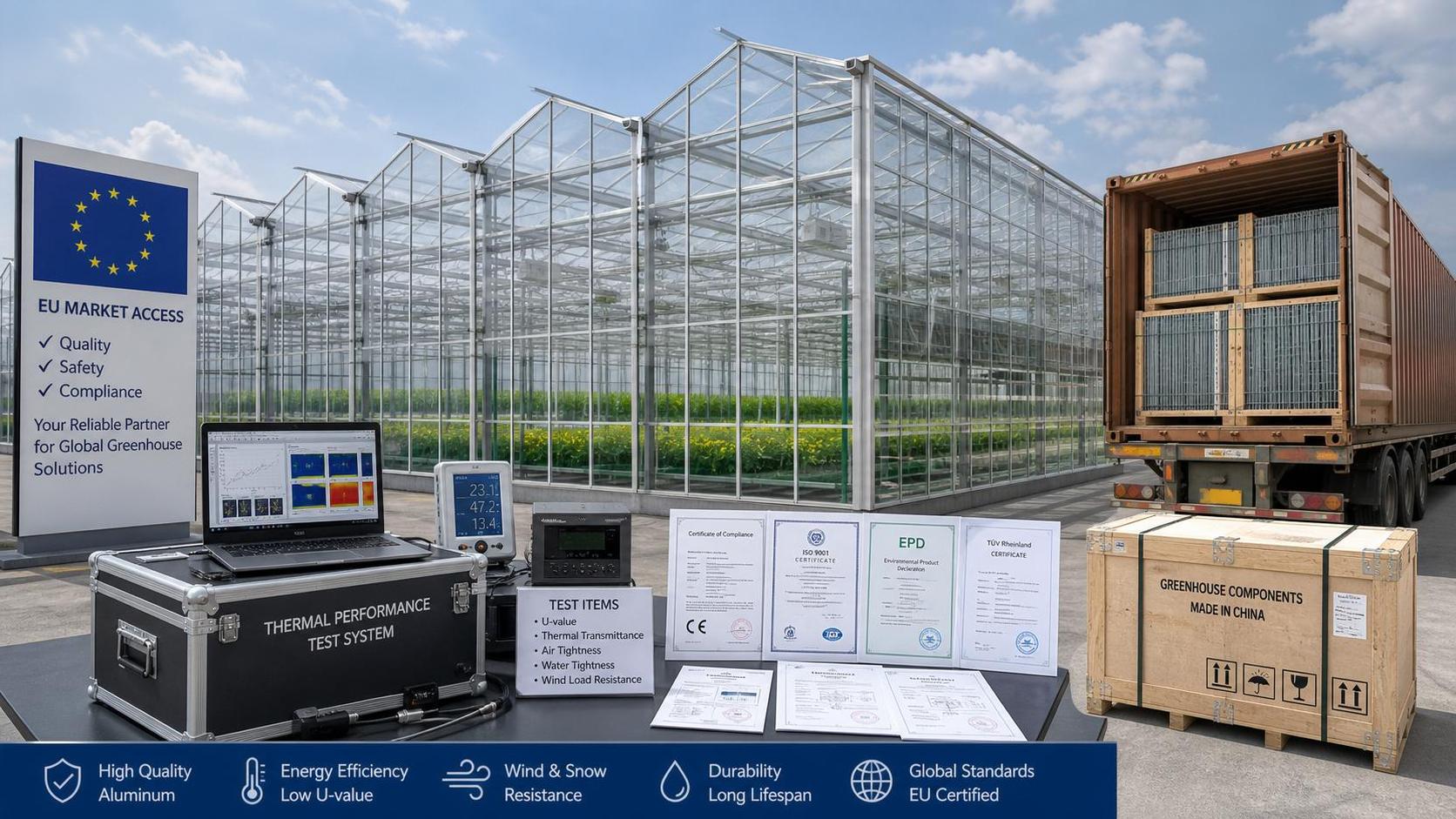
On July 11, 2026, the European Commission released Implementing Regulation (EU) 2026/1389, introducing a new market-entry requirement for imported Venlo glass greenhouse systems. From January 1, 2027, compliance will no longer center only on product delivery, but also on whether exporters, testing partners, and customs documentation teams can meet a dual-parameter certification requirement under EN 12464-3:2026+A1:2026 and provide a third-party Climate Adaptation Parameter Package (CAP). For suppliers serving the EU market, this is worth close attention because it directly connects technical compliance with customs clearance and market access.
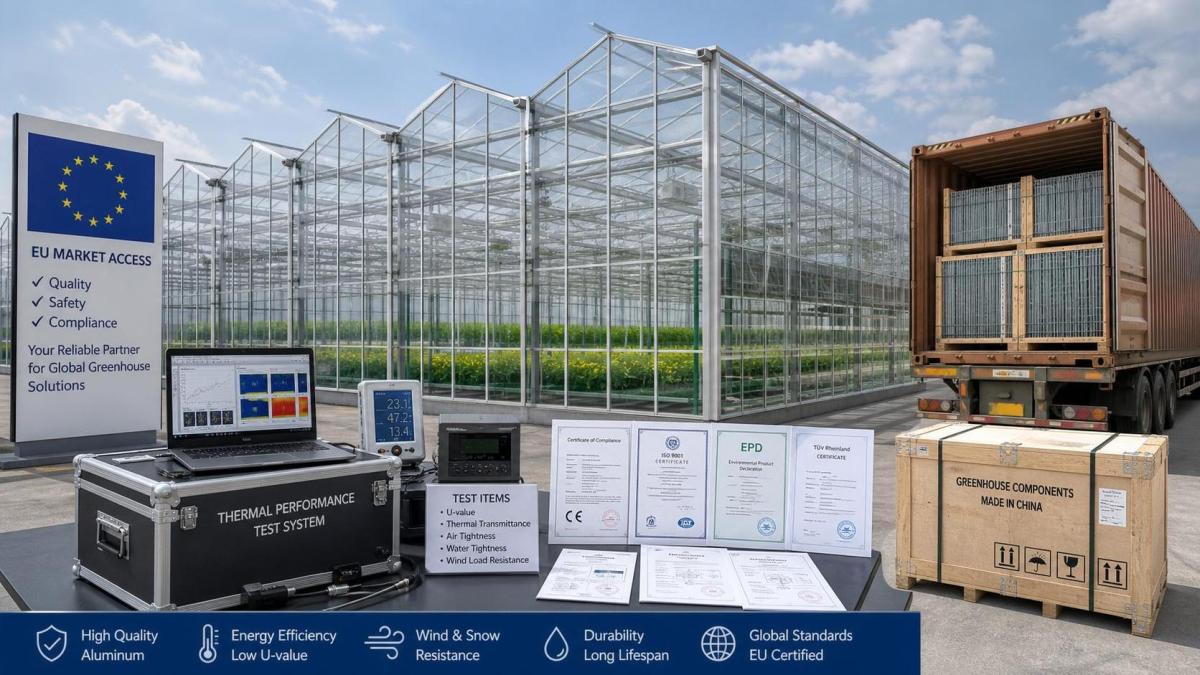
What the new EU requirement confirms
The confirmed facts are limited and clear. The European Commission issued Implementing Regulation (EU) 2026/1389 on July 11, 2026. Under this requirement, all imported Venlo glass greenhouse systems must, from January 1, 2027, obtain certification covering two parameters under EN 12464-3:2026+A1:2026: energy efficiency and thermal bridge coefficient. In addition, importers must submit a third-party Climate Adaptation Parameter Package, or CAP.
The summary provided also makes clear that the rule has direct implications for Chinese exporters in three concrete areas: product design, testing timelines, and customs documentation preparation. Products that do not comply will be denied entry into the EU market.
Where the pressure is likely to appear first in the supply chain
Export-side product decisions move closer to compliance review
From an industry perspective, exporters of Venlo glass greenhouse systems are likely to feel the most immediate impact because the new requirement links product access to both certification and supporting documentation. The practical effect is that design choices may need to be reviewed against energy-efficiency and thermal-bridge performance before shipment planning is finalized. What deserves closer attention is whether existing product configurations, technical files, and export documentation are aligned with the new certification threshold before the 2027 effective date.
Testing and certification work becomes a delivery variable
Certification-related service providers and testing partners may also become a critical part of project scheduling. Analysis shows that once a dual-parameter certification requirement is made mandatory, testing lead time is no longer a background compliance issue; it becomes part of delivery readiness. Companies involved in certification preparation, document review, and technical validation should therefore watch for changes in report format, parameter presentation, and the interface between certification records and customs submission materials.
Customs and trade execution face a higher document standard
For trade operations teams, freight coordinators, and customs-facing compliance staff, the requirement changes the document burden attached to shipment execution. The input confirms that customs clearance preparation is directly affected, which means the CAP and certification evidence are not peripheral materials. Observably, businesses shipping to the EU will need to pay closer attention to whether filing packages, technical attachments, and product compliance records are complete and internally consistent before dispatch.
Buyers and procurement teams may tighten qualification checks
Procurement teams and EU-facing buyers are also likely to respond by placing more weight on supplier readiness. Analysis shows that when non-compliant products can be refused entry, supplier selection may shift toward providers that can demonstrate certification planning and document preparedness earlier in the sales or tender process. That does not confirm a change in all procurement behavior, but it is a reasonable compliance-related risk for suppliers to monitor.
What companies should review before the rule takes effect
Check whether current designs can support the required certification path
Analysis shows that companies exporting Venlo glass greenhouse systems should first review whether current product designs can be assessed against the two required parameters under EN 12464-3:2026+A1:2026. The key issue is not only product performance itself, but whether the existing technical basis is sufficient to support certification without delaying shipment schedules.
Prepare the CAP as part of the trade file, not as a late-stage add-on
The requirement to submit a third-party CAP suggests that climate-related parameter documentation should be treated as part of the compliance package from the start. What deserves closer attention is how companies organize supporting materials internally so that certification outputs and CAP materials can be assembled in a form suitable for customs submission rather than added shortly before export.
Reassess testing timelines against 2027 delivery commitments
Observably, businesses with EU delivery plans that extend into or beyond January 1, 2027 should examine whether current testing schedules still match contractual or procurement timelines. The input does not provide detailed execution rules, so it would be premature to assume a uniform industry timetable. Even so, the confirmed link between the rule and testing cycles means timing risk deserves immediate review.
Watch for later wording, interpretation, and document practice
Because the available information confirms the rule and its effective date but does not provide full execution detail, companies should continue monitoring how the requirement is described in official communications, customer documentation requests, and practical customs workflows. Analysis shows that later clarification on certification presentation, CAP expectations, or procurement wording could materially affect how exporters prepare files and sequence compliance work.
How this change is best understood at this stage
Analysis shows that this development is more appropriate to understand as an implemented market-access requirement rather than a distant policy signal. The effective date has already been defined, and the consequence for non-compliance is explicit: refusal of entry into the EU market. At the same time, it should not yet be treated as a fully settled operational framework in every practical detail, because the input does not provide a complete enforcement or documentation interpretation pathway.
From an industry perspective, the main significance lies in how technical certification, climate-related documentation, and customs execution are being tied more closely together. That combination matters because it shifts compliance from a specialist function into a cross-functional issue involving design, testing, export operations, and customer-facing delivery planning.
A practical reading for the market
The immediate value of this update is not in headline policy language but in its operational message: access to the EU market for imported Venlo glass greenhouse systems will depend on documented conformity to a defined certification and documentation framework from January 1, 2027. A neutral reading is that companies should treat this as a real compliance threshold with confirmed market-entry consequences, while still reserving judgment on finer execution details until additional official practice or market feedback becomes available.
Basis of this article and what still needs verification
This article is based on the user-provided news title, event date, and event summary. For developments of this type, commonly relevant source categories may include official notices, regulatory publications, customs or trade authority information, industry association updates, standard-setting documents, and reporting by authoritative trade media. No specific official source link was provided in the input, so the precise official publication path still requires ongoing verification.
Further observation is still needed on points such as detailed implementation wording, certification interpretation in practice, CAP submission expectations, changes in tender or procurement documents, industry feedback, and how companies execute compliance in actual export transactions.
Related Intelligence