
Smart Fertilization Systems: Costs, ROI, and Setup Factors
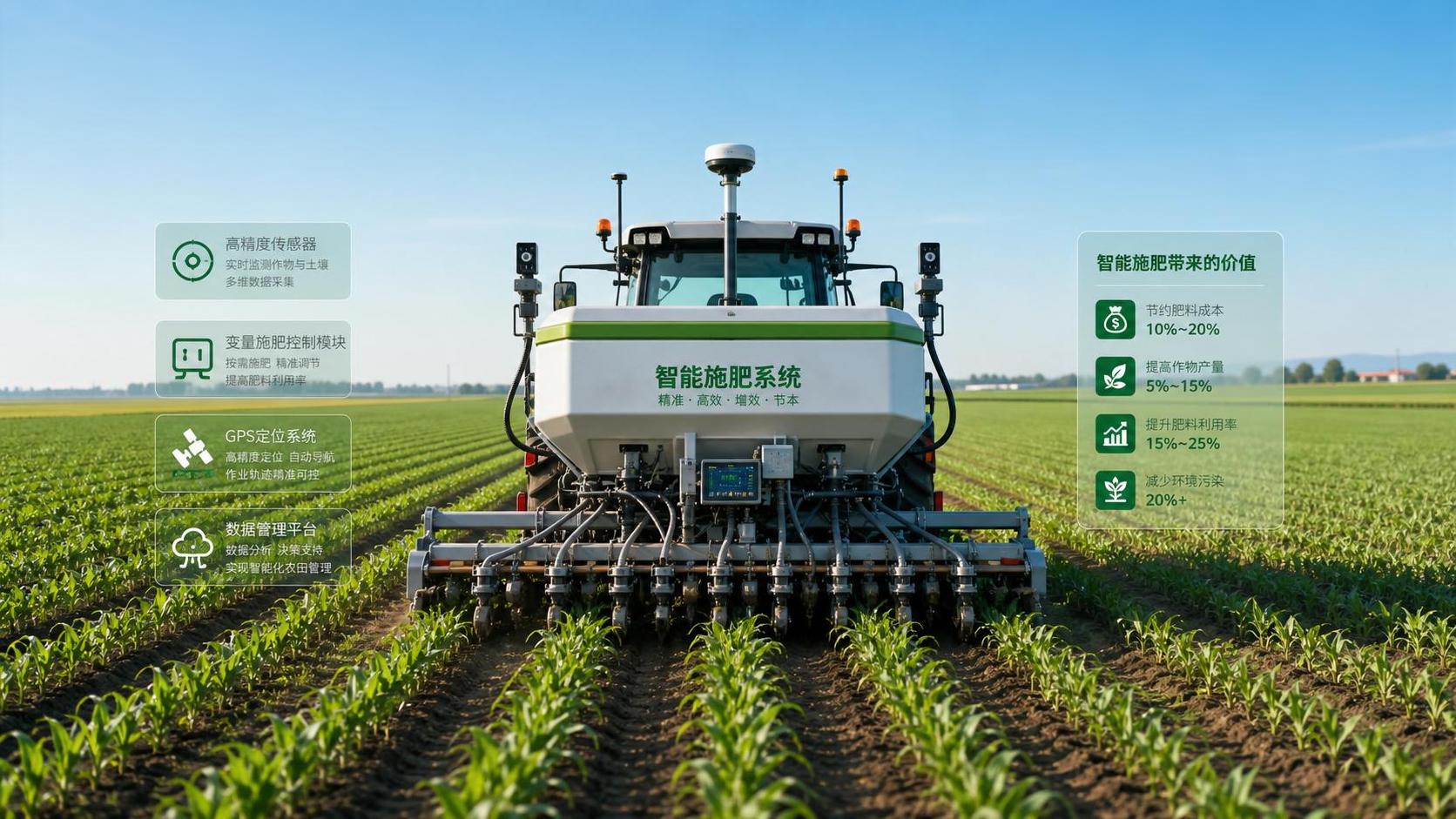
Why are smart fertilization systems now a finance question, not only a field question?
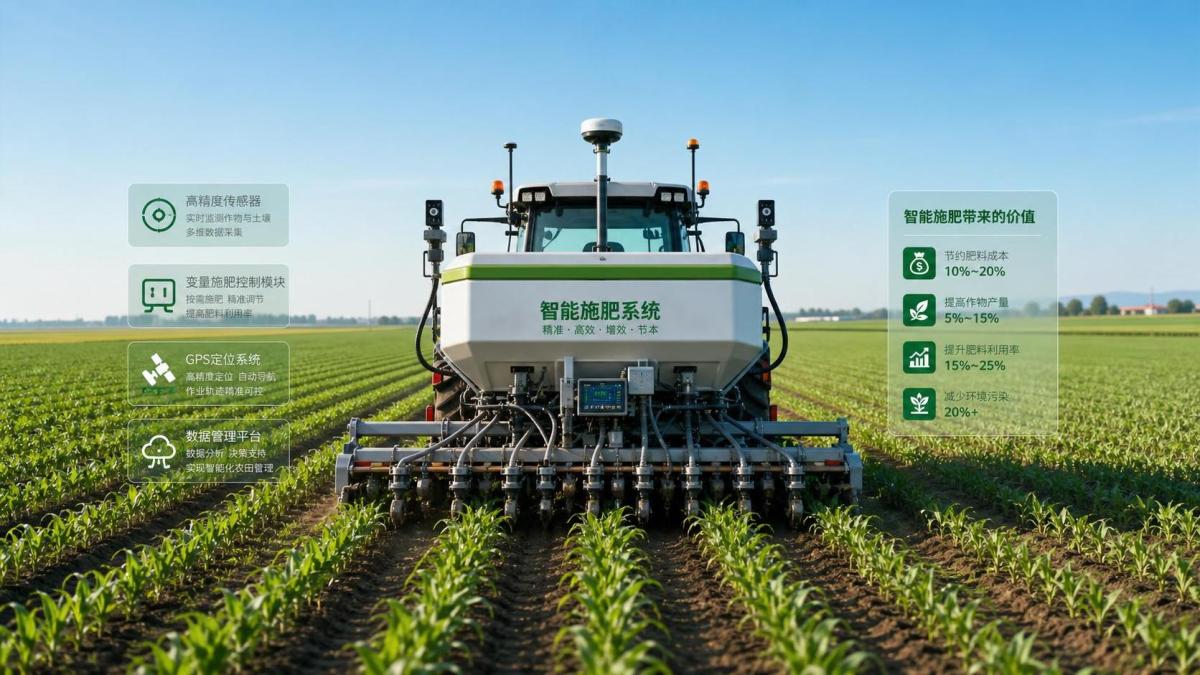
Smart fertilization systems sit at the intersection of agronomy, machinery, and capital discipline.
They influence fertilizer use, crop consistency, labor planning, and data visibility across multiple seasons.
That matters because fertilizer remains one of the largest variable costs in modern crop production.
A small improvement in application accuracy can change per-acre economics more than expected.
In practical terms, smart fertilization systems combine sensors, variable-rate control, mapping, connectivity, and application hardware.
Some are mounted on spreaders or sprayers.
Others operate inside greenhouse fertigation loops or controlled environment agriculture platforms.
The common goal is simple.
Apply nutrients where they create value, avoid over-application where they do not, and document results.
Within the wider SAMS perspective, this is not an isolated technology purchase.
It connects with RTK guidance, NDVI maps, drones, irrigation systems, climate sensing, and digital farm management.
That broader integration often decides whether the investment performs or disappoints.
What does a smart fertilization system usually cost in real projects?
The honest answer is that costs vary widely because the term covers several system levels.
A retrofit controller on existing equipment is very different from a full precision application stack.
Most budgets fall into four cost layers.
- Application hardware: spreaders, sprayers, injectors, pumps, meters, valves, and section control components.
- Positioning and sensing: GPS or RTK, canopy or soil sensors, EC and pH probes, flow monitoring, or drone-based imaging inputs.
- Software and data: mapping, prescription creation, telematics, cloud dashboards, and compatibility with existing farm platforms.
- Implementation: installation, calibration, operator training, agronomic setup, and support during the first season.
For open-field operations, entry projects often begin with variable-rate capability added to existing machines.
Larger investments usually include RTK guidance, prescription mapping, and multi-product application control.
In greenhouse or hydroponic fertigation, the budget tends to shift from vehicle hardware to pumps, sensors, dosing accuracy, and climate-linked controls.
The more useful budgeting method is not asking for one average price.
It is asking which functions actually create measurable value in the target production system.
That distinction keeps teams from paying for precision features that never translate into operational gains.
A quick cost-reading table before comparing vendors
This table helps separate low-ticket add-ons from systems that require full capital review.
Where does ROI usually come from, and what tends to be overstated?
Many proposals emphasize fertilizer savings first.
That is real, but it is rarely the whole story.
The stronger business case often comes from combined effects.
- Reduced nutrient waste through variable-rate application or more stable dosing.
- Improved yield consistency in low-performing or uneven zones.
- Lower rework, fewer missed areas, and less overlap when guidance is integrated.
- Better labor allocation because operators spend less time correcting field variability manually.
- Stronger records for compliance, benchmarking, and later input decisions.
The weak version of the ROI case appears when savings are modeled from ideal conditions only.
For example, projected fertilizer reduction may ignore crop response, soil variability, or weather disruption.
A more reliable approach is to build ROI from three lines.
First, direct input reduction.
Second, expected revenue protection or yield lift.
Third, operational savings tied to labor, fuel, passes, or water use.
This matters especially in systems connected to irrigation, greenhouse climate control, or drone imagery.
In those cases, smart fertilization systems perform best when they are part of a coordinated data loop.
Which setup factors most often change the final economics?
This is where many projects move away from spreadsheet assumptions.
The purchase price matters, but setup conditions often decide the real payback period.
Several factors deserve attention before approval.
1. Existing machinery and digital compatibility
A controller that does not communicate cleanly with current spreaders, tractors, or farm software can add hidden cost fast.
ISOBUS support, RTK availability, and map file compatibility are not minor details.
2. Field variability or production complexity
Smart fertilization systems return more value where soil, moisture, topography, or crop vigor vary meaningfully.
Uniform fields can still benefit, but the payback may take longer.
3. Agronomic data quality
Bad prescriptions create expensive precision.
If soil tests, NDVI inputs, or nutrient response history are weak, technology cannot correct that on its own.
4. Training and first-season support
Calibration errors, sensor drift, and poor workflow setup often show up early.
Vendors with structured onboarding usually reduce adoption loss.
5. Water and climate linkage in protected cultivation
In greenhouse and hydroponic environments, dosing precision depends on water quality, recirculation design, and climate control coordination.
That is why fertigation ROI should be reviewed with the wider controlled environment system, not alone.
How can you compare suppliers without getting lost in feature lists?
The better question is not who offers more features.
It is which supplier can prove outcome reliability under the intended operating conditions.
A practical review usually includes five checkpoints.
- Can the smart fertilization system integrate with current tractors, drones, irrigation assets, or greenhouse controls?
- Is the application accuracy documented in conditions similar to the target crops and field sizes?
- What service model covers calibration, software updates, sensor replacement, and seasonal troubleshooting?
- How transparent is the data ownership model, especially when cloud mapping or prescription tools are included?
- Can the vendor show a realistic payback method rather than a generic yield-improvement claim?
Platforms such as SAMS are useful here because they frame equipment decisions inside broader machinery and digital workflows.
That makes it easier to compare nutrient application technology with adjacent investments.
Sometimes the real decision is whether smart fertilization systems should come before, after, or together with guidance, sensing, or irrigation upgrades.
What mistakes slow payback most often?
Most disappointing projects fail for operational reasons, not because the concept is wrong.
A few patterns appear repeatedly.
In actual deployments, the fastest gains usually come from disciplined implementation, not from chasing the highest specification sheet.
So when does a smart fertilization system make sense to approve?
Approval tends to make sense when three conditions align.
The operation has meaningful nutrient variability or controllable waste.
The system can connect to existing machinery or digital tools without excessive custom work.
And the vendor can support a measured ramp-up instead of a one-time installation.
When those conditions are missing, the better move may be preparatory.
That could mean cleaning data, standardizing guidance, or improving irrigation control first.
A sensible next step is to build a side-by-side evaluation sheet.
List capital cost, implementation cost, compatibility, expected savings, yield impact, and service coverage.
Then test the payback under conservative, expected, and difficult seasons.
That approach produces a more durable decision than relying on a headline ROI claim.
For operations already reviewing precision ag, fertigation, or digital farm management, smart fertilization systems deserve attention because they affect both input control and production stability.
The strongest decisions come from comparing them as part of the wider farm technology stack, not as a standalone gadget.
Related Intelligence