
Fertigation System Price: Cost Drivers, Payback, and Budget Planning
Why does fertigation system price deserve a closer financial review?
Fertigation system price is rarely just equipment cost.
It shapes working capital, fertilizer efficiency, labor planning, and the speed of operational payback.
That is why many greenhouse, hydroponic, and irrigated field projects review it as a full-system investment, not a simple purchase order.
In practical terms, the right fertigation setup can reduce nutrient waste, improve dosing accuracy, and support more stable crop output.
The wrong setup may still run, but it often creates hidden service costs, uneven application, and weaker return on capital.
Across smart agriculture, this matters even more.
Platforms such as SAMS often frame fertigation beside irrigation control, climate systems, sensors, and digital farm management.
That broader view helps explain why two systems with similar names can carry very different pricing logic.
What actually drives fertigation system price up or down?
The biggest factor is system scope.
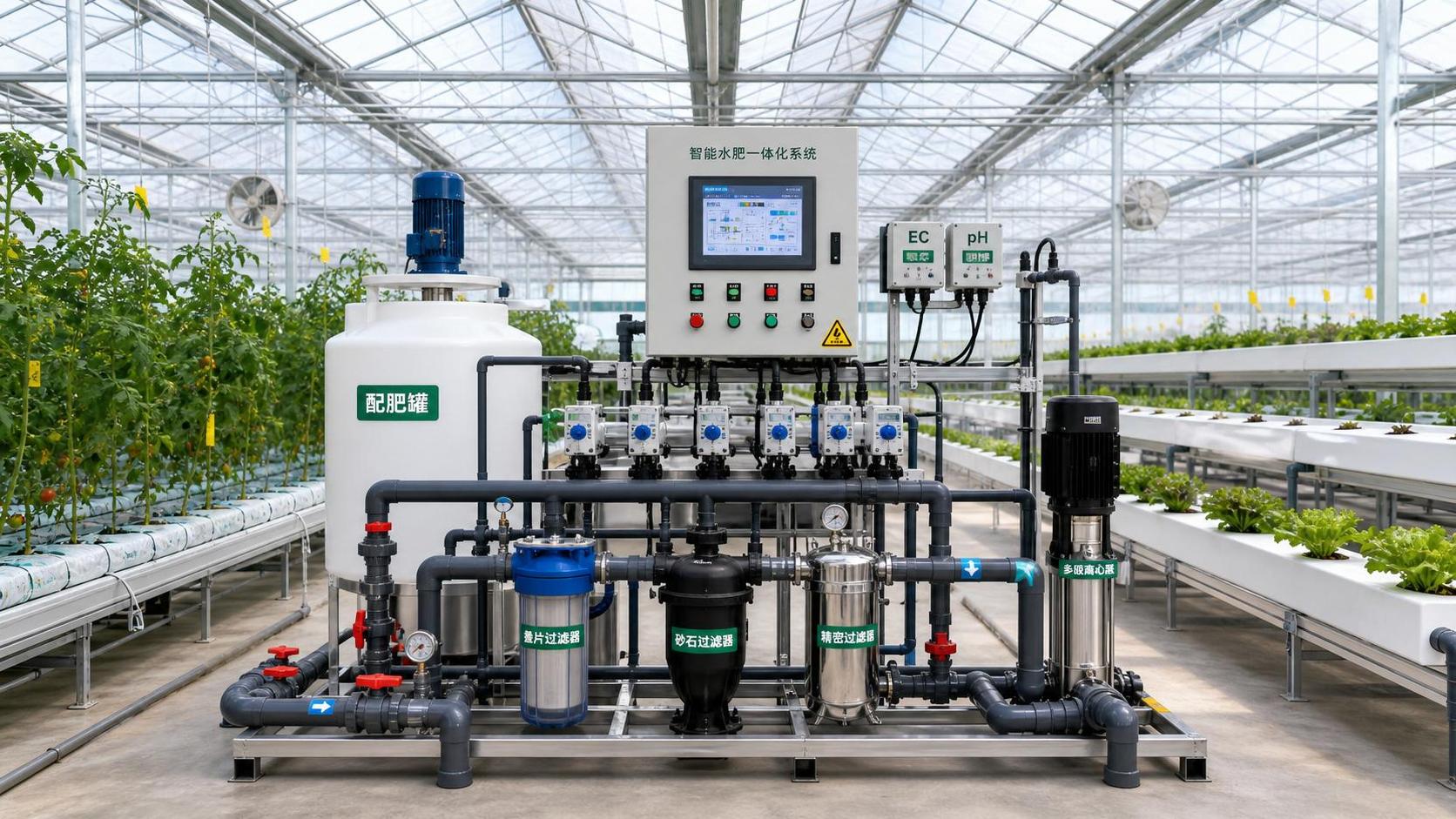
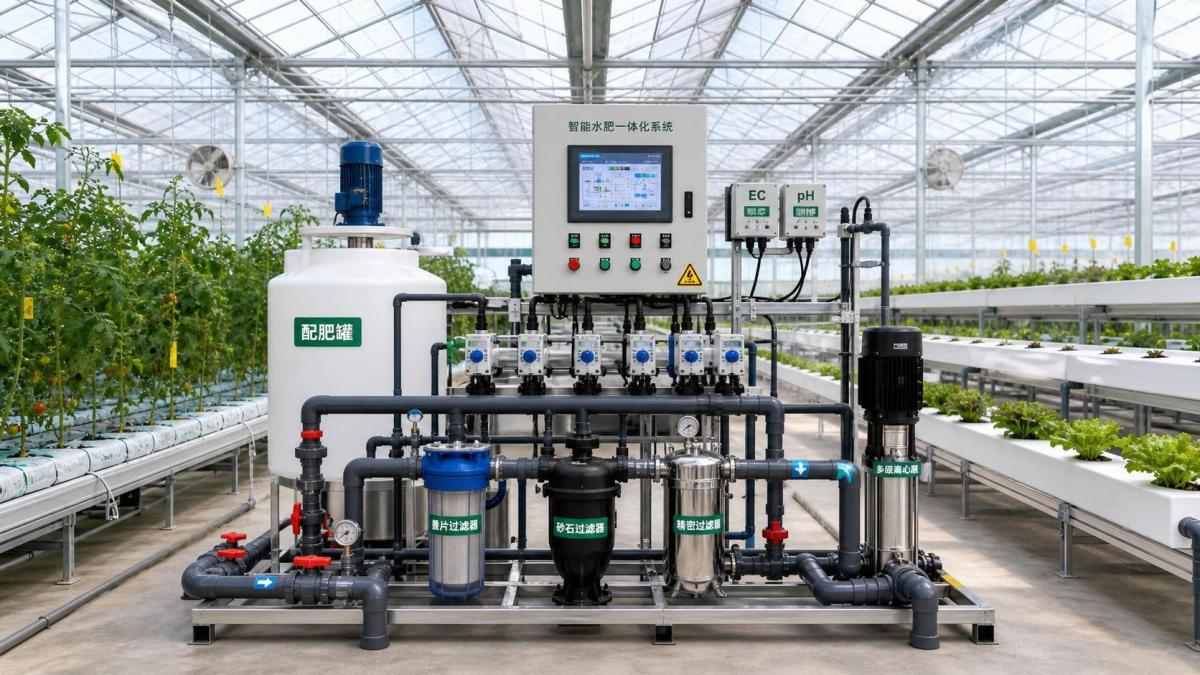
A compact injector for a small greenhouse zone costs far less than a multi-zone automated fertigation platform tied to EC, pH, climate, and irrigation scheduling.
Capacity also changes the equation.
Higher flow rates, more dosing channels, stronger pumps, and larger tanks all raise the base fertigation system price.
Then comes the control layer.
Manual units may look attractive on paper, yet automated controllers often lower cost per acre or per square meter over time.
Sensor quality matters too.
Reliable EC and pH sensors, data logging, alarm systems, and remote monitoring can add upfront cost but reduce correction losses later.
More commonly, price differences also come from engineering details that are easy to miss during early comparison.
- Mixing method and dosing precision
- Material grade for corrosion resistance
- Filtration level and clogging protection
- Integration with irrigation valves and climate controls
- Local service access and spare parts availability
When suppliers quote very different numbers, the gap usually reflects one or more of these items rather than margin alone.
A quick comparison helps reveal where price differences come from
The table below summarizes how configuration choices affect fertigation system price and later operating cost.
Where do hidden costs usually appear after the quote is approved?
This is often the most important question.
A supplier may present a competitive fertigation system price, but the delivered project cost can move much higher.
Installation is one common source.
Electrical work, pipe adaptation, filtration upgrades, water treatment, sensor calibration, and commissioning are sometimes quoted separately.
Software and connectivity can also surprise buyers.
Remote dashboards, cloud subscriptions, and data integration fees may not sit inside the first equipment proposal.
Another overlooked area is consumables and maintenance.
Sensors need calibration and replacement cycles.
Filters clog, seals age, and dosing pumps require preventive service.
In actual budgeting, a lower fertigation system price can become more expensive if support quality is weak or downtime is frequent.
A practical review checklist usually includes these questions:
- Is commissioning included or billed separately?
- How often do EC and pH sensors require replacement?
- Are software licenses perpetual or annual?
- What spare parts should be stocked locally?
- What is the response time for technical service?
These details matter more than a small discount on the initial equipment line.
How is payback calculated for a fertigation investment?
Payback should be based on measurable operating changes, not optimistic assumptions.
The most credible model starts with current fertilizer use, water use, labor hours, crop consistency, and seasonal loss caused by underfeeding or overfeeding.
Then compare those numbers with expected performance after installation.
In many projects, payback comes from several smaller gains rather than one dramatic yield jump.
- Lower fertilizer waste through precise dosing
- Reduced manual mixing and supervision time
- More uniform crop growth and marketable output
- Lower risk of nutrient shock or irrigation mismatch
- Better traceability for intensive production systems
A simple payback approach is useful at approval stage.
Total project cost divided by annual savings gives a first estimate.
Still, that number should be stress-tested.
Use conservative yield assumptions and include maintenance, energy, training, and replacement parts.
More disciplined reviews also compare best case, expected case, and downside case.
That prevents the fertigation system price from being justified by benefits that are hard to verify later.
A useful rule of thumb
If the supplier cannot explain where savings appear month by month, the payback model is probably too weak.
Which type of operation usually sees the strongest value?
Not every site benefits in the same way.
The strongest returns often appear in controlled or semi-controlled production where nutrient precision directly affects crop quality and output stability.
Greenhouses, hydroponic units, high-value vegetables, nursery operations, and intensive fruit production usually fit that pattern.
Larger irrigated field operations may also justify a higher fertigation system price when labor is limited or nutrient timing is critical.
In contrast, low-intensity operations with simple irrigation routines may prefer a more basic configuration.
The key is not whether fertigation is modern.
The real question is whether precision translates into measurable savings or better saleable yield.
This is where the broader SAMS perspective becomes useful.
Fertigation rarely works alone in advanced operations.
Its value improves when linked with sensors, irrigation scheduling, greenhouse climate control, and digital reporting.
That wider system view often explains why some projects accept a higher upfront fertigation system price and still outperform on total return.
How should a realistic budget be built before supplier comparison starts?
A sound budget starts with operating requirements, not brochure features.
Define crop type, irrigation method, number of zones, water quality, fertilizer recipes, expansion plans, and required reporting depth.
Then separate the budget into four blocks.
- Core equipment cost
- Installation and commissioning cost
- Annual operating and maintenance cost
- Contingency for integration or site changes
That structure makes supplier proposals easier to compare line by line.
It also reduces the risk of approving a low headline fertigation system price that later expands through exclusions.
Before final approval, a short decision table can sharpen the review.
A realistic budget is less about choosing the cheapest quote and more about controlling cost drift over the asset life.
So what is the smart next step before approving a fertigation project?
Start by translating fertigation system price into operating impact.
List where the project should save fertilizer, labor, water, or crop loss, and test whether those assumptions are measurable.
Then compare suppliers on full lifecycle cost, not equipment headline alone.
In many cases, the better decision is not the lowest quote.
It is the option with clearer engineering scope, steadier service support, and more believable payback.
When the review includes integration, maintenance, and return assumptions, fertigation system price becomes easier to judge with confidence.
That is usually the point where budget planning stops being reactive and starts supporting long-term farm performance.
Related Intelligence