
Automated Climate Control Hydroponics: Setup Mistakes to Avoid
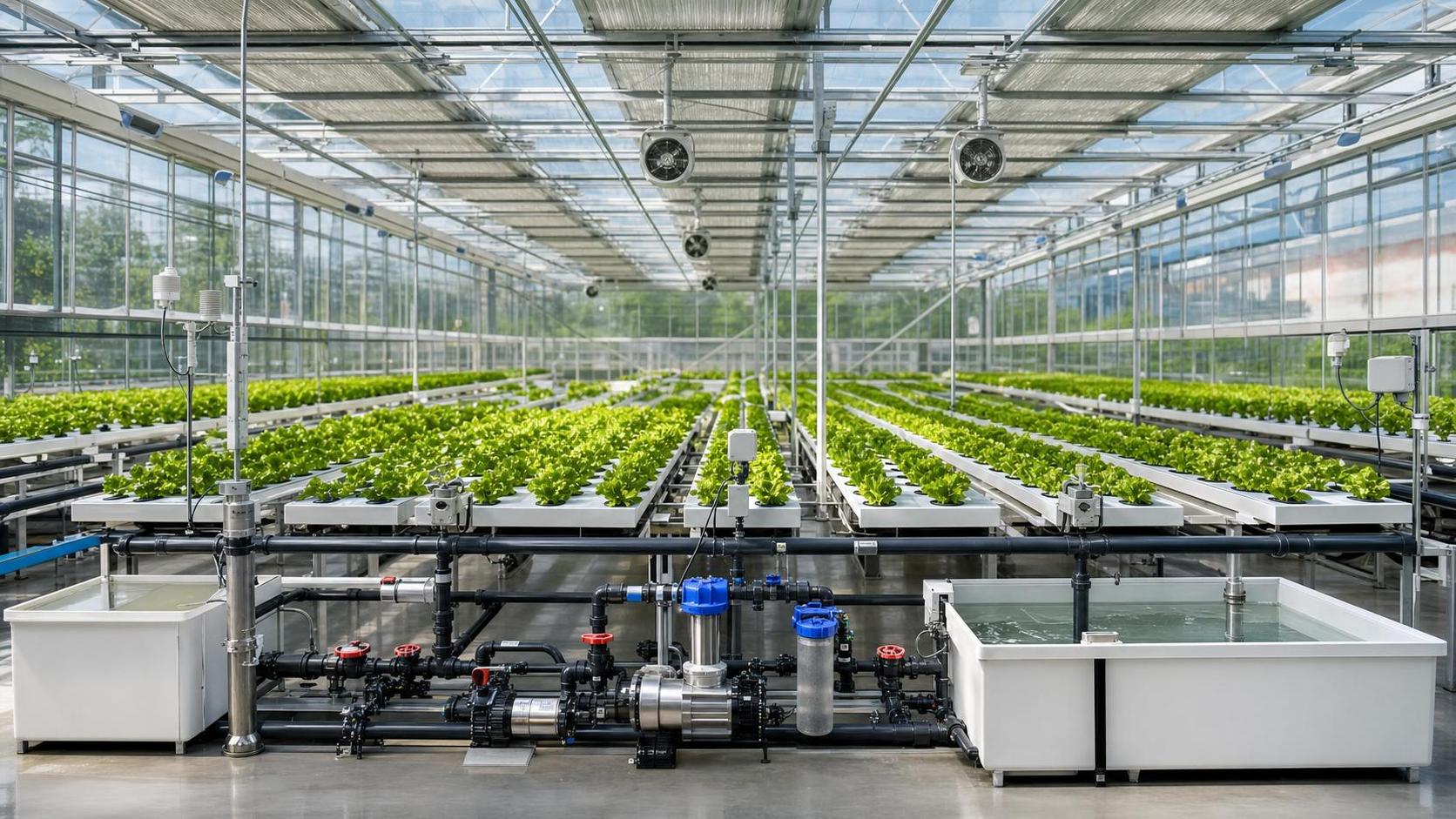
Why does automated climate control hydroponics fail even when the equipment looks advanced?
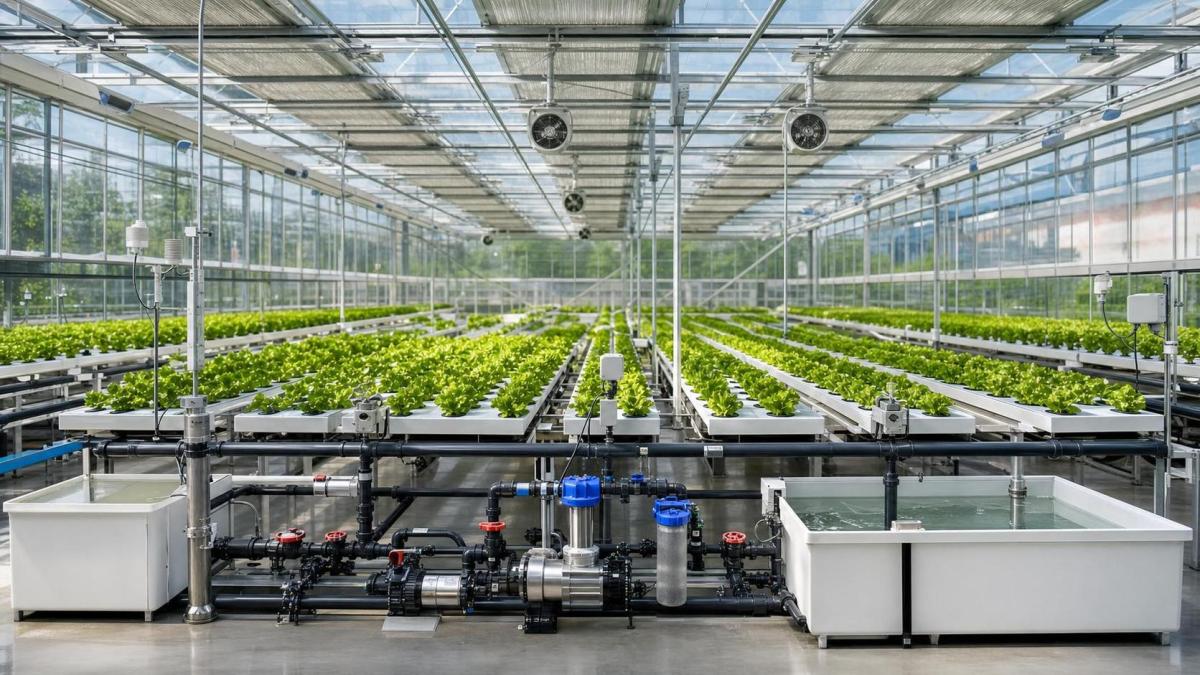
Automated climate control hydroponics often disappoints for one reason: the control strategy is weaker than the hardware list.
Many projects buy sensors, fans, valves, dosing units, and software, then assume automation will organize itself.
In practice, unstable yield usually starts with poor coordination between temperature, humidity, CO2, irrigation timing, and crop stage.
A hydroponic greenhouse is not a collection of devices. It is one linked environment with delayed reactions and competing priorities.
For example, cooling actions may lower temperature but raise humidity risk. More ventilation may protect leaf health but waste CO2.
That is why automated climate control hydroponics should be planned like an integrated agricultural system, not an automation package.
This is also where platforms such as SAMS are useful in a broader industry sense.
They frame greenhouse climate control beside irrigation systems, digital farm management, sensing, and ROI questions, which reflects real deployment logic.
The early warning sign is simple: if teams discuss components before control philosophy, setup mistakes are already forming.
Which setup mistakes create the most expensive problems later?
The costliest mistakes are rarely dramatic on day one. They appear as unstable performance, repeated manual overrides, and missed production targets.
Several errors show up again and again in automated climate control hydroponics projects:
- Sizing HVAC or dehumidification from floor area alone, without crop load, solar gain, and regional weather variation.
- Placing sensors where they are easy to install, not where canopy conditions are actually changing.
- Running climate control and fertigation as separate systems with weak data exchange.
- Using fixed setpoints all day, even though plant demand changes by light level and growth phase.
- Ignoring redundancy for pumps, power, communication, and water treatment.
- Accepting dashboard visibility as proof of control accuracy.
A short comparison helps clarify where projects usually slip.
The pattern is consistent. Small design shortcuts often create large operating penalties after planting begins.
Are climate sensors and control zones usually designed too simply?
Yes, and this is one of the most underestimated risks in automated climate control hydroponics.
A greenhouse may look uniform on paper, but airflow, light exposure, pipe temperature, and plant density create multiple microclimates.
When one sensor drives one large area, the controller reacts to an average that plants never actually experience.
That leads to overcorrection. The software cools too long, irrigates too late, or injects CO2 where it cannot stay.
A better approach is to define control zones from crop behavior and equipment response, not from construction convenience.
Need to split zones? Usually yes, when one of these conditions appears:
- The greenhouse orientation causes uneven solar gain.
- Different cultivars or growth stages share the same building.
- Ventilation paths are asymmetrical.
- Fertigation lines have measurable pressure or delivery variation.
- Dehumidification capacity is concentrated in one end of the house.
It also helps to validate sensor placement during live operation, not only at handover.
Many teams commission an empty structure, then discover canopy-level readings drift once plants begin transpiring heavily.
That gap matters because automated climate control hydroponics depends on actual plant conditions, not equipment-room values.
Why do fertigation and climate control need to be treated as one system?
Because plants respond to both at the same time.
In many projects, climate automation is specified by one team and fertigation by another. That separation creates blind spots.
If temperature rises and vapor pressure deficit increases, root-zone strategy may need to change within hours, not days.
When those systems are isolated, irrigation frequency, EC targets, drain percentage, and recirculation logic lag behind the climate reality.
The result is familiar: acceptable air readings, weak root performance, and uneven crop development.
More mature automated climate control hydroponics design links these data points:
- Radiation or light integral
- Air temperature and relative humidity
- VPD trend by zone
- Root-zone EC and pH
- Irrigation start rules and interval logic
- Drain volume and recirculation quality
This is where practical industry intelligence matters more than generic automation language.
SAMS often treats greenhouse control, irrigation efficiency, digital monitoring, and CAPEX planning as connected decisions rather than separate product categories.
That perspective mirrors how implementation risk actually behaves on site.
How can you tell whether the automation logic is realistic before installation?
The simplest test is to ask how the system behaves during conflict, not during ideal conditions.
Good automated climate control hydroponics does not just define targets. It defines priority when targets compete.
For example, what happens when outside humidity is high, indoor temperature is climbing, and CO2 enrichment is active?
If the answer is vague, the control sequence is probably incomplete.
Before installation, confirm these points in writing:
- Control hierarchy between cooling, ventilation, heating, shading, and dehumidification
- Day and night setpoint strategy by crop stage
- Alarm thresholds and escalation logic
- Fallback mode during sensor failure or communication loss
- Manual override rules and operator permissions
- Seasonal retuning requirements after first crop cycle
Another useful check is trend visibility. Can the platform show cause and effect over time, not only current readings?
Without trend analysis, teams keep reacting to symptoms instead of identifying the source of instability.
That makes automated climate control hydroponics look unreliable when the real issue is poor commissioning discipline.
What should be checked before sign-off to avoid delayed ROI?
Sign-off should never be limited to equipment startup.
The right question is whether the system can hold stable crop conditions through normal disturbances.
A practical pre-handover checklist usually includes:
- Sensor calibration records and verification at canopy level
- Zone-by-zone response testing for heating, cooling, venting, and dosing
- CO2 distribution confirmation under realistic airflow conditions
- Irrigation uniformity and fertigation recipe validation
- Power backup and recovery sequence testing
- Data logging review across at least several operating cycles
It is also wise to define what success means commercially.
That may include tighter temperature range, lower water use, reduced labor hours, better crop uniformity, or faster payback per square meter.
Without those benchmarks, automated climate control hydroponics can be technically complete but commercially underperforming.
A disciplined rollout works better than a rushed launch. Stable operation during the first crop cycle is usually more valuable than aggressive automation claims.
So what is the smartest next step when planning automated climate control hydroponics?
Start by mapping the project around decisions, not around devices.
List the crop targets, local climate pressures, greenhouse structure limits, water quality, energy constraints, and staffing reality.
Then test whether the proposed automated climate control hydroponics design can respond to those conditions without constant manual correction.
The strongest projects usually compare suppliers and system layouts using the same framework: control logic, redundancy, serviceability, data visibility, and operating cost.
That is also why cross-category intelligence matters in controlled environment agriculture.
A source such as SAMS is valuable when it helps connect greenhouse climate control with irrigation systems, automation reliability, and return-on-investment thinking.
The main takeaway is straightforward. Most failures do not come from the idea of automation itself.
They come from simplified assumptions made before the first crop is planted.
If the next review focuses on zone logic, sensor validity, fertigation linkage, fallback control, and measurable sign-off criteria, costly redesigns become far less likely.
Related Intelligence