
Controlled Environment Agriculture: Costs, Yields, and Payback
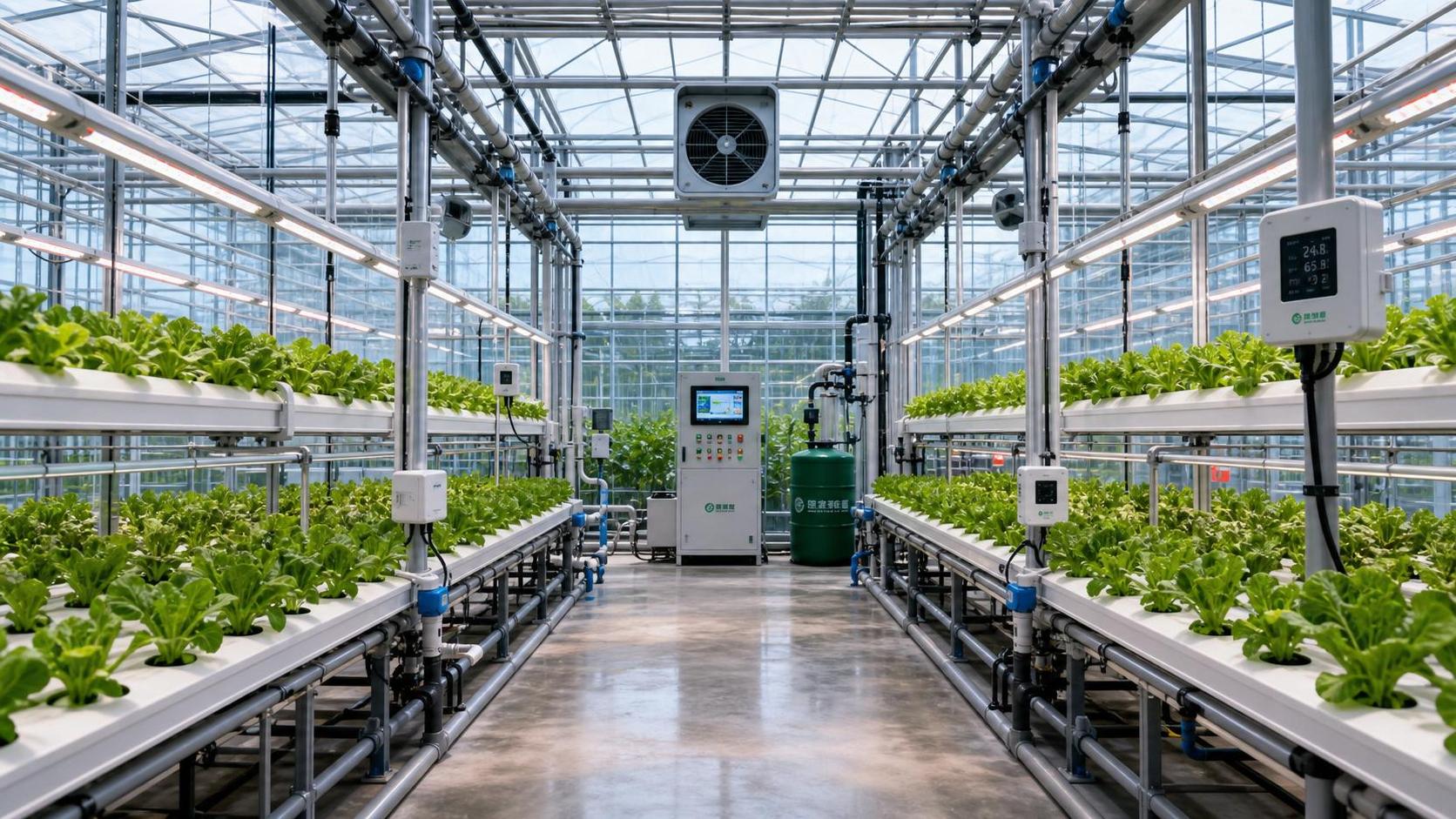
Is controlled environment agriculture really a cost-saving model, or mainly a yield-control strategy?
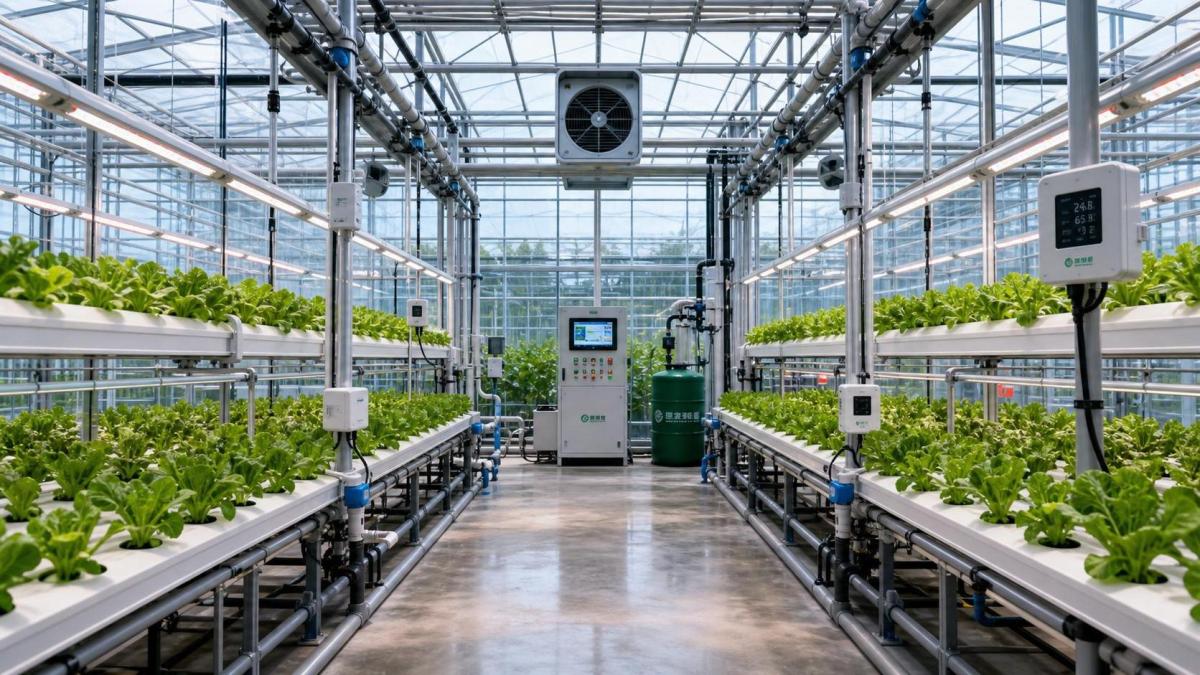
Controlled environment agriculture is rarely the cheapest way to grow food at the start.
Its real value is tighter control over yield, quality, timing, and resource use.
That matters when supply consistency affects contracts, retail standards, or processing schedules.
In practical terms, controlled environment agriculture reduces exposure to weather swings, pest pressure, and seasonal production gaps.
The trade-off is obvious: higher CAPEX, more technology dependency, and greater management discipline.
That is why the first question should not be whether it is modern or efficient.
The better question is whether output stability is worth the fixed investment.
Across the broader smart agriculture landscape, this logic is familiar.
The same ROI discipline used for tractors, drones, irrigation, and automation also applies here.
SAMS often frames technology decisions this way: not as gadgets, but as systems tied to per-unit return.
What actually drives controlled environment agriculture costs?
Most cost discussions focus too heavily on the greenhouse shell or vertical farm structure.
In reality, controlled environment agriculture costs come from several layers that interact continuously.
The biggest items usually include land preparation, structure, climate systems, fertigation, lighting, sensors, software, and labor planning.
Energy is often the most decisive operating cost, especially where cooling, supplemental light, or dehumidification is intensive.
Water costs may look lower, but water treatment and recirculation equipment can still be significant.
Maintenance also deserves more attention than many early-stage plans give it.
Fans, pumps, valves, dosing units, controls, and sensor calibration all affect uptime.
A simple summary helps separate the cost picture.
When controlled environment agriculture underperforms financially, the cause is often poor system balance rather than one expensive component.
How much yield improvement can be expected in real operations?
The honest answer is that yield depends heavily on crop, market target, and operational maturity.
Leafy greens, herbs, seedlings, tomatoes, peppers, and strawberries all behave differently.
Controlled environment agriculture usually improves not only output volume, but also harvest frequency and product uniformity.
That combination can be more valuable than headline yield alone.
For example, a crop with stable weekly harvests may support better contracts than a crop with higher seasonal peaks.
In actual deployment, buyers should look at four yield questions together:
- How many cycles per year are realistic for the target crop?
- What percentage of output meets premium grade specifications?
- How much yield is lost during startup and learning periods?
- Can the system maintain output in hot, cold, or low-light months?
This is where controlled environment agriculture becomes a management business, not just a facility business.
Climate sensors, CO2 control, fertigation precision, and crop monitoring all influence realized yield.
That systems view aligns closely with the SAMS approach to agricultural technology analysis.
It is not enough to compare structures.
The stronger comparison is structure plus control strategy plus operational data discipline.
When does the payback period make sense, and when does it drag out?
Payback in controlled environment agriculture is highly sensitive to crop value and market access.
A premium crop sold into reliable channels can justify investment much faster than a commoditized crop.
The same facility can look attractive in one region and weak in another.
A useful way to judge payback is to test the project under three cases.
Base case
Use realistic yield, average pricing, standard labor cost, and normal energy assumptions.
Stress case
Reduce selling price, increase power cost, and include startup losses for the first production cycles.
Upside case
Add higher grade rates, better annual utilization, and improved labor efficiency after stabilization.
If controlled environment agriculture only works in the upside case, the investment is fragile.
If it remains acceptable in the stress case, the business model is much stronger.
In many projects, payback stretches because assumptions are too optimistic at the beginning.
Typical examples include overestimated yields, underestimated downtime, weak labor planning, or inadequate climate design.
Which operations are most likely to benefit from controlled environment agriculture?
Not every operation needs controlled environment agriculture, even if the technology is impressive.
The strongest fit usually appears where three conditions overlap.
- Crop value is high enough to absorb infrastructure and energy costs.
- Supply reliability matters more than seasonal volume spikes.
- Resource efficiency, especially water and labor, has measurable economic value.
This often favors greenhouse vegetables, nursery propagation, seedling systems, fresh herbs, and selected berry categories.
It may also fit regions facing climate volatility, land constraints, or unstable outdoor production windows.
More cautious evaluation is needed when the target crop competes mainly on bulk price.
Controlled environment agriculture can still work there, but margins are thinner and execution risk rises.
A broader modernization plan also matters.
If the business is already investing in irrigation systems, sensors, digital farm platforms, and automation, integration value improves.
That is one reason industry intelligence platforms such as SAMS look at climate control within the full equipment and data ecosystem.
What mistakes create the biggest risk before signing a project?
The most common mistake is buying a controlled environment agriculture concept before validating the operating model.
A polished design does not guarantee profitable production.
Several warning signs deserve close attention.
- Payback estimates ignore utility volatility or maintenance cycles.
- The crop plan is broad, but the sales channel is vague.
- The system depends on imported parts without service clarity.
- Climate control, fertigation, and software come from disconnected vendors.
- No one has defined KPIs for yield, grade rate, labor hours, and energy per kilogram.
Needless complexity is another risk.
In many cases, a simpler greenhouse with better controls outperforms an overdesigned facility.
A disciplined comparison process helps reduce this risk.
Instead of asking which supplier promises the highest yield, ask which system explains assumptions most clearly.
That shift usually leads to better decisions.
So how should controlled environment agriculture be evaluated before moving forward?
A strong decision process starts with commercial logic, not equipment shopping.
First define the crop, target market, annual volume, quality threshold, and acceptable payback range.
Then test whether controlled environment agriculture improves those outcomes better than upgraded open-field or basic protected production.
After that, compare systems using a practical checklist.
- Match climate design to local weather extremes and energy pricing.
- Verify yield assumptions with operating references, not only design documents.
- Review service access, spare parts logic, and control system compatibility.
- Model payback using base, stress, and upside scenarios.
- Set measurable KPIs before construction starts.
Controlled environment agriculture can be commercially compelling, but only when costs, yields, and operational demands are viewed together.
That is the most useful takeaway for any investment review.
The next step is not to chase the most advanced system.
It is to build a decision framework that connects climate control, production economics, and long-term reliability.
With that approach, controlled environment agriculture becomes easier to judge on business terms rather than industry hype.
Related Intelligence